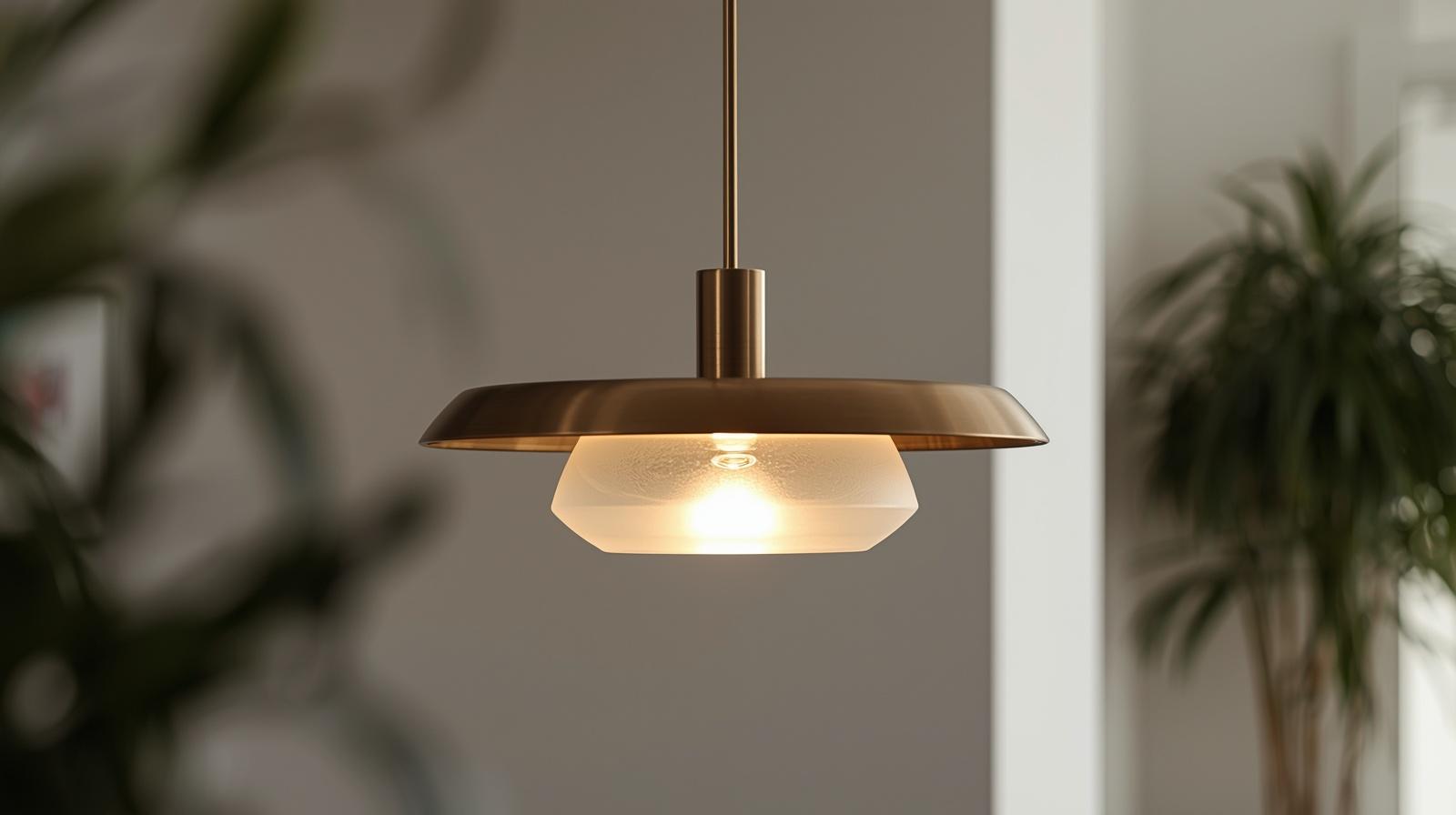
Modern Pendant Light: Illuminating Contemporary Spaces with Style
There is something transformative about a well-chosen pendant light. Suspended gracefully from the ceiling, it does more than illuminate; it defines spaces, creates atmosphere, and serves as sculptural art that happens to provide light. Modern pendant lights represent the culmination of decades of design evolution, combining clean aesthetics with advanced technology to create fixtures that are both beautiful and highly functional. From minimalist glass globes to dramatic sculptural statements, from industrial-inspired metal shades to organic forms in natural materials, modern pendants offer endless possibilities for expressing personal style while meeting practical lighting needs. This comprehensive guide explores the world of modern pendant lights, helping you understand the options, make informed choices, and incorporate these versatile fixtures into your own spaces.
Understanding Modern Pendant Lighting
Before exploring specific styles, it is helpful to understand what makes pendant lighting “modern” in the contemporary sense. Modern design is not merely about what is new or trendy; it embodies a philosophy that has evolved over more than a century, emphasizing clean lines, honest materials, and the principle that form should follow function.
Modern pendant lights trace their lineage to the Bauhaus movement of the early twentieth century, which rejected ornamentation in favor of pure form and industrial materials. This philosophy was refined by mid-century designers who explored organic shapes and new materials, and continues to evolve today with advances in LED technology and manufacturing techniques.
What distinguishes modern pendants from traditional ones is their intentional simplicity. Every element serves a purpose; nothing is added merely for decoration. Beauty emerges from proportion, material, and the quality of light itself rather than from applied ornament. This restraint creates fixtures that feel timeless rather than dated, that work in a wide range of settings, and that age gracefully.
Types of Modern Pendant Lights
The world of modern pendant lights encompasses numerous distinct styles, each with its own character and ideal applications.
Minimalist Glass Pendants
Glass pendants in their simplest forms, clear globes, cylinders, or cones, represent modern design at its most elemental. The beauty lies in the purity of the shape and the way glass interacts with light. Clear glass allows the bulb to become part of the design; opaline glass softens and diffuses light beautifully; colored glass adds warmth and personality.
These minimalist pendants work in virtually any setting. A single large globe makes a statement in an entryway. A row of cylinders over a kitchen island provides even task lighting. Clusters of small pendants at varying heights create sculptural installations. Their simplicity allows them to blend or stand out as desired.
Geometric Metal Pendants
Metal pendants in geometric forms, cubes, spheres, pyramids, and more complex polyhedrons, explore the beauty of pure shape. The metal may be polished to a high shine, brushed for subtle texture, or painted in matte colors. Perforations or cutouts create patterns of light and shadow on surrounding surfaces.
These pendants work particularly well in modern and industrial spaces, where their clean lines complement architectural simplicity. A cluster of geometric pendants in varying sizes creates visual interest while providing general illumination. Single large geometric fixtures make dramatic statements over dining tables or in two-story spaces.
Sculptural and Artistic Pendants
For those who want their lighting to serve as art, sculptural pendants push the boundaries of fixture design. These pieces may incorporate unusual materials, complex forms, or innovative uses of light. They command attention whether illuminated or not, serving as focal points that define entire rooms.
Sculptural pendants require space to breathe. They work best in rooms with high ceilings and relatively simple surroundings that don’t compete for attention. The fixture becomes the room’s jewelry, the element that elevates the entire space.

Organic and Natural Material Pendants
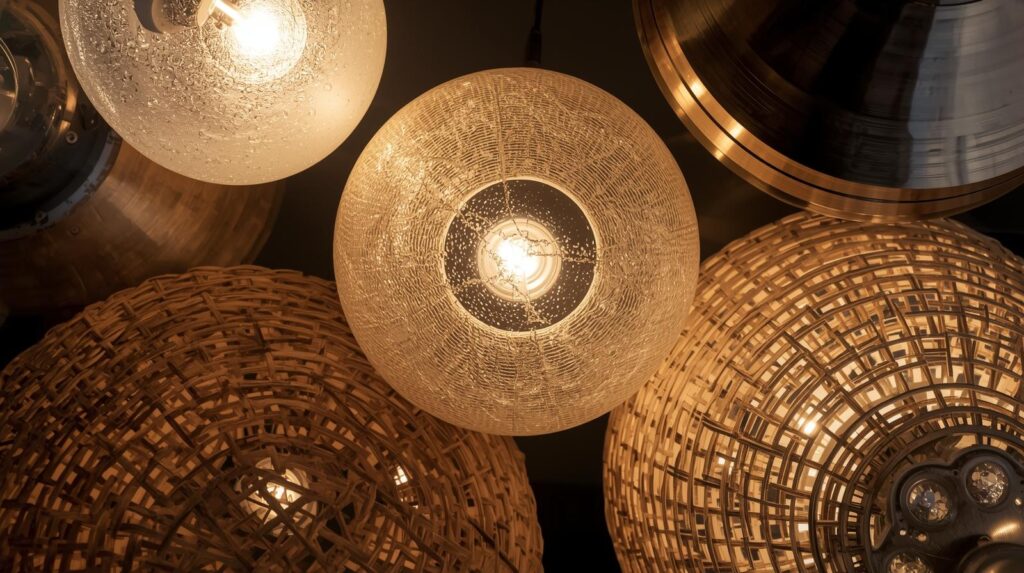
A significant trend in modern lighting involves natural materials reinterpreted through contemporary design. Pendants in wood, bamboo, rattan, and natural fibers bring warmth and organic texture to modern spaces. These materials may be used in their natural state or combined with metal and glass for contrast.
Wood pendants range from simple turned forms to complex assemblies of thin veneers. Rattan and woven fiber pendants create beautiful patterns of light and shadow. Bamboo offers sustainability along with distinctive grain. These natural elements soften the hard edges of modern architecture while maintaining contemporary sensibility.
Industrial-Inspired Pendants
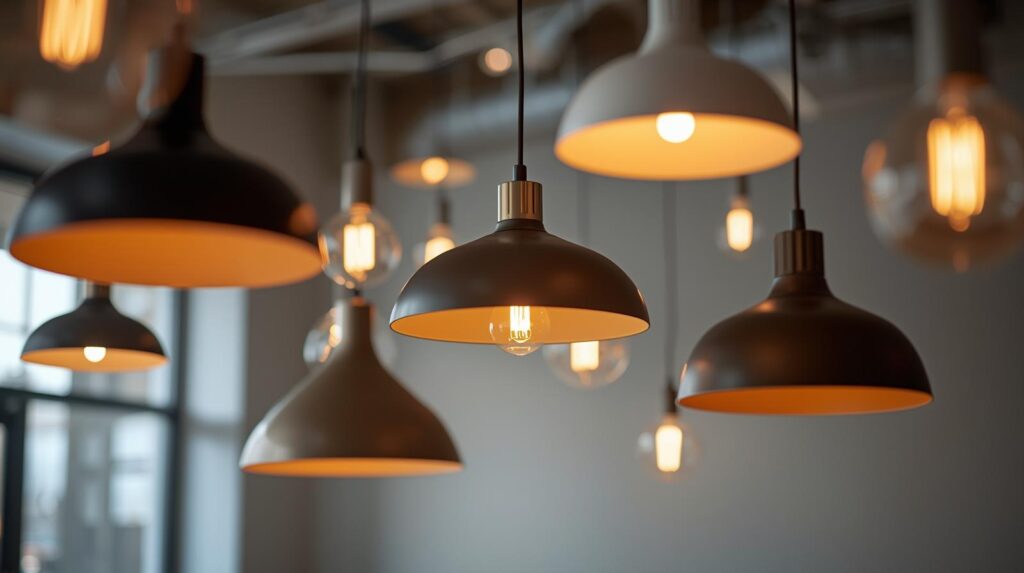
The industrial aesthetic, celebrating the beauty of utilitarian objects, has deeply influenced modern pendant design. Factory lights, warehouse fixtures, and utilitarian forms have been refined into sophisticated pendants that retain their honest, no-nonsense character while meeting contemporary aesthetic standards.
These pendants typically feature simple metal shades, exposed hardware, and straightforward forms. They work beautifully in lofts, kitchens, and any space seeking an edge of urban authenticity. The key to successful industrial-inspired pendants lies in the quality of materials and finishing; cheap versions look merely cheap, while well-crafted pieces carry genuine presence.
Linear and Suspension Systems
For spaces requiring extended illumination, linear pendants and suspension systems offer elegant solutions. Long, narrow fixtures run the length of kitchen islands, dining tables, or reception desks, providing even light across the entire surface. Multiple pendants on a single track allow adjustable positioning.
These systems combine the sculptural quality of individual pendants with the functionality of continuous illumination. They work particularly well in contemporary kitchens and commercial spaces where task lighting matters as much as atmosphere.
Materials in Modern Pendant Lights
The materials used in modern pendants contribute significantly to their character and performance.
Glass
Glass remains a favored material for its ability to transmit, diffuse, and color light. Modern glass pendants range from perfectly smooth, machine-made forms to artisanal pieces with bubbles and variations that add character. Opaline glass provides soft, even diffusion. Clear glass creates sparkle and allows bulb visibility. Colored glass adds warmth and personality.
Quality glass has consistent thickness, smooth edges, and optical clarity (unless deliberately textured). Hand-blown glass carries subtle variations that make each piece unique. Machine-made glass offers perfect uniformity at lower cost.
Metal
Metal provides structure, shade, and sculptural form. Common metals include aluminum (lightweight and affordable), steel (strong and substantial), brass (warm and luxurious), and copper (rich and developing patina). Finishes range from polished to brushed to matte, from bright to dark.
The quality of metalwork matters significantly. Well-made pendants have smooth edges, secure joins, and durable finishes. Cheaper versions may show poor workmanship that becomes obvious over time.
Wood
Wood brings warmth, organic texture, and sustainability to modern pendants. Common choices include oak, walnut, maple, and ash, each with distinctive grain and color. Wood may be turned on lathes, carved, or assembled from thin veneers into complex forms.
Wood pendants require appropriate finishing to protect against heat and humidity. Quality pieces use woods suitable for the application and finishes that maintain appearance over time.
Natural Fibers
Rattan, bamboo, seagrass, and other natural fibers create pendants with texture and warmth. These materials are typically woven over frames, creating patterns that filter light beautifully. The resulting fixtures have a casual, organic feel that suits bohemian, coastal, and natural design schemes.
Quality varies enormously; well-made fiber pendants have tight, consistent weaving and sturdy construction. Cheaper versions may sag or unravel over time.
Concrete and Plaster
For industrial and brutalist aesthetics, concrete and plaster pendants offer raw, sculptural presence. These materials can be cast into almost any form, creating fixtures with substantial visual weight. The rough texture and gray tones provide contrast to smoother, warmer elements.
These pendants work best in spaces with sufficient scale to handle their visual mass. They make powerful statements in industrial lofts, modern homes, and commercial settings.

Light Quality and Technology
Beyond aesthetics, modern pendant lights must perform their essential function of providing illumination. Advances in lighting technology have expanded possibilities dramatically.
LED Integration
LED technology has revolutionized pendant design. LEDs consume far less energy than traditional bulbs, last many times longer, and generate less heat. They can be integrated directly into fixtures, allowing forms impossible with removable bulbs. Color temperature can be tuned from warm to cool, and some systems offer color-changing capabilities.
Integrated LED pendants require no bulb replacement and offer consistent performance throughout their long lives. When they eventually fail, the entire fixture typically requires replacement, a consideration worth weighing against the convenience of replaceable bulbs.
Bulb Requirements
Pendants designed for removable bulbs offer flexibility and easier eventual replacement. Standard bulb types include Edison screw bases in various sizes, GU10 pin bases, and others. Choose fixtures that accept bulbs readily available in your area.
Bulb choice significantly affects light quality. Warm color temperatures (2700K-3000K) flatter most spaces. High color rendering index (90+ CRI) ensures colors appear true. Dimmable bulbs and compatible dimmer switches allow adjustment for different activities and moods.
Direction and Diffusion
Consider how light will be directed. Open-bottom pendants cast light downward, ideal for task illumination over tables and islands. Enclosed pendants diffuse light in all directions, providing ambient illumination. Adjustable pendants allow direction changes as needs evolve.
Diffusion materials affect light quality. Clear glass provides direct illumination with sparkle. Opaline glass and acrylic diffuse softly. Perforated metal creates patterns of light and shadow. Choose based on the atmosphere you want to create.
Incorporating Modern Pendants in Your Home
Modern pendant lights work beautifully throughout the home, each room offering different opportunities.
Kitchen Pendants
Kitchens represent the most common application for pendant lighting. Pendants over islands provide task illumination for food preparation while defining the space and adding style. A row of matching pendants creates rhythm and order. Varied pendants at different heights add sculptural interest.
Consider the tasks performed at your island. If you do significant food preparation there, ensure adequate light without glare. Position pendants to illuminate the work surface without casting shadows from your own body. Typical height is 28 to 34 inches above the counter.
Dining Room Pendants
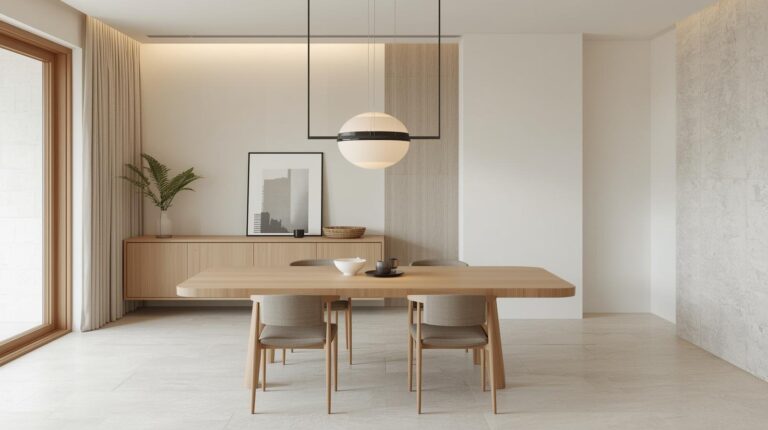
A pendant over the dining table creates intimate atmosphere while providing light for meals. The fixture should be sized to the table; a good rule is pendant width roughly one-half to two-thirds table width. Hang 30 to 36 inches above the table surface, adjusted for sight lines across the table.
Dimmers prove particularly valuable in dining rooms, allowing bright light for serving and cleaning, soft light for intimate meals. Consider how the pendant looks from all angles, as diners will see it from below and from across the room.
Entryway and Foyer Pendants
Entry pendants create first impressions, setting the tone for your entire home. A dramatic fixture here welcomes guests and establishes your design sensibility. In two-story foyers, large pendants or clusters make appropriate scale statements.
Consider sight lines from outside through windows and from interior spaces into the foyer. The pendant should look good from all viewing angles and at all times of day, whether illuminated or not.
Living Room Pendants
Pendants in living rooms provide ambient illumination while adding sculptural interest. They work particularly well in rooms with high ceilings, where they fill vertical space. Multiple pendants at varying heights create dynamic installations that define seating areas.
Living room pendants typically hang lower than in other spaces, 6 to 7 feet above the floor, low enough to feel present but high enough for clear sight lines. Dimmers allow adjustment for different activities.
Bedroom Pendants
Bedroom pendants offer alternatives to table lamps, freeing nightstand space while providing reading light. Pendants on each side of the bed, hung at appropriate height for reading in bed, create symmetrical elegance. Consider fixtures with adjustable arms or shades for personalized light direction.
Bathroom Pendants
Bathroom pendants must meet code requirements for damp or wet locations. Choose fixtures rated for bathroom use and position them away from direct water exposure. Pendants flanking mirrors provide flattering light for grooming tasks.
Scale and Proportion Considerations
Getting scale right separates successful installations from disappointing ones.
A pendant too small for its space looks insignificant, overwhelmed by surrounding elements. One too large dominates uncomfortably, making the room feel smaller. General guidelines help, but ultimately you must consider your specific space.
For dining tables and kitchen islands, fixture width should relate to surface width. A good starting point is pendant width roughly one-half to two-thirds table width for a single fixture, or combined widths similarly proportioned for multiples.
For open spaces without furniture anchors, consider the room’s overall dimensions. A small pendant in a large room gets lost; a large pendant in a small room overwhelms. Visualize the pendant in context before committing.
Height placement affects both function and appearance. Standard dining height is 30 to 36 inches above the table. Kitchen islands range 28 to 34 inches. Living areas typically hang pendants 6 to 7 feet above the floor. Adjust based on your specific circumstances and sight lines.
Multiple Pendant Arrangements
Using multiple pendants together creates different effects than single fixtures.
Linear arrangements of matching pendants, equally spaced, create rhythm and order. This works beautifully over kitchen islands and long dining tables. Ensure spacing allows adequate light coverage and visual comfort.
Clustered arrangements of varied pendants at different heights create sculptural installations. This approach suits open spaces where the cluster becomes a focal point. Choose pendants with visual coherence through color, material, or form.
Grid arrangements of identical pendants create dramatic ceiling treatments in large spaces. This requires significant investment but produces stunning results in appropriate settings.
Conclusion: The Transformative Power of Modern Pendants
Modern pendant lights offer far more than illumination. They define spaces, create atmosphere, and serve as sculptural elements that elevate entire rooms. The range of styles, materials, and configurations available today means there is a modern pendant for every space and every sensibility.
Whether you choose a minimalist glass globe, a dramatic sculptural statement, or a row of industrial-inspired shades, your pendant lights become integral to how you experience your home. They shape how spaces feel at different times of day, how tasks are illuminated, how guests perceive your design sensibility.
Take time to consider your options. Think about the activities that will happen beneath your pendants, the atmosphere you want to create, the relationship between fixtures and surrounding elements. Consider scale, light quality, and the overall composition. The right pendants will reward you not just with beautiful light but with daily pleasure, fixtures that continue to satisfy years after installation.
In a world of mass production and fleeting trends, well-chosen modern pendants offer something more lasting: thoughtful design that serves real needs while delighting the eye. They remind us that even utilitarian objects can be beautiful, that the spaces we inhabit deserve attention, that light itself, properly shaped and directed, can transform how we feel. That is the enduring promise of modern pendant lights.