Modern Lighting: Illuminating Contemporary Spaces with Style and Purpose
Lighting is one of the most transformative elements in interior design, yet it is often overlooked or treated as an afterthought. Modern lighting goes far beyond simple illumination; it shapes how we experience spaces, influences our mood, defines architectural features, and establishes the entire character of a room. The evolution of lighting design over the past century has produced an extraordinary range of options, from minimalist fixtures that seem to disappear to sculptural pieces that command attention as works of art. Understanding modern lighting means understanding not just fixtures but the principles of layering, placement, and technology that create truly successful illumination. This comprehensive guide explores the world of modern lighting, from foundational concepts to specific fixture types, helping you make informed choices for your own spaces.
The Philosophy of Modern Lighting
Before exploring specific fixtures and techniques, it is essential to understand what makes lighting “modern” in the contemporary sense. Modern lighting design is characterized by several key principles that distinguish it from traditional approaches.
First, modern lighting embraces simplicity of form. Clean lines, geometric shapes, and unornamented surfaces characterize modern fixtures. This does not mean boring or minimal; it means that beauty emerges from form and material rather than from applied decoration. A sculptural pendant light makes its statement through shape and proportion, not through crystals or elaborate detailing.
Second, modern lighting prioritizes function without sacrificing beauty. Every fixture should serve its purpose effectively while contributing to the overall aesthetic. Task lighting should illuminate work surfaces adequately; ambient lighting should create comfortable overall illumination; accent lighting should highlight specific features. The best modern lighting integrates these functions seamlessly.
Third, modern lighting embraces new technologies while honoring timeless principles. LED technology has revolutionized what’s possible, allowing fixtures that were unimaginable with traditional bulbs. Yet the fundamental principles of good lighting, layering, placement, appropriate intensity, remain unchanged. Modern lighting design works with technology rather than being driven by it.
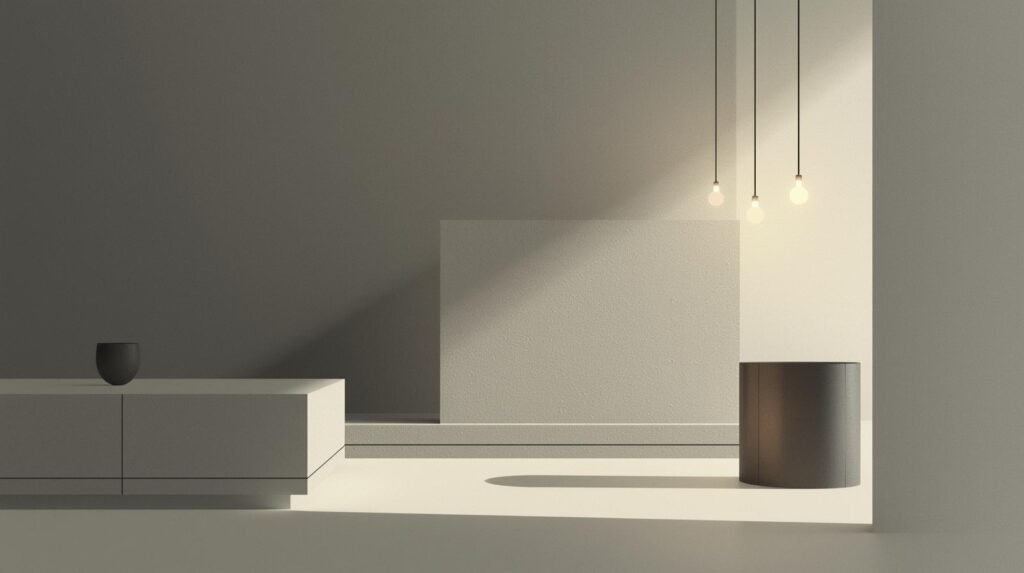
Fourth, modern lighting considers the relationship between light and shadow. In traditional lighting, the goal was often to eliminate shadows entirely. Modern approaches recognize that shadows create depth, drama, and interest. The interplay between illuminated and shadowed areas gives spaces dimension and character.
Understanding Light Layers
Successful modern lighting relies on layering different types of light to create spaces that are functional, comfortable, and beautiful. These layers work together, each serving a specific purpose.
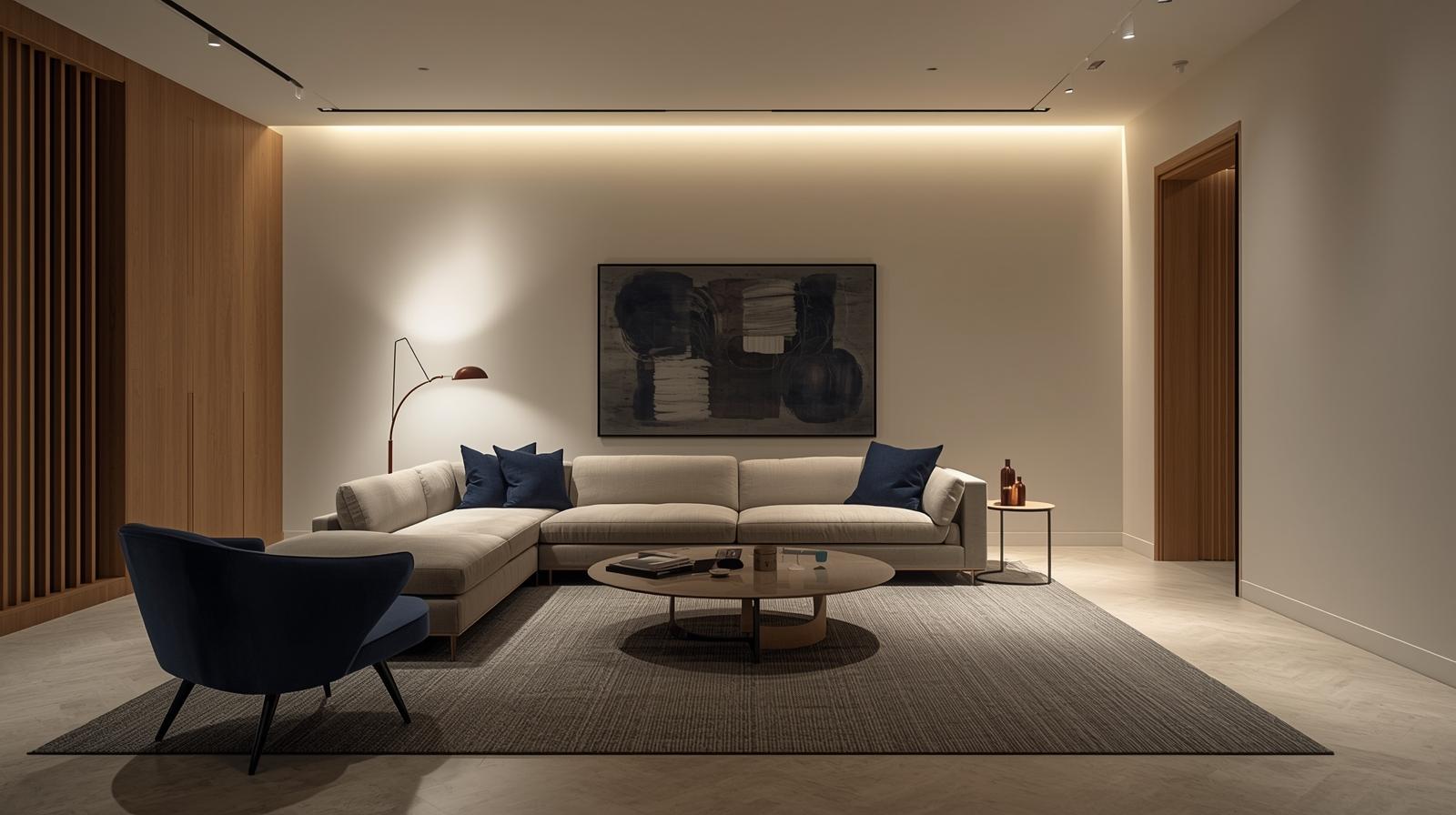
Ambient lighting provides overall illumination for a space. It is the foundation upon which other layers are built. In modern design, ambient lighting is often diffuse and even, creating comfortable overall light without harsh shadows. Recessed lights, flush-mount ceiling fixtures, and cove lighting all provide ambient illumination. The key is sufficient light for general activities without glare or harshness.
Task lighting illuminates specific areas where activities occur. Reading, cooking, applying makeup, and working at a desk all require concentrated light that ambient illumination cannot provide. Modern task lighting is adjustable and directional, allowing light to be aimed exactly where needed. Pendant lights over kitchen islands, under-cabinet lights in kitchens, and adjustable desk lamps all exemplify task lighting.
Accent lighting draws attention to specific features, artwork, or architectural elements. It creates drama and focal points, adding depth and interest to spaces. Modern accent lighting is often directional and relatively intense, creating contrast that makes highlighted elements stand out. Picture lights over artwork, track lighting directed at collections, and uplighting highlighting architectural details all serve accent functions.
Decorative lighting makes a statement in its own right. These fixtures are meant to be seen, contributing to the room’s aesthetic even when not illuminated. A sculptural chandelier, an artistic pendant, or a collection of distinctive sconces all serve decorative functions while also providing light. In modern design, decorative lighting often serves as the room’s jewelry, providing focal points and personality.
The art of modern lighting lies in combining these layers effectively. A well-lit room might have recessed ambient lighting, pendant task lighting over key areas, accent lights highlighting artwork, and a decorative chandelier making a statement. Each layer serves its purpose while contributing to a cohesive whole.
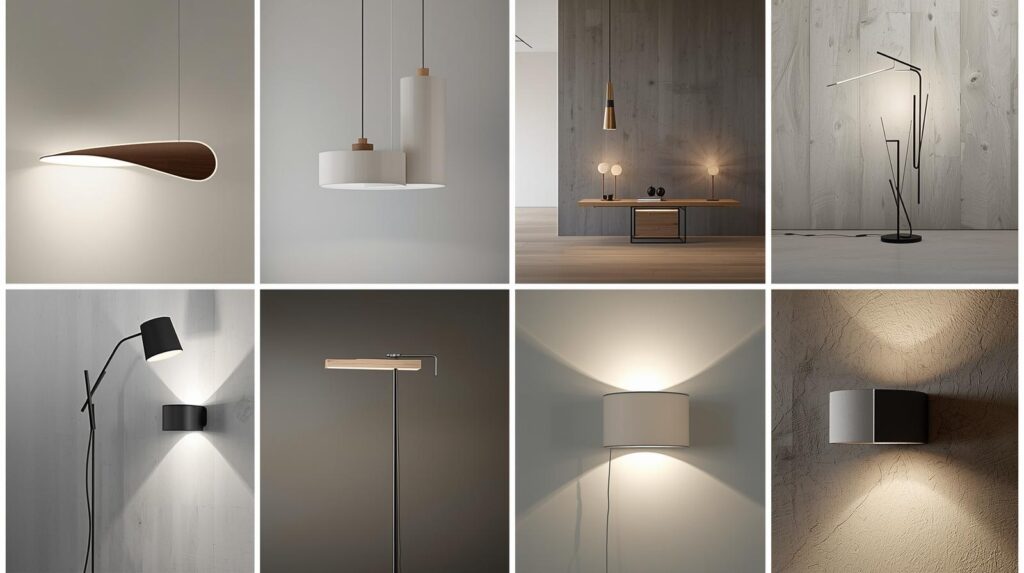
Types of Modern Light Fixtures
Modern lighting encompasses an enormous range of fixture types, each suited to particular applications and aesthetics.
Pendant Lights
Pendant lights hang from the ceiling, providing both task and decorative illumination. In modern design, pendants appear singly or in groups, over kitchen islands, dining tables, entryways, and bedside tables. The range of styles is vast, from minimalist glass globes to sculptural metal forms to woven natural fiber designs. Pendant height matters significantly; too high and they lose impact, too low and they obstruct views and movement. General guidelines suggest 30 to 36 inches above dining tables and 28 to 34 inches above kitchen islands.
Chandeliers
While chandeliers once meant ornate crystal fixtures, modern interpretations have expanded the category dramatically. Contemporary chandeliers range from minimalist metal rings to cascading glass orbs to dramatic sculptural statements. They serve as focal points in entryways, dining rooms, and living spaces. Scale matters enormously; a chandelier too small for its space looks insignificant, while one too large overwhelms. As a general rule, the diameter of a chandelier in inches should roughly equal the width of the room in feet added to the length in feet.
Flush Mount and Semi-Flush Mount Lights
These ceiling-mounted fixtures work well in spaces with lower ceilings where pendants aren’t practical. Flush mounts sit directly against the ceiling; semi-flush mounts hang slightly below. Modern versions range from minimalist disks to more sculptural forms. They provide ambient illumination in hallways, bedrooms, and any space where overhead light is needed without visual obstruction.
Recessed Lighting
Recessed lights install flush with the ceiling, providing illumination without visual clutter. Modern LED recessed lights are slim, energy-efficient, and available with various beam spreads and color temperatures. They excel at providing even ambient illumination and can be aimed when using adjustable trims. Placement matters; too few lights create dark spots, too many create a ceiling full of holes. Professional design or careful planning ensures appropriate spacing.
Track Lighting
Track lighting offers flexibility for directional illumination. Modern track systems are far more elegant than their predecessors, with slim profiles and integrated LEDs. They work well for accent lighting, for illuminating artwork, and in spaces where lighting needs may change. Some systems allow fixtures to be added, removed, and repositioned easily, providing adaptability that fixed lighting cannot match.
Wall Sconces
Sconces mount on walls, providing ambient, task, or accent lighting while adding architectural interest. In modern design, sconces appear in entryways, hallways, flanking mirrors, and beside beds where they free nightstand space. They create pools of light that define spaces without requiring floor or table space. Modern sconces range from minimalist metal forms to glowing glass orbs to sculptural pieces that function as art.
Floor and Table Lamps
Portable lighting provides flexibility that fixed fixtures cannot match. Modern floor and table lamps range from minimalist designs that recede visually to sculptural statements that command attention. They allow light to be moved as needs change and add warmth and personality to spaces. In modern design, lamps are chosen not just for their light but for their contribution to the room’s aesthetic.
Under-Cabinet and Task Lighting
Specialized task lighting illuminates work surfaces in kitchens, home offices, and hobby areas. Modern LED under-cabinet lights are slim, easily installed, and provide excellent illumination for food preparation. Adjustable desk lamps allow focused light for reading and working. The key is adequate light without glare, achieved through proper placement and fixture selection.
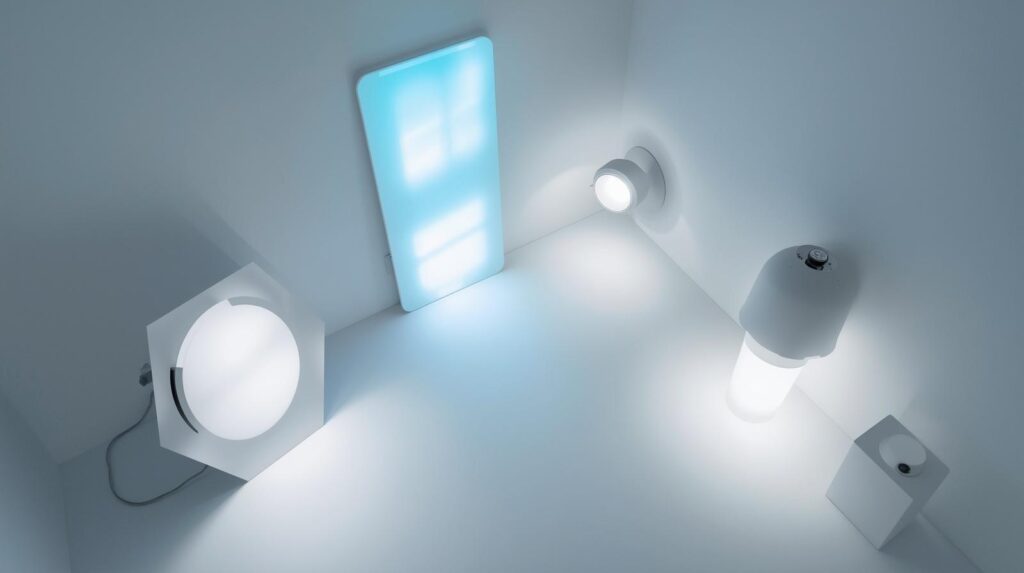
Modern Lighting Technologies
The rapid evolution of lighting technology has transformed what’s possible in modern design. Understanding these technologies helps in making informed choices.
LED Lighting
LEDs have revolutionized lighting design. They consume far less energy than traditional bulbs, last many times longer, and generate less heat. Modern LEDs are available in color temperatures from warm (2700-3000K) to cool (4000-5000K), allowing precise control over the quality of light. Many are dimmable, and some offer color-changing capabilities. The initial higher cost is quickly recouped through energy savings and reduced bulb replacement.
Smart Lighting Systems
Smart lighting allows control through phones, voice assistants, and automated schedules. Lights can be dimmed, turned on and off, and even changed in color temperature remotely. Smart systems can simulate presence when you’re away, gradually brighten in the morning to ease waking, and create scenes for different activities. While not essential for every home, smart lighting offers convenience and flexibility that traditional systems cannot match.
Integrated Lighting
Modern architecture increasingly integrates lighting into the structure itself. Cove lighting illuminates from recesses in ceilings or walls. Cabinet lighting activates when doors open. Step lighting provides safety and drama on staircases. This integrated approach creates seamless illumination that feels like part of the architecture rather than an addition.
Color Temperature and Light Quality
Beyond fixture selection, the quality of light itself significantly affects how spaces feel. Understanding color temperature helps in making appropriate choices.
Color temperature is measured in Kelvin (K). Lower numbers indicate warmer, more yellowish light; higher numbers indicate cooler, more bluish light. Warm white (2700K-3000K) flatters skin tones and creates cozy, intimate atmospheres suitable for living rooms and bedrooms. Neutral white (3500K-4100K) provides balanced illumination for kitchens, bathrooms, and workspaces. Cool white (5000K-6500K) mimics daylight and supports detailed tasks but can feel clinical in living spaces.
Color rendering index (CRI) measures how accurately a light source reveals colors compared to natural light. Higher CRI (90+) ensures that colors appear true, important in spaces where color matters, such as kitchens, bathrooms, and areas with artwork. Modern LEDs with high CRI provide excellent color rendering while maintaining energy efficiency.
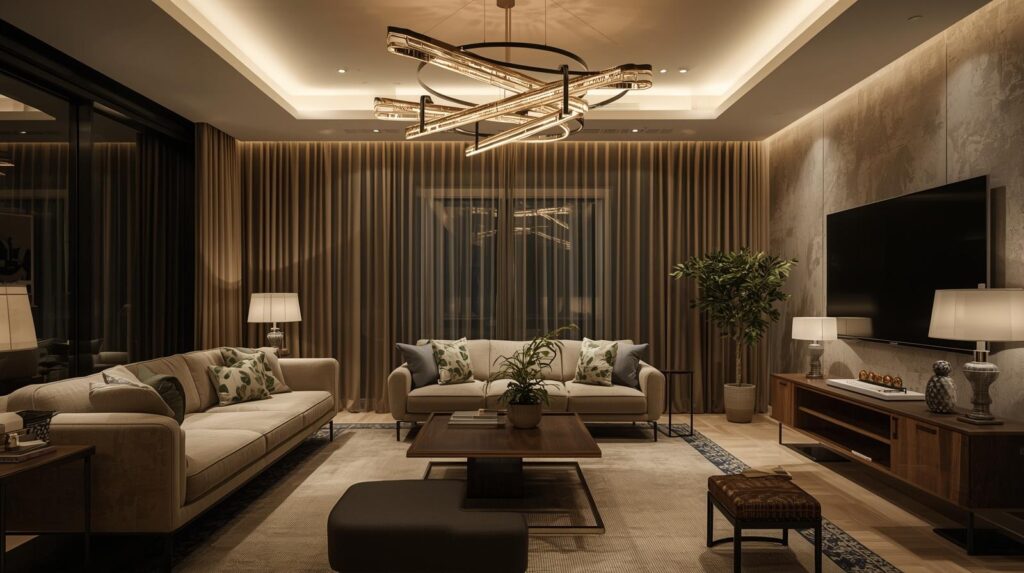
Modern Lighting by Room
Different rooms have different lighting needs, and modern design addresses these through thoughtful fixture selection and placement.
Living Room Lighting
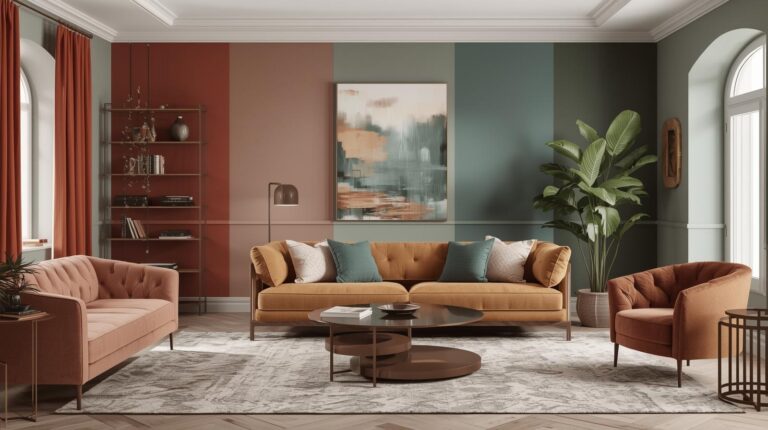
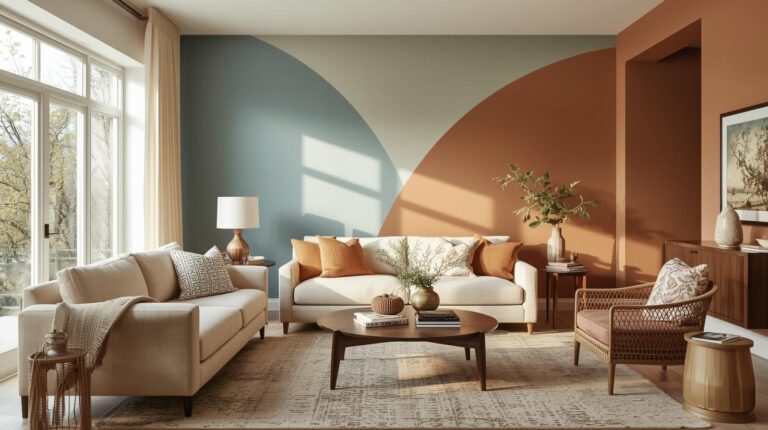
Living rooms require flexibility for various activities, from reading to entertaining to watching television. A combination of ambient lighting, perhaps recessed or a statement chandelier, provides overall illumination. Task lighting, such as floor lamps beside reading chairs and table lamps on end tables, supports specific activities. Accent lighting highlights artwork or architectural features. Dimmers on all circuits allow adjustment for different moods and activities.
Kitchen Lighting
Kitchens demand layered lighting for safety and function. Ambient lighting, often recessed, provides overall illumination. Under-cabinet task lighting illuminates countertops for food preparation. Pendant lights over islands provide both task illumination and decorative focus. Inside-cabinet lighting, often on switches that activate when doors open, adds function and drama. The combination ensures every work surface is well-lit while creating a warm, welcoming atmosphere.
Bedroom Lighting
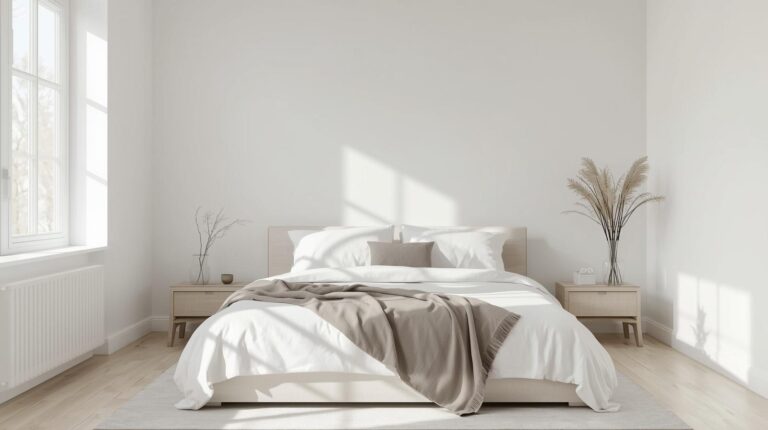
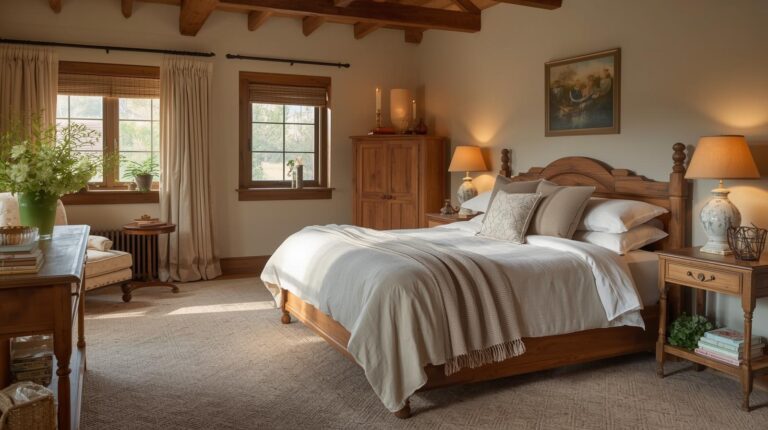
Bedrooms benefit from softer, more controllable lighting that supports relaxation while providing adequate illumination for dressing and reading. Ambient lighting, perhaps a flush mount or semi-flush fixture, provides overall illumination. Bedside task lighting, whether table lamps or wall sconces, allows reading without disturbing a partner. Dimmers on all circuits allow adjustment from bright for cleaning to soft for relaxation.
Bathroom Lighting
Bathroom lighting must support grooming tasks while creating a pleasant atmosphere. Vanity lighting, ideally placed at eye level on both sides of mirrors, provides the most flattering illumination for face-related tasks. Overhead ambient lighting provides general illumination. Waterproof fixtures in shower areas ensure safety. Good color rendering (90+ CRI) proves particularly important for applying makeup and assessing skin.
Home Office Lighting
Home offices require adequate illumination for computer work, reading, and video calls. Ambient lighting prevents harsh contrasts that cause eye strain. Task lighting, such as an adjustable desk lamp, provides focused illumination for reading and writing. Careful placement prevents glare on computer screens. If video calls are frequent, lighting that flatters the face becomes important.
Conclusion: The Power of Modern Lighting
Modern lighting offers extraordinary opportunities to transform how we experience our homes. Through thoughtful layering, appropriate fixture selection, and attention to light quality, we can create spaces that are not only beautiful but also functional, comfortable, and emotionally resonant. Lighting shapes our perception of space, influences our mood, and affects how we feel in our homes.
The principles of modern lighting, simplicity, function, integration of technology, and appreciation of light and shadow, provide guidance for any lighting project, whether a single room or an entire home. By understanding these principles and the range of options available, you can make choices that serve your needs while expressing your personal aesthetic.
As you plan your own lighting, remember that successful illumination rarely comes from a single source. Layer different types of light, consider how spaces are used, and don’t be afraid to make a statement with key fixtures. The result will be spaces that not only look beautiful but also feel right, supporting everything from quiet relaxation to lively entertaining with light that seems almost magical in its ability to transform.