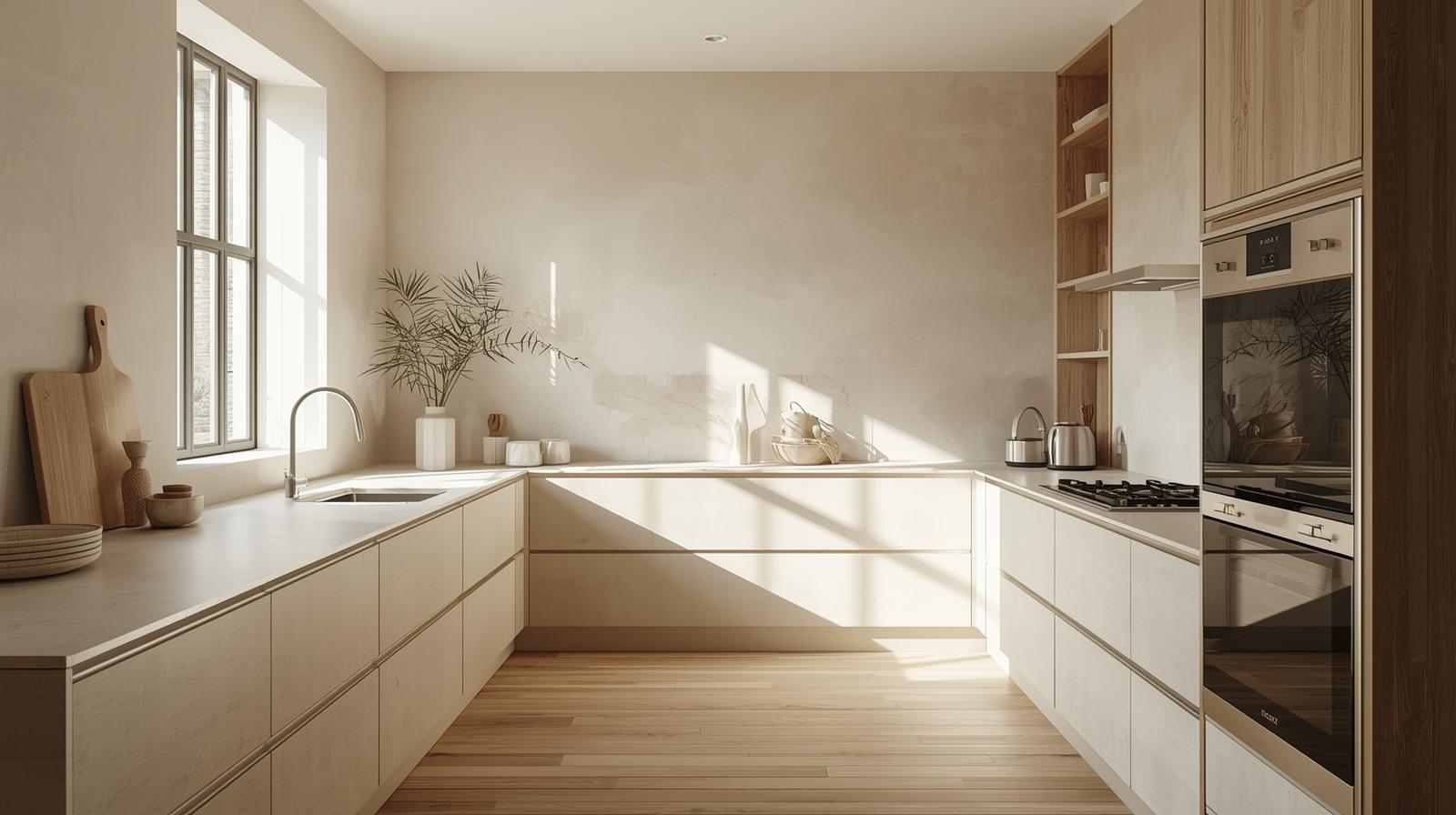
Minimalist Kitchen Ideas: Creating Calm Through Simple Design
The kitchen is often called the heart of the home, and for good reason. It is where meals are prepared, conversations happen, and daily life unfolds. Yet this essential space can easily become cluttered, chaotic, and overwhelming. The minimalist kitchen offers an alternative, a space designed around the principles of simplicity, functionality, and intentionality. By stripping away the non-essential, minimalist design creates a kitchen that is not only beautiful but also more pleasant and efficient to use. Every element earns its place, every surface serves a purpose, and the result is a space that feels calm, spacious, and deeply satisfying. Whether you are planning a complete kitchen renovation or simply want to bring more minimalism to your current space, these ideas will help you create a kitchen that embodies the very best of minimalist design.
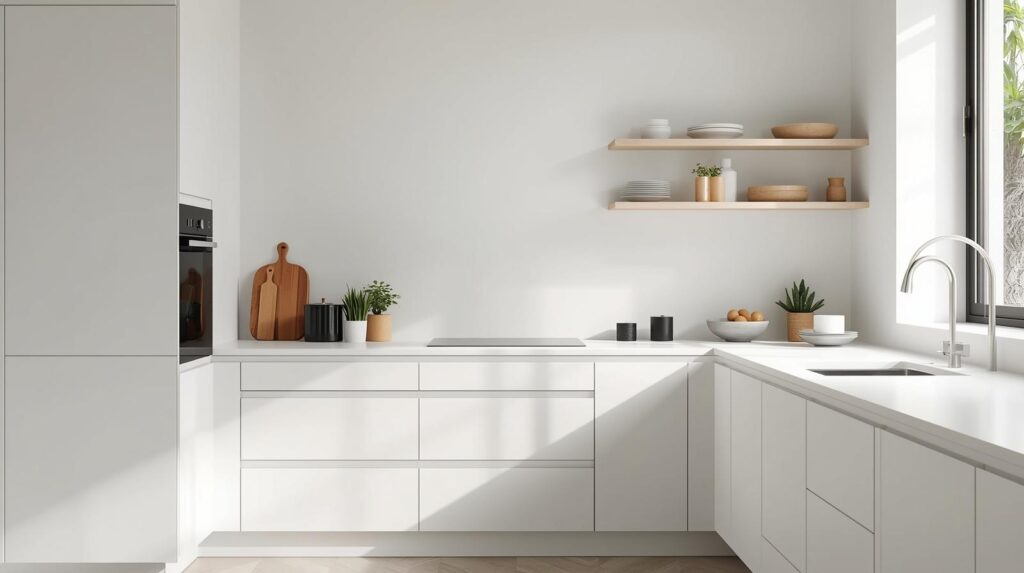
Understanding Minimalist Kitchen Design
Before exploring specific design elements, it is essential to understand what minimalism truly means in the context of kitchen design. Minimalism is often misunderstood as starkness or deprivation, but authentic minimalism is about intentionality rather than emptiness.
At its core, minimalism asks a simple question about every object in your kitchen: does this add value to my life? Objects that serve a purpose or bring genuine joy remain; objects that merely accumulate clutter are released. This editing process creates space, both physical and mental, for what truly matters.
In the kitchen, this philosophy proves particularly appropriate. This is a workspace where efficiency matters, where clutter impedes function, and where visual noise can make cooking feel like a chore rather than a pleasure. By reducing visual stimulation and physical obstacles, minimalist design supports the kitchen’s primary function of food preparation while creating an environment of calm.
Minimalist kitchens also emphasize quality over quantity. Rather than many mediocre tools and appliances, a minimalist kitchen features fewer, better things. A single high-quality chef’s knife replaces a block of rarely-used blades. A few beautiful serving pieces replace cabinets full of mismatched dishes. This approach often costs more initially but provides greater long-term satisfaction and actually saves money over time through reduced consumption.
The Minimalist Kitchen Color Palette
Color sets the foundation for minimalist design, creating calm, cohesive spaces that promote a sense of order and tranquility. The minimalist palette favors neutrals and muted tones that recede rather than demand attention.
White stands as the quintessential minimalist kitchen color. White cabinets, white walls, and white countertops create a clean, fresh backdrop that makes spaces feel larger and brighter. White also reflects light beautifully, maximizing natural illumination and reducing the need for artificial lighting during daytime hours. In a minimalist kitchen, white need not be stark; warm whites with subtle undertones add depth while maintaining the fresh quality essential to the aesthetic.
Cream and ivory offer softer alternatives to pure white, bringing warmth without compromising the minimalist palette. These gentle neutrals create cozy, inviting spaces that feel welcoming rather than clinical. Cream cabinets with white countertops provide subtle contrast while maintaining the light, airy quality essential to minimalist design.
Gray provides sophisticated neutrality that works beautifully in minimalist kitchens. From pale silver to soft charcoal, gray offers endless possibilities for creating calm, refined spaces. Warm grays with brown undertones create cozy atmospheres, while cooler grays contribute to crisp, clean aesthetics. The key lies in choosing grays with sufficient warmth to feel welcoming rather than industrial.
Black appears sparingly but purposefully in minimalist kitchens. Used as an accent rather than a dominant color, black provides contrast and definition. Black faucets, cabinet hardware, light fixtures, or window frames create graphic interest against pale backgrounds, anchoring the space and preventing it from feeling washed out.
Natural wood tones add warmth and organic texture to minimalist kitchens. Wood flooring, butcher block countertops, or open shelving in wood bring life to neutral palettes while connecting the space to nature. The key lies in using wood thoughtfully, as an accent rather than an overwhelming presence.
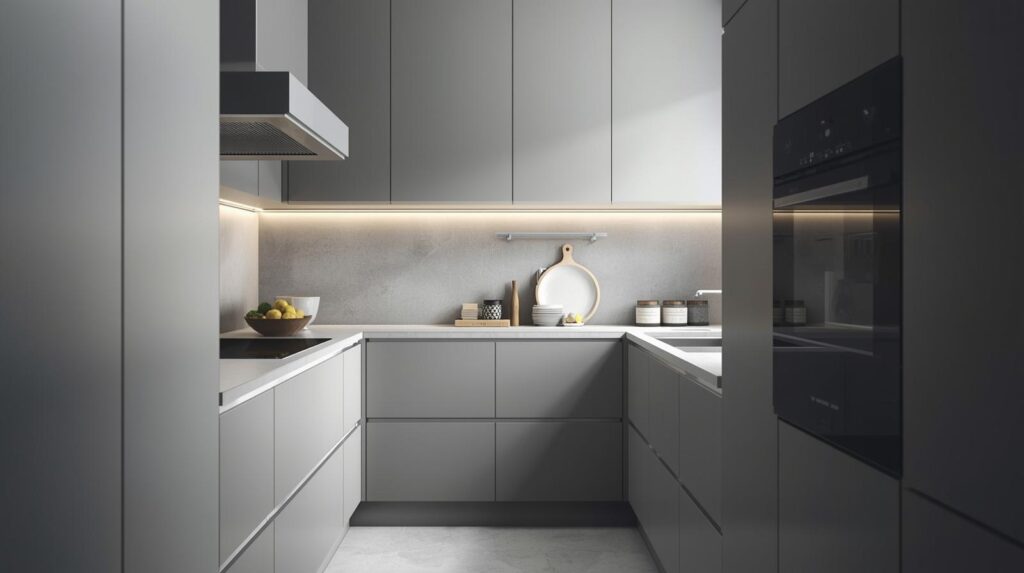
Minimalist Kitchen Cabinetry
Cabinetry dominates the visual landscape of most kitchens, making it a primary consideration in minimalist design. The goal is storage that is ample but invisible, providing function without visual clutter.
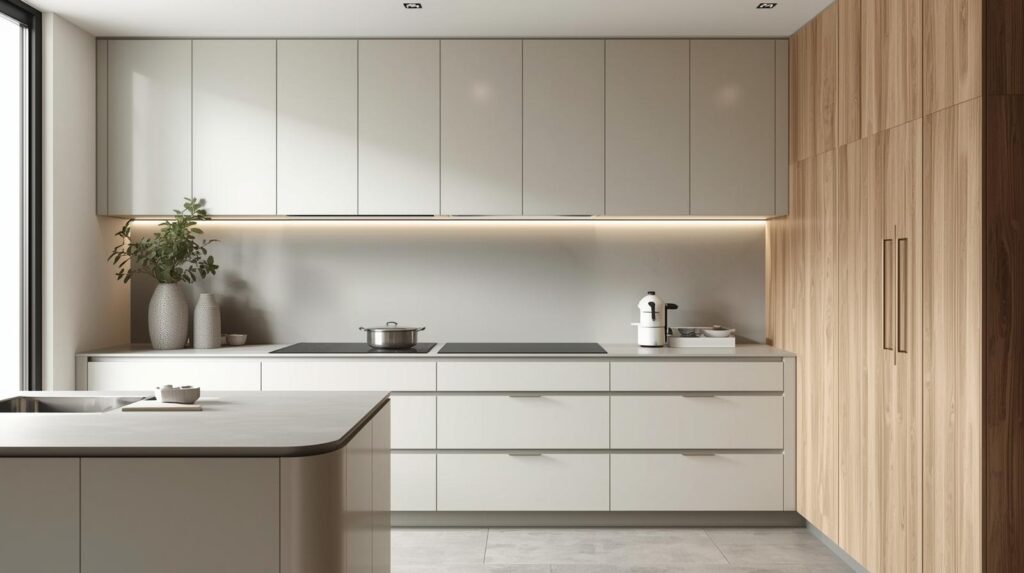
Flat-panel cabinet doors, also called slab doors, represent the most minimalist option. With no frames, recesses, or ornamentation, these doors create smooth, seamless surfaces that recede visually. Painted in colors that match the walls, they virtually disappear, allowing the room’s architecture and a few carefully chosen elements to take center stage.
Handleless cabinets take minimalism a step further. Push-to-open mechanisms eliminate the need for hardware entirely, creating uninterrupted expanses of cabinetry. For cabinets that require pulls, consider simple linear bars in finishes that blend with the cabinets rather than contrasting. The goal is hardware that serves its function without drawing attention.
Upper cabinets, while providing valuable storage, can make kitchens feel closed in. In minimalist design, consider alternatives like open shelving for frequently used items, or eliminate upper cabinets entirely in favor of lower storage and a beautiful backsplash. When upper cabinets are necessary, keep them shallow and run them to the ceiling to avoid dust-collecting gaps.
Glass-front cabinets, used sparingly, add visual interest while maintaining the minimalist aesthetic. Choose clear glass and keep contents organized and limited, as everything inside becomes part of the visual landscape. A few beautifully arranged items create more impact than crowded shelves.
Minimalist Kitchen Countertops
Countertops in a minimalist kitchen should be seamless, durable, and beautiful, providing expansive work surfaces without visual interruption.
Quartz offers non-porous durability with consistent color and pattern. Available in countless colors, from pure white to soft gray to black, quartz provides the seamless look essential to minimalist design. Large slabs minimize seams, and the material’s uniformity contributes to the calm, uncluttered aesthetic.
Concrete brings industrial edge to minimalist kitchens while providing seamless possibilities. Poured-in-place concrete countertops can be formed with integrated sinks, eliminating seams entirely. The material’s subtle variations add visual interest without creating pattern or distraction. Proper sealing ensures durability and stain resistance.
Butcher block adds warmth and organic texture to minimalist kitchens. Wood countertops in light tones like maple or ash provide beautiful work surfaces that age gracefully. The key lies in choosing simple plank construction without decorative edges or details. Regular oiling maintains beauty and protects the wood.
Marble, while requiring more maintenance, brings timeless elegance to minimalist kitchens. Choose marbles with subtle veining rather than dramatic patterns, allowing the material’s inherent beauty to shine without overwhelming. Honed finishes reduce shine and feel more calm than polished surfaces.
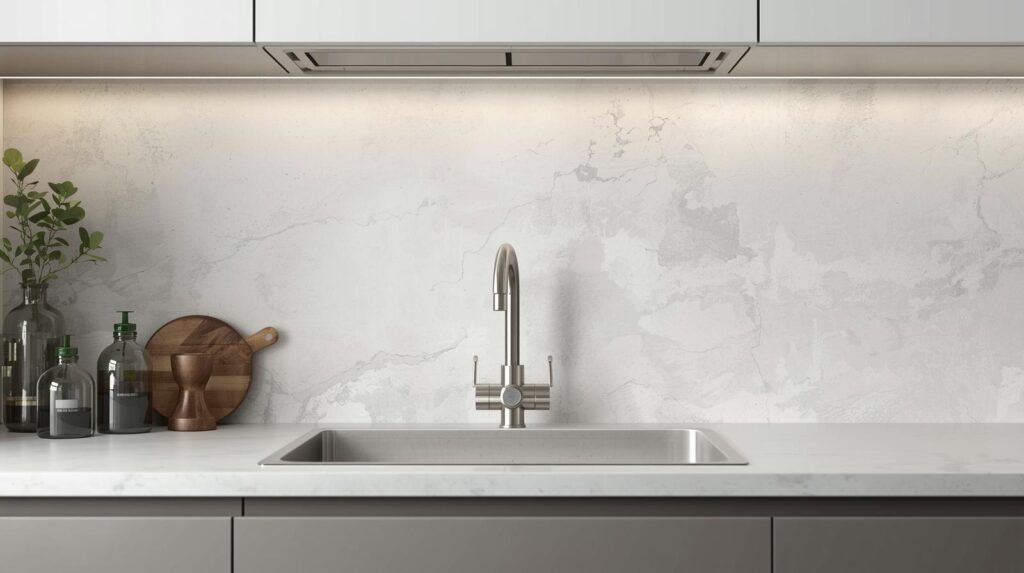
Minimalist Kitchen Backsplashes
The backsplash, while functional, also offers opportunity for minimalist expression. The goal is protection for walls without visual competition.
Subway tile in white remains a classic minimalist choice. Installed in a simple running bond pattern, glossy white subway tile provides texture without pattern, reflecting light while maintaining visual calm. Large-format tiles, 3×6 or even 4×8, create a more modern proportion than traditional sizes.
Large-format porcelain slabs create seamless backsplashes with minimal grout lines. A single slab behind the range and counter eliminates grout entirely, creating a smooth, uninterrupted surface that embodies minimalist principles. Choose colors that blend with countertops for maximum cohesion.
Painted drywall, properly protected with a high-quality, washable paint, offers the ultimate minimalist backsplash. With no tile at all, the wall becomes a seamless continuation of the room, allowing other elements to take center stage. This approach requires diligent maintenance but creates unparalleled simplicity.
Thin slabs of natural stone, cut to size, provide elegant, seamless backsplashes with minimal visual interruption. Choose stones with subtle patterns that blend rather than contrast with countertops. Honed finishes reduce shine and contribute to the calm aesthetic.
Minimalist Kitchen Appliances
Appliances in a minimalist kitchen should perform their functions without drawing attention. Several approaches achieve this goal.
Panel-ready refrigerators and dishwashers accept custom cabinetry fronts, allowing them to disappear completely into the kitchen’s millwork. When closed, these appliances look exactly like surrounding cabinets, maintaining the seamless aesthetic essential to minimalism. The initial investment pays dividends in visual calm.
Integrated appliances, designed to be concealed behind cabinetry, take this concept further. Refrigerators, freezers, and even coffee systems can be hidden behind doors that match surrounding cabinets, appearing only when needed.
Counter-depth refrigerators align with standard cabinet depth, eliminating the visual bulk of standard-depth models that protrude into the room. This simple choice significantly improves the kitchen’s clean lines and uncluttered appearance.
Hidden outlets, pop-up units that rise from countertops when needed and disappear when not, eliminate visual clutter while maintaining function. Place them strategically where they’ll be used, perhaps on a peninsula or island, keeping counters clear when appliances aren’t in use.
Induction cooktops with smooth glass surfaces provide seamless cooking surfaces that blend with countertops when not in use. Choose models with minimal controls and black glass that recedes visually rather than stainless steel that demands attention.
Minimalist Kitchen Storage Solutions
Behind the clean surfaces of a minimalist kitchen, storage should be thoughtfully organized to keep necessary items accessible but concealed.
Deep drawers rather than lower cabinets provide superior access to pots, pans, and stored items. Full-extension drawer glides bring everything forward, eliminating the frustration of items lost at the back of cabinets. Custom dividers keep contents organized and prevent shifting.
Pull-out shelving within base cabinets maximizes accessibility for items stored lower. These sliding shelves bring back-row items forward, making everything visible and reachable with minimal effort.
Corner solutions like lazy Susans or pull-out swing shelves utilize often-wasted space while maintaining accessibility. Choose mechanisms that bring items fully forward rather than requiring reaching into dark corners.
Vertical dividers for baking sheets, cutting boards, and trays keep these flat items organized and accessible. Installed beside or below ovens, these simple organizers prevent the frustrating shuffle to extract a single sheet pan.
Drawer organizers for utensils, cutlery, and tools keep these items neatly arranged and immediately accessible. Custom-fit inserts maximize drawer space while maintaining order.
Pantry organization systems, whether in a walk-in pantry or reach-in cabinet, keep food items visible and accessible. Clear containers for dry goods create uniform, attractive storage while making inventory easy. Labels ensure everything returns to its proper place.
Minimalist Kitchen Lighting
Lighting in a minimalist kitchen should be layered to accommodate different activities and times of day, with fixtures that are functional rather than decorative.
Natural light remains the most important light source. Maximize window exposure and keep window treatments minimal to admit daylight when desired. Skylights or light tubes bring additional natural light to interior spaces.
Recessed can lighting provides general illumination without visual clutter. Spaced appropriately for even coverage, recessed lights disappear into the ceiling, providing light without demanding attention. Dimmers allow adjustment for different tasks and times of day.
Under-cabinet lighting illuminates work surfaces for food preparation. LED strip lights install easily and provide bright, even light exactly where needed. Choose fixtures with warm color temperature for the most flattering light and choose hidden mounting that keeps the light source itself invisible.
Task lighting over islands and peninsulas provides focused illumination for food preparation. Pendant lights, if used, should be simple and unobtrusive, providing light without competing for attention. Choose fixtures with clean lines and finishes that blend with the overall palette.
Toe-kick lighting, installed at the base of cabinets, provides subtle ambient illumination for nighttime navigation. This gentle glow allows movement through the kitchen without turning on overhead lights that might disturb others.
Minimalist Kitchen Decor and Accessories
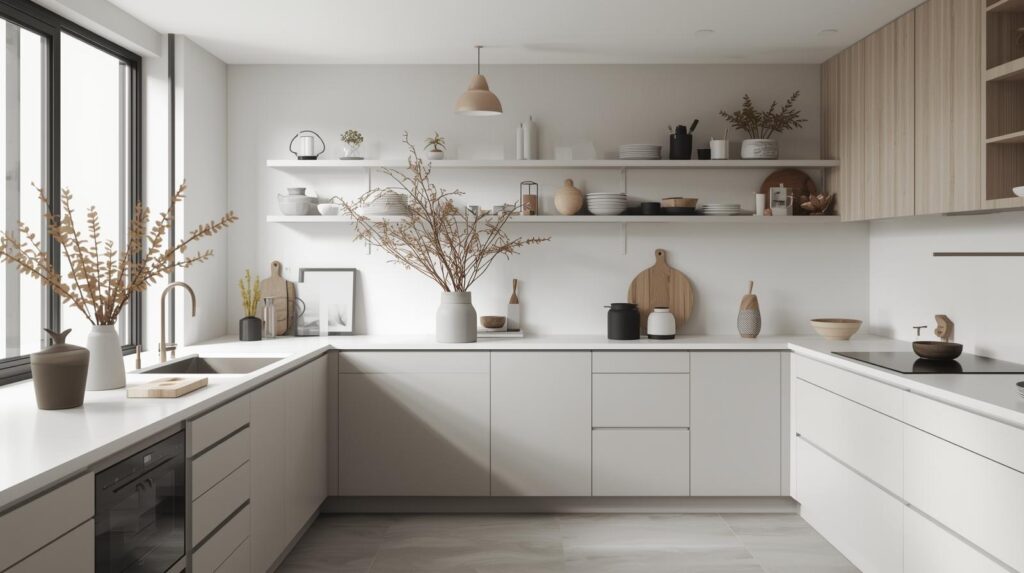
In a minimalist kitchen, decor is limited and intentional. Every visible item should earn its place through beauty or function.
Countertops should remain clear except for essential, frequently used items. A beautiful cutting board, a single vessel of utensils, perhaps a small plant, these elements add life without clutter. Everything else belongs behind closed doors.
Open shelving, if used, should display only carefully chosen items. A few beautiful pieces of ceramics, simple glassware, or cookbooks with lovely covers create visual interest without chaos. Keep arrangements sparse, with generous space between objects.
A single piece of art can add personality without overwhelming. Choose something meaningful, perhaps a botanical print, simple abstract, or family photograph, and give it space on a wall where it can be appreciated.
Plants bring life and organic beauty to minimalist kitchens. A single well-chosen plant, perhaps an herb on the windowsill or a small succulent on a shelf, adds color and vitality without clutter. Choose plants that thrive in kitchen conditions.
Bowls of fruit or vegetables, when fresh and beautiful, add natural color and life. A single bowl of lemons, apples, or seasonal produce provides beauty that changes with the seasons while serving practical function.
The Minimalist Kitchen Island
An island can provide valuable workspace and storage in a minimalist kitchen, but its design should align with overall principles.
Clean lines and simple forms characterize the minimalist island. Rectangular or square shapes without decorative detailing work best. The island should appear as a single block, not a collection of parts.
A single material for the island base maintains visual simplicity. Painted wood in a color that matches or complements cabinetry, or natural wood that adds warmth, both work beautifully. Avoid mixing materials that create visual complexity.
The countertop should continue the island’s simple lines, with minimal overhang and no decorative edges. A single slab of material, whether quartz, concrete, or wood, provides the seamless surface essential to minimalist design.
Seating, if included, should be integrated thoughtfully. Stools that tuck completely under the counter when not in use maintain clean lines. Simple designs in materials that complement the island, without upholstery or ornamentation, suit the aesthetic.
Maintaining Minimalist Clarity
Creating a minimalist kitchen requires initial effort, but maintaining it requires ongoing mindfulness. Without conscious attention, clutter gradually accumulates, eroding the calm you have created.
Establish a daily reset routine. Clear and wipe counters each evening, return items to their designated places, and ensure everything is ready for the next day. This five-minute practice maintains the visual calm that makes minimalist kitchens so satisfying.
Adopt a one-in-one-out policy for new kitchen acquisitions. When you bring something new into your kitchen, remove something existing. This discipline prevents gradual accumulation and ensures that every item in your space truly earns its place.
Regularly assess your kitchen with honest eyes. Does every item still serve a purpose or bring joy? Have things accumulated since your last edit? Seasonal reviews allow you to maintain the thoughtful editing that defines minimalist spaces.
Conclusion: The Freedom of a Simple Kitchen
A minimalist kitchen offers far more than a particular look. It provides a daily experience of calm and clarity, a space where cooking and gathering are supported rather than undermined by visual noise and physical clutter. In our busy, demanding world, such a space is not a luxury but a genuine support for daily life.
The principles of minimalism extend beyond design to touch how we live. By choosing quality over quantity, intention over accumulation, and calm over stimulation, we create not just beautiful kitchens but better experiences of daily life. The freedom of less, it turns out, is the freedom to focus on what truly matters: the meals we prepare, the conversations we share, and the moments of connection that happen in this essential room.
So embrace the discipline of editing, the courage of empty space, and the peace of simplicity. Create a minimalist kitchen that supports your daily life rather than demanding your attention, a true workspace where form and function exist in perfect harmony. In this space of calm and clarity, you will find that less truly becomes more.