Mid Century Modern Pendant: Iconic Lighting for Timeless Interiors
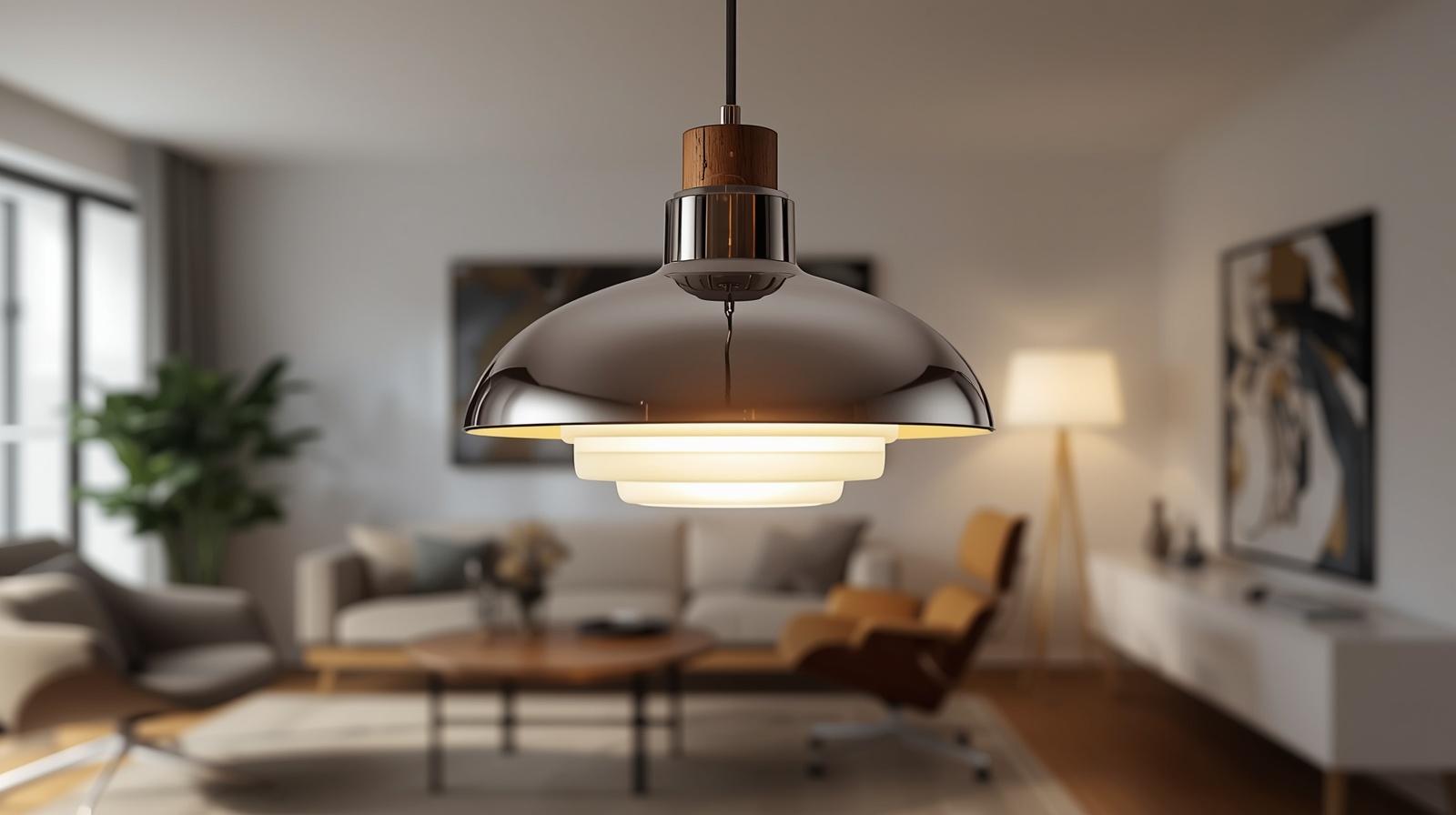
There is something captivating about a mid century modern pendant suspended gracefully overhead. These fixtures, born from one of design’s most fertile periods, do more than illuminate; they define spaces, create atmosphere, and serve as sculptural art that happens to provide light. From the atomic exuberance of Sputnik-inspired designs to the organic elegance of Danish modern teak pendants, from the warm glow of opaline glass globes to the clean geometry of enameled metal shades, mid century modern pendants embody the principles that made the era’s design so enduring. These fixtures have transcended their historical origins to become staples of contemporary interiors, proving that true design excellence never goes out of style. Whether you are a devoted collector of authentic vintage pieces or simply drawn to the aesthetic, understanding mid century modern pendants enriches your appreciation of design history while helping you make informed choices for your own spaces. This comprehensive guide explores the history, iconic styles, materials, and enduring appeal of mid century modern pendant lights.
The Golden Age of Pendant Design
The mid century modern period, roughly 1945 through the 1960s, represented a golden age for pendant lighting. The post-war era brought unprecedented prosperity, technological advancement, and optimism about the future. New materials emerged from wartime research, manufacturing techniques improved dramatically, and a generation of designers was ready to apply these innovations to creating beautiful, functional objects for everyday life.
Before this period, pendant lights were largely traditional in form, with ornate details, heavy materials, and an emphasis on decorative effect over pure design. Mid century designers flipped this priority entirely. They sought to create fixtures where beauty emerged from form, proportion, and material rather than from applied decoration. They celebrated the technology of light itself, making bulbs and sockets part of the design rather than hiding them. They experimented with new ways of directing and diffusing light, creating effects impossible with traditional fixtures.
The pendant form particularly suited mid century experimentation. Suspended from ceilings, these fixtures could be seen from all angles, inviting sculptural treatment. They could be clustered for dramatic effect, hung at varying heights to create rhythm, or used singly as focal points. Designers explored every possibility, creating an extraordinary range of forms that continues to inspire today.
Key Principles of Mid Century Modern Pendants
Understanding the principles that guided mid century pendant designers helps explain why these fixtures remain so compelling.
Form Follows Function
The Bauhaus-derived principle that form should follow function guided mid century designers. A pendant’s shape should arise from its purpose, not from arbitrary decoration. A shade that directs light downward exists to illuminate a dining table; its form is a direct response to its function. A globe that diffuses light in all directions exists to provide ambient illumination; its spherical form serves that purpose perfectly.
Honest Materials
Mid century designers believed in using materials honestly. Wood should look like wood, showing its grain and natural variations. Metal should look like metal, whether polished to a shine or left with industrial texture. Glass should reveal its qualities, whether clear, opaline, or colored. Plastics and fiberglass, new materials at the time, were celebrated for their unique properties rather than disguised as something else.
Celebration of Structure
Unlike traditional pendants that hid their workings behind elaborate shades, mid century designs often exposed structure proudly. The canopy, the stem, the socket, all became part of the visual composition. The bulb itself, once hidden, became a design element. This celebration of how things worked appealed to the era’s fascination with technology and industry.
Sculptural Presence
Mid century pendants are sculptures as much as lighting devices. They command attention even when not illuminated, contributing to the room’s aesthetic through form alone. Designers considered how pendants would be seen from all angles, how they would interact with surrounding space, how they would create not just light but shadow and atmosphere.
Iconic Mid Century Modern Pendant Styles
The world of mid century pendants encompasses numerous distinct styles, each with its own character and history.
Sputnik and Atomic Pendants
Perhaps no pendant style better captures the space-age optimism of the 1950s than the Sputnik. Named for the Soviet satellite launched in 1957, these fixtures feature a central sphere with multiple arms radiating outward in all directions, each tipped with a light source. The effect is explosive, celebratory, and unmistakably atomic age.
Sputnik pendants range from relatively modest fixtures with a half-dozen arms to elaborate compositions with dozens of lights. The arms may be straight or curved, the central sphere may be simple or elaborate, but the essential form remains instantly recognizable. These pendants make dramatic statements over dining tables, in entryways, and any space needing a focal point.
Beyond the classic Sputnik, atomic-inspired pendants feature starburst patterns, radiating lines, and geometric compositions that evoke the era’s fascination with space and energy. These designs work beautifully in spaces seeking visual excitement and period authenticity.
George Nelson’s Bubble Pendants
George Nelson’s bubble pendants, introduced in the 1950s, represent another iconic approach. These fixtures feature spherical or organic shapes formed by a steel wire frame covered in a translucent plastic membrane. The result is a soft, glowing orb that diffuses light beautifully while creating a sculptural presence.
Nelson designed numerous variations. The classic globe remains most familiar, but he also created elongated shapes, clusters, and custom installations for specific spaces. The Bubble Pendants offered an alternative to traditional glass fixtures, lighter, less fragile, with a warm, diffused glow that flattered any space.
The manufacturing process was ingenious. Nelson originally developed the lamps using a self-webbing plastic developed for military applications. The material could be sprayed over wire frames, creating seamless, translucent shells that allowed forms impossible with traditional materials.
Danish Modern Wood Pendants
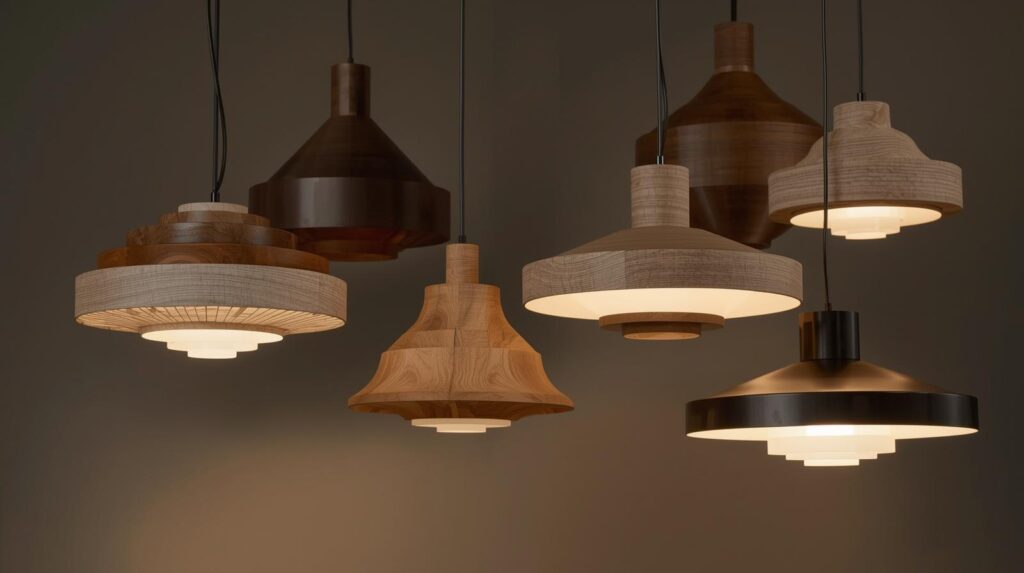
Scandinavian designers brought their own sensibilities to pendant lighting. Danish modern wood pendants feature clean lines, organic forms, and exquisite craftsmanship. Teak, rosewood, oak, and walnut bring warmth and natural beauty that softer than the more industrial American designs.
These pendants often feature simple, elegant forms that direct light downward while concealing the source. A teak pendant with a white glass diffuser provides warm, focused illumination for dining tables. A hand-carved rosewood shade becomes a sculptural object while casting soft, ambient light. The beauty lies in proportion, material, and the quality of light.
Danish modern pendants work beautifully in spaces seeking warmth along with modern sensibility. They bring organic texture to minimalist interiors and add Scandinavian sophistication to eclectic rooms.
Opaline Glass Globes
Opaline glass, with its milky, translucent quality, appears throughout mid century pendant design. Simple spherical pendants in opaline glass provide soft, even illumination that flatters any space. The material diffuses light beautifully, eliminating glare while creating a warm, welcoming glow.
These pendants range from perfectly smooth, machine-made spheres to hand-blown pieces with subtle variations that add character. Sizes vary from intimate 8-inch globes to substantial 18-inch statements. Clusters of opaline globes at varying heights create dramatic installations that feel both retro and thoroughly contemporary.
Colored glass, particularly amber, green, and blue, adds warmth and period authenticity. These colored pendants work as accents in neutral spaces or as part of colorful compositions.
Enameled Metal Shades
Simple metal pendants in enameled colors became mid century staples, particularly for kitchens and utility spaces. These fixtures feature clean geometric forms, cones, cylinders, and bells, in colors ranging from soft pastels to bright primaries. The enamel finish, smooth and durable, adds color while protecting the metal.
These shades direct light downward efficiently, making them ideal for task illumination over kitchen islands, dining tables, and workspaces. Their simplicity allows them to work in multiples, creating rhythmic installations that define spaces while providing practical light.
Gunnel Nyman and Finnish Glass
Finnish designers brought their own distinctive sensibility to pendant lighting. Gunnel Nyman and her contemporaries created pendants in hand-blown glass with organic forms that seemed to capture light within their folds and curves. These fixtures are as much art objects as lighting devices, each unique in its subtle variations.
These pendants command premium prices but offer unparalleled beauty and craftsmanship. They work best in spaces where they can be appreciated individually, perhaps over a bedside table or in an entryway where they can be seen up close.
Geometric and Sculptural Forms
Mid century designers explored geometric forms of all kinds in pendant design. Cubes, pyramids, hexagons, and complex polyhedrons appear in metal, wood, and glass. These fixtures treat light as an element to be shaped and directed, with forms that create patterns of illumination and shadow.
Sculptural pendants push beyond simple geometry into more complex organic forms. Inspired by nature, abstract art, and the possibilities of new materials, these fixtures serve as much as art as lighting. They command attention whether illuminated or not.
Materials in Mid Century Pendants
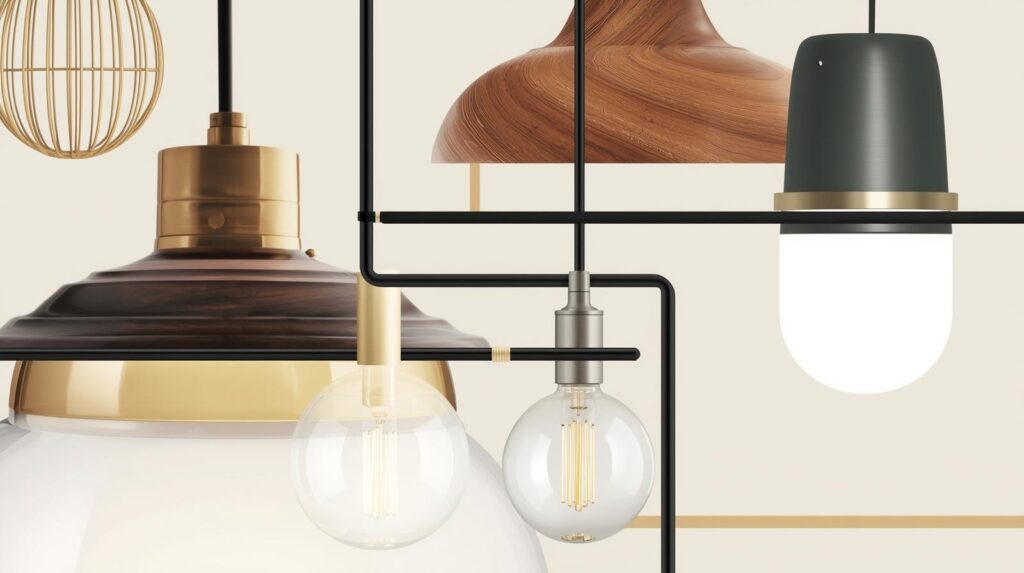
The materials used in mid century pendants contribute significantly to their character and appeal.
Glass
Glass appears in countless mid century pendants. Opaline glass, with its milky translucence, softens light beautifully. Clear glass allows the bulb to become part of the design. Colored glass adds warmth and period authenticity. Textured glass creates visual interest even when unlit.
Quality varies enormously. Vintage glass often has subtle imperfections, bubbles, and variations that add character and prove authenticity. New glass tends to be more uniform, which some prefer for its clean appearance.
Metal
Metal forms the structure of many mid century pendants. Enameled metal in bright colors captures the optimism of the 1950s and 60s. Polished brass and chrome add glamour and sophistication. Painted finishes in black or white recede, letting form take center stage. Aged and patinated metals appeal to those seeking vintage authenticity.
Wood
Wood brings warmth and organic texture to mid century pendants. Teak, rosewood, oak, and walnut appear in designs from Danish and Scandinavian makers. Molded plywood, shaped into compound curves, demonstrates the material’s expressive potential. Solid wood, whether turned on lathes or carved, adds handcrafted quality.
Plastic and Fiberglass
New materials enabled new forms impossible with traditional materials. Fiberglass, molded into complex curves, produced pendants with organic shapes. Plastics offered possibilities for color, transparency, and lightness that expanded design possibilities enormously.
Incorporating Mid Century Pendants Today
Mid century pendants work beautifully in contemporary spaces, whether as authentic vintage pieces or quality reproductions.
Over Dining Tables
A pendant over the dining table creates intimate atmosphere while providing light for meals. The fixture should be sized to the table; a good rule is pendant width roughly one-half to two-thirds table width. Hang 30 to 36 inches above the table surface, adjusted for sight lines across the table.
Sputnik pendants make dramatic statements over dining tables. Danish modern wood pendants add warmth and sophistication. Clusters of opaline globes create rhythmic installations that define the space.
In Kitchen Islands
Kitchen islands benefit from pendant lighting that provides task illumination while adding style. A row of matching pendants creates rhythm and order. Varied pendants at different heights add sculptural interest. Typical height is 28 to 34 inches above the counter.
Enameled metal pendants in bright colors add playful energy to kitchens. Glass globes provide soft, even illumination. Industrial-inspired designs suit modern and loft kitchens.
In Entryways and Foyers
Entry pendants create first impressions, setting the tone for your entire home. A dramatic fixture here welcomes guests and establishes your design sensibility. In two-story foyers, large pendants or clusters make appropriate scale statements.
Sputnik pendants make spectacular entry statements. Bubble pendants in oversized versions create warm, welcoming glow. Clusters of smaller pendants at varying heights fill vertical space dramatically.
Grouped in Living Spaces
Multiple pendants grouped together create sculptural installations that define living areas without walls. A cluster of varied pendants at different heights becomes a focal point. A grid of identical pendants creates dramatic ceiling treatments in large spaces.
Consider sight lines from all angles. Grouped pendants should look good from everywhere in the room and from adjacent spaces.
Authentic Vintage vs. Quality Reproduction
The choice between authentic vintage and quality reproduction involves several considerations.
Authentic vintage pendants carry history, character, and the patina of age. Each has a story, evident in minor wear, original finishes, and period details. Vintage pendants may require rewiring and careful handling. Their value may appreciate over time. For collectors and purists, nothing else will do.
Quality reproductions offer the look with modern electrical components, consistent finishes, and often lower prices. They may be more readily available in desired quantities and styles. Some reproductions are licensed by original manufacturers, ensuring design accuracy. Others offer inspired-by interpretations that capture the spirit without copying specific pieces.
Most mid century lighting collections benefit from a mix, statement pieces in authentic vintage, supporting elements in quality reproduction, and personal touches that make the space uniquely yours.
Caring for Mid Century Pendants
Proper care ensures your mid century pendants remain beautiful for years.
For vintage pendants, professional assessment of electrical systems is essential. Original wiring may be deteriorated or inadequate for modern use. Qualified electricians can rewire safely while preserving original components where possible.
Cleaning methods depend on materials. Glass benefits from gentle cleaning with appropriate products; avoid abrasives that could scratch. Metal finishes require care appropriate to the specific material; research before applying any cleaner. Wood should be dusted regularly and conditioned occasionally with appropriate products.
Regular dusting prevents buildup that dims light output. For glass pendants, occasional washing with mild soap and water restores clarity. Ensure fixtures are completely dry before restoring power.
Conclusion: The Enduring Appeal of Mid Century Pendants
Mid century modern pendants have endured for good reason. They represent high points of design achievement, objects where form and function achieve perfect balance. They capture the optimism and creativity of an era that believed design could improve daily life. And they continue to illuminate our homes with beauty that transcends trends and generations.
Whether you acquire an authentic vintage piece with decades of history or a quality new version of a classic design, a mid century pendant brings something special to your space. It provides not just light but a connection to design heritage, a sculptural presence overhead, and a daily reminder that ordinary objects can be extraordinary when thoughtfully designed.
As you consider adding mid century pendants to your home, take time to understand the options, to appreciate the history behind the designs, and to choose pieces that truly speak to you. The right pendant will reward you not just with beautiful light but with enduring satisfaction, a design companion for years of living well beneath its glow.