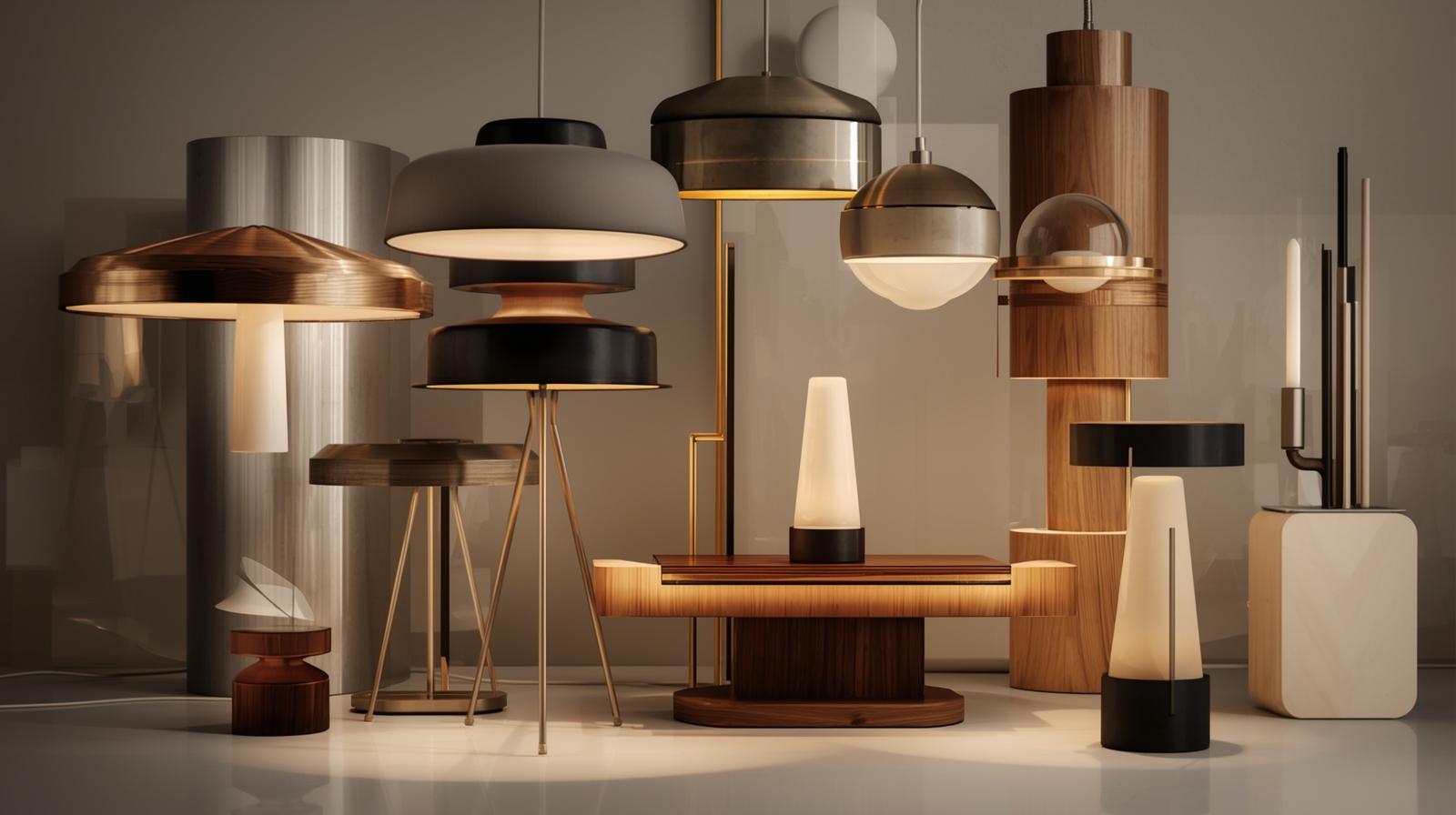
Mid Century Modern Light Fixtures: Illuminating Icons of Design
There is something transcendent about mid century modern light fixtures. Suspended from ceilings, mounted on walls, or standing with sculptural presence, these luminous objects capture the very essence of one of design’s most fertile periods. They embody an era when optimism reigned, when new materials enabled new forms, and when designers believed that everyday objects could and should be beautiful. Mid century modern light fixtures are more than mere illumination; they are sculptural statements, historical artifacts, and functional art that continue to enhance contemporary spaces with their timeless appeal. From the atomic exuberance of Sputnik chandeliers to the organic elegance of Danish modern pendants, from the dramatic arcs of floor lamps to the warm glow of ceramic table lamps, these fixtures have transcended their origins to become enduring classics. This comprehensive guide explores the history, iconic designs, materials, and lasting influence of mid century modern light fixtures.
The Golden Age of Lighting Design
The mid century modern period, roughly 1945 through the 1960s, represented a golden age for lighting design. The post-war era brought unprecedented prosperity, technological advancement, and optimism about the future. New materials emerged from wartime research, manufacturing techniques improved dramatically, and a generation of designers was ready to apply these innovations to creating beautiful, functional objects for everyday life.
Before this period, lighting was largely traditional in form, with ornate details, heavy materials, and an emphasis on decorative effect over pure design. Mid century designers flipped this priority entirely. They sought to create fixtures where beauty emerged from form, proportion, and material rather than from applied decoration. They celebrated the technology of light itself, making bulbs and sockets part of the design rather than hiding them. They experimented with new ways of directing and diffusing light, creating effects impossible with traditional fixtures.
The result was an explosion of creativity that produced some of the most enduring designs in lighting history. Many of these fixtures remain in continuous production today, a testament to their timeless appeal. Others, long out of production, have become highly sought-after collectibles, commanding prices that reflect their enduring value.
Key Principles of Mid Century Modern Lighting
Understanding the principles that guided mid century lighting designers helps explain why these fixtures remain so compelling.
Form Follows Function
The Bauhaus-derived principle that form should follow function guided mid century designers. A light fixture’s shape should arise from its purpose, not from arbitrary decoration. The iconic Arco lamp’s curved stem exists to position light over a table without ceiling mounting; its form is a direct response to its function. The Sputnik’s radiating arms exist to hold multiple light sources; their explosive arrangement celebrates rather than hides this function.
Honest Materials
Mid century designers believed in using materials honestly. Wood should look like wood, showing its grain and natural variations. Metal should look like metal, whether polished to a shine or left with industrial texture. Plastics and fiberglass, new materials at the time, were celebrated for their unique properties rather than disguised as something else. This honesty gives mid century fixtures their authentic character.
Celebration of Structure
Unlike traditional fixtures that hid their workings behind elaborate shades, mid century designs often exposed structure proudly. The skeleton of a lamp, its arms, joints, and sockets, became part of the visual composition. The bulb itself, once hidden, became a design element. This celebration of how things work appealed to the era’s fascination with technology and industry.
Sculptural Presence
Mid century light fixtures are sculptures as much as lighting devices. They command attention even when not illuminated, contributing to the room’s aesthetic through form alone. Designers considered how fixtures would be seen from all angles, how they would interact with surrounding space, how they would create not just light but shadow and atmosphere.
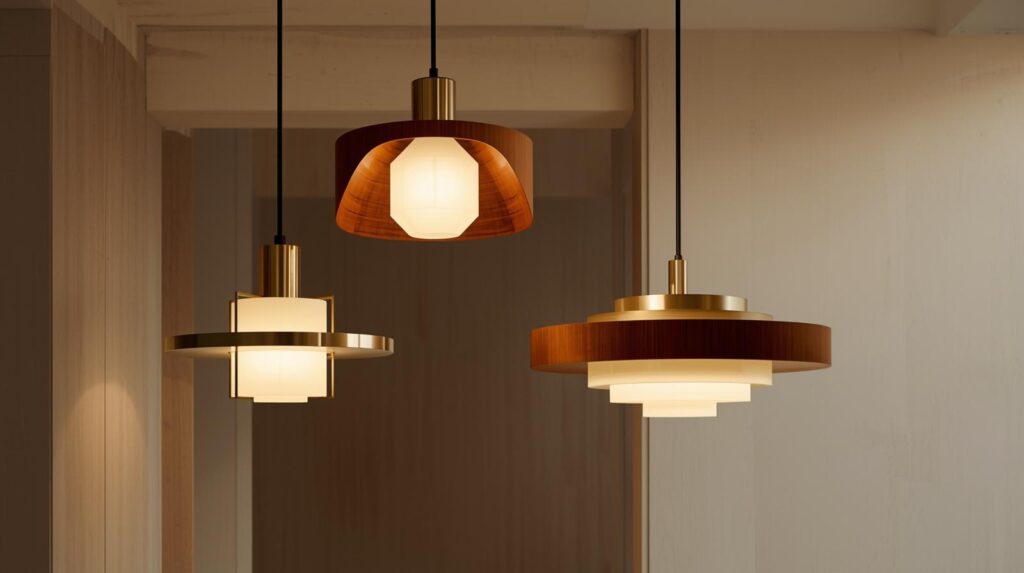
Iconic Mid Century Modern Light Fixtures
Several designs from the period have achieved iconic status, remaining influential and desirable decades after their introduction.
The Sputnik Chandelier
Perhaps no fixture better captures the space-age optimism of the 1950s than the Sputnik chandelier. Named for the Soviet satellite launched in 1957, these fixtures feature a central sphere with multiple arms radiating outward in all directions, each tipped with a light source. The effect is explosive, celebratory, and unmistakably atomic age.
The Sputnik’s design varies widely. Some versions feature straight arms in polished brass, creating a starburst effect. Others use curved arms that suggest orbital paths. The number of arms ranges from modest half-dozen compositions to elaborate fixtures with dozens of lights. What unites them is the sense of energy and outward expansion, the celebration of reaching into space.
The Sputnik works in spaces needing drama and focal presence. Over dining tables, in entryways, in rooms with high ceilings, it commands attention while providing abundant illumination. Its continued popularity speaks to its perfect embodiment of mid century optimism.
The Arco Floor Lamp
The Arco floor lamp, designed in 1962 by Achille and Pier Giacomo Castiglioni for Flos, solves a common problem elegantly. How can you provide overhead lighting without drilling into the ceiling? The Arco’s answer is a dramatic arc of polished stainless steel, rising from a massive Carrara marble base and suspending a perforated aluminum reflector over dining tables or seating areas.
Every element of the Arco serves its purpose. The marble base provides stability without additional weight; its mass anchors the entire structure. The arched stem positions light precisely where needed. The perforated reflector diffuses light while creating beautiful patterns on surrounding surfaces. The hole in the center of the reflector allows a view through to the ceiling, preventing the fixture from feeling too heavy.
The Arco embodies mid century principles perfectly. Its form follows its function absolutely. Its materials are used honestly and expressively. Its structure is celebrated rather than hidden. More than sixty years after its introduction, it remains in production and continues to appear in design magazines and stylish homes worldwide.
George Nelson’s Bubble Lamps
George Nelson’s bubble lamps, introduced in the 1950s, represent another iconic approach. These fixtures feature spherical or organic shapes formed by a steel wire frame covered in a translucent plastic membrane. The result is a soft, glowing orb that diffuses light beautifully while creating a sculptural presence.
Nelson designed numerous variations. The classic globe remains most familiar, but he also created elongated shapes, clusters, and custom installations for specific spaces. The Bubble Lamps offered an alternative to traditional glass fixtures, lighter, less fragile, with a warm, diffused glow that flattered any space.
The manufacturing process was ingenious. Nelson originally developed the lamps using a self-webbing plastic developed for military applications. The material could be sprayed over wire frames, creating seamless, translucent shells. This innovation allowed forms impossible with traditional materials.
The Tripod Floor Lamp
Tripod floor lamps, with three splayed legs supporting a conical shade, became a mid century signature. Designers like Hans Wegner and other Danish modernists embraced the tripod form for its stability and visual lightness. The three legs, often in teak or oak, created an open, airy quality that contrasted with the solid bases of traditional lamps.
These lamps captured the Danish modern emphasis on organic forms and quality materials. The wooden legs showed off beautiful grain, often with hand-carved details where legs joined the stem. The shades, typically in metal or fiberglass, directed light downward while adding a sculptural element. The combination of warm wood and cool metal created visual tension that kept the eye moving.
Tripod lamps work beautifully beside sofas, in corners, and as reading lights where adjustable direction is needed. Their lightweight appearance makes them suitable for smaller spaces where heavier fixtures might overwhelm.
Danish Modern Pendants
Scandinavian designers brought their own sensibilities to pendant lighting. Danish modern pendants feature clean lines, organic forms, and exquisite craftsmanship. Materials like teak, oak, and hand-blown glass create warmth and texture that feels softer than the more industrial American designs.
These pendants often feature simple, elegant forms that direct light downward while concealing the source. The beauty lies in proportion, material, and the quality of light. A teak pendant with a white glass diffuser provides warm, focused illumination for dining tables. A hand-blown glass pendant in organic form becomes a sculptural object while casting soft, ambient light.
Danish modern pendants work beautifully in spaces seeking warmth along with modern sensibility. They bring organic texture to minimalist interiors and add Scandinavian sophistication to eclectic rooms.
The Tulip Table Lamp
Eero Saarinen’s Tulip collection, designed for Knoll, includes table lamps that share the organic elegance of his famous pedestal furniture. These lamps feature single-stem bases that rise from round disks, eliminating the clutter of multiple legs. The forms are pure, sculptural, and unmistakably modern.
The Tulip lamp’s beauty lies in its simplicity. A graceful stem supports a rounded shade, all in smoothly molded materials. The absence of visible joints or hardware creates an object of remarkable purity. Light emerges softly from the shade, providing warm ambient illumination without glare.
Ceramic Table Lamps
Mid century ceramic table lamps brought artistry and warmth to modern interiors. Designers like Edward Wormley, Paul McCobb, and Eva Zeisel created lamps that served as both light sources and sculptural objects.
These lamps featured organic forms, often with textured glazes in earthy matte finishes or glossy bright colors. Some drew inspiration from natural shapes, like leaves or seed pods. Others explored pure geometric forms with hand-crafted variations. Each lamp was unique, bearing the marks of its making.
Ceramic lamps work beautifully in mid century interiors, adding warmth and handcrafted quality to balance industrial elements. Their sculptural presence makes them focal points even when unlit.
Materials in Mid Century Light Fixtures
The materials used in mid century fixtures contribute significantly to their character and appeal.
Glass
Glass appears in countless mid century fixtures, from simple globes to elaborate hand-blown creations. Opaline glass, with its milky translucence, softens light beautifully, creating warm, even illumination. Clear glass allows the bulb to become part of the design, celebrating the technology of light. Colored glass, particularly amber, green, and blue, adds warmth and period authenticity. Textured glass creates visual interest even when unlit.
Metal
Metal forms the structure of most mid century fixtures. Enameled metal in bright colors captures the optimism of the 1950s and 60s, with shades of turquoise, pink, yellow, and orange adding playful energy. Polished brass and chrome add glamour and sophistication, reflecting light and surrounding colors. Painted finishes in black or white recede, letting form take center stage. Aged and patinated metals appeal to those seeking vintage authenticity.
Wood
Wood appears in mid century lighting influenced by Scandinavian and organic modern design. Teak, rosewood, oak, and walnut bring warmth and natural beauty. Molded plywood, shaped into compound curves, demonstrates the material’s expressive potential. Solid wood, whether turned on lathes or carved, adds handcrafted quality. Wood fixtures work particularly well in spaces with other natural materials.
Plastic and Fiberglass
New materials enabled new forms impossible with traditional materials. Fiberglass, molded into complex curves, produced fixtures with organic shapes that seemed to defy gravity. Plastics offered possibilities for color, transparency, and lightness that expanded design possibilities enormously. These materials, once revolutionary, now carry their own vintage appeal.
Incorporating Mid Century Light Fixtures Today
Mid century light fixtures work beautifully in contemporary spaces, whether as authentic vintage pieces or quality reproductions.
As Focal Points
A striking mid century fixture can serve as a room’s focal point, drawing the eye and establishing design credentials. A Sputnik chandelier over a dining table, an Arco floor lamp beside a sofa, a cluster of bubble lamps in an entryway, these fixtures command attention while providing essential illumination. When a fixture makes this kind of statement, surrounding elements should be simpler, allowing it to shine.
In Period Rooms
For those who love mid century design, authentic fixtures help create cohesive period rooms. Combine with furniture from the same era, an Eames lounge chair, a Wegner dining table, a Nelson bench, for authentic period looks. Use period-appropriate color palettes and materials throughout. The result transports you to the golden age of modern design.
As Contrast
Mid century fixtures also work beautifully as contrast in thoroughly contemporary spaces. The organic curves of a Danish modern pendant soften the hard edges of minimalist architecture. The warm glow of opaline glass adds softness to an all-white room. The atomic energy of a Sputnik adds excitement to calm, neutral spaces. This juxtaposition creates dynamic, interesting interiors.
In Eclectic Settings
Mid century lighting shines in eclectic spaces that mix periods and styles. A Sputnik chandelier works alongside contemporary furniture, traditional pieces, and global artifacts. The key lies in finding common threads, perhaps in color, material, or scale, that unite disparate elements. The fixture becomes part of a collected, personal composition.
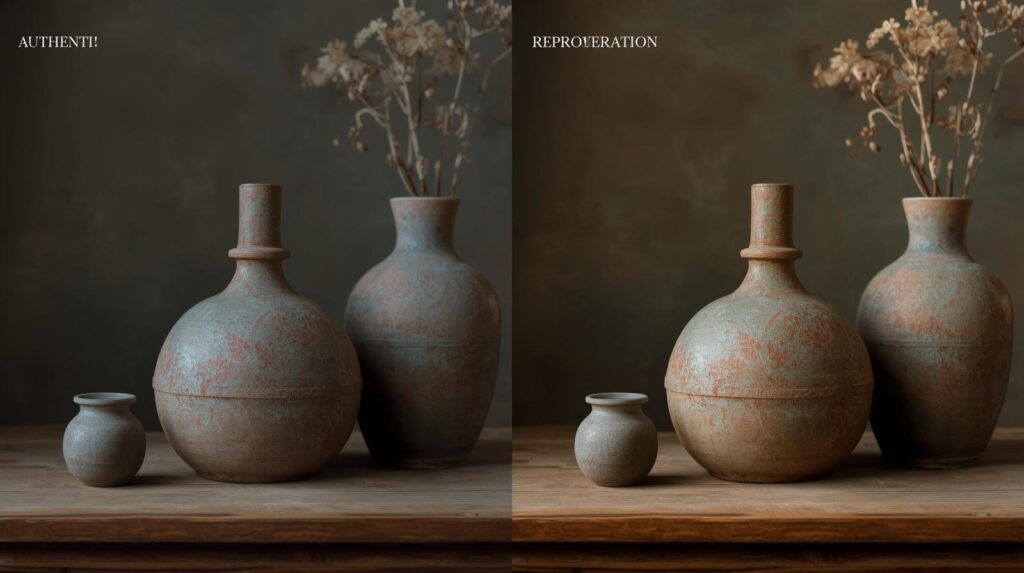
Authentic Vintage vs. Quality Reproductions
The choice between authentic vintage and quality reproduction involves several considerations.
Authentic vintage fixtures carry history, character, and the patina of age. Each has a story, evident in minor wear, original finishes, and period details. Vintage fixtures may require rewiring and careful handling. Their value may appreciate over time. For collectors and purists, nothing else will do.
Quality reproductions offer the look with modern electrical components, consistent finishes, and often lower prices. They may be more readily available in desired quantities and styles. Some reproductions are licensed by original manufacturers, ensuring design accuracy. Others offer inspired-by interpretations that capture the spirit without copying specific pieces.
Most mid century lighting collections benefit from a mix, statement pieces in authentic vintage, supporting elements in quality reproduction, and personal touches that make the space uniquely yours.
Conclusion: The Enduring Legacy of Mid Century Light
Mid century modern light fixtures have endured for good reason. They represent high points of design achievement, objects where form and function achieve perfect balance. They capture the optimism and creativity of an era that believed design could improve daily life. And they continue to illuminate our homes with beauty that transcends trends and generations.
Whether you acquire an authentic vintage piece with decades of history or a quality new version of a classic design, a mid century light fixture brings something special to your space. It provides not just light but a connection to design heritage, a sculptural presence, and a daily reminder that ordinary objects can be extraordinary when thoughtfully designed.
As you consider adding mid century lighting to your home, take time to understand the options, to appreciate the history behind the designs, and to choose pieces that truly speak to you. The right fixture will reward you not just with beautiful light but with enduring satisfaction, a design companion for years of living well beneath its glow.