Mid Century Floor Lamp: Iconic Lighting for Timeless Style
There are few design objects as instantly recognizable and enduringly beloved as the mid century floor lamp. Emerging from one of the most creative periods in modern design, these lamps have transcended their historical origins to become staples of contemporary interiors. With their clean lines, organic forms, and marriage of form and function, mid century floor lamps capture the essential spirit of an era that continues to influence how we live and decorate today. Whether you are a devoted collector of authentic vintage pieces or simply appreciate the aesthetic, understanding mid century floor lamps enriches your appreciation of design history while helping you make informed choices for your own spaces. This comprehensive guide explores the history, characteristics, types, and enduring appeal of mid century floor lamps.
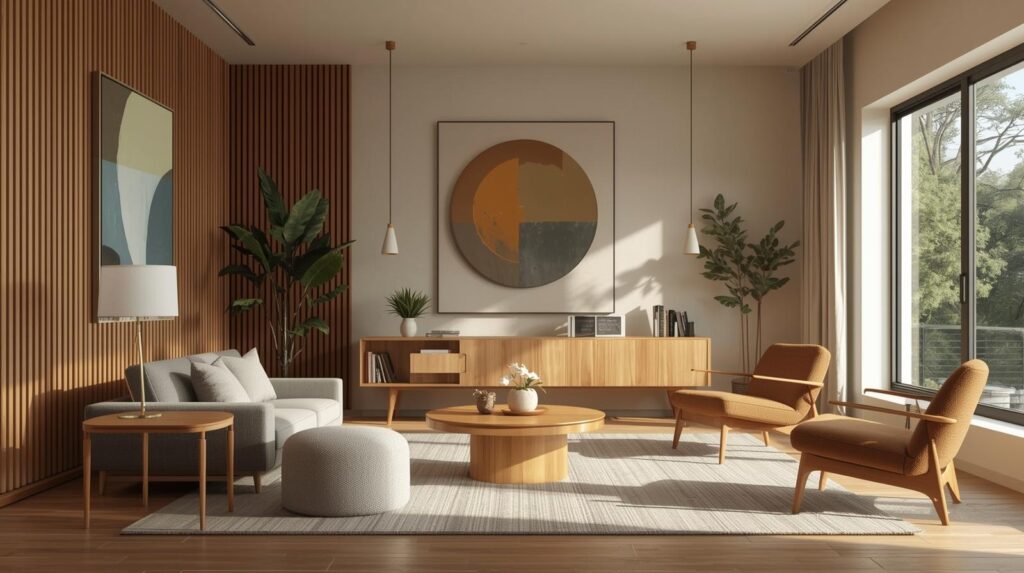
Understanding Mid Century Modern Design
Before diving into floor lamps specifically, it is essential to understand the broader context of mid century modern design. This influential movement emerged after World War II and flourished roughly from 1945 to 1969, a period of optimism, innovation, and unprecedented prosperity in the Western world.
Mid century modern design was characterized by several key principles. Functionality came first; objects should serve their purpose effectively before anything else. Form followed function, meaning that beauty emerged naturally from practical considerations rather than being applied as decoration. Honest use of materials meant that wood should look like wood, metal like metal, with no false finishes or imitations. Clean lines and minimal ornamentation created objects that felt fresh and modern rather than weighed down by history.
These principles applied to everything from architecture to furniture to lighting. Designers sought to create objects that would improve daily life through thoughtful design, making the ordinary extraordinary through attention to proportion, material, and detail. The result was a body of work that remains influential more than half a century later.
The Golden Age of Floor Lamp Design
The mid century period represented a golden age for lighting design. New materials and manufacturing techniques, combined with the era’s design philosophy, produced floor lamps unlike anything that had come before.
Before mid century, floor lamps were largely traditional in form, with weighted bases, vertical poles, and fabric shades that diffused light. They were decorative objects first, lighting sources second. Mid century designers flipped this priority, creating lamps where the lighting itself drove the design. They experimented with new forms, new materials, and new ways of directing and diffusing light.
The development of new materials proved crucial. Molded plywood, pioneered by Charles and Ray Eames, allowed organic curves that were impossible with traditional woodworking. Fiberglass, also championed by the Eameses, enabled complex sculptural forms. Plastics in various forms offered new possibilities for color and transparency. Metals could be bent, welded, and finished in ways that created sleek, modern forms.
Perhaps most importantly, mid century designers thought differently about light itself. Rather than simply hiding the light source behind a shade, they made the bulb part of the design, celebrating the technology that made illumination possible. They experimented with ways to direct light, to create indirect illumination that bounced off walls and ceilings, to use light sculpturally within spaces.
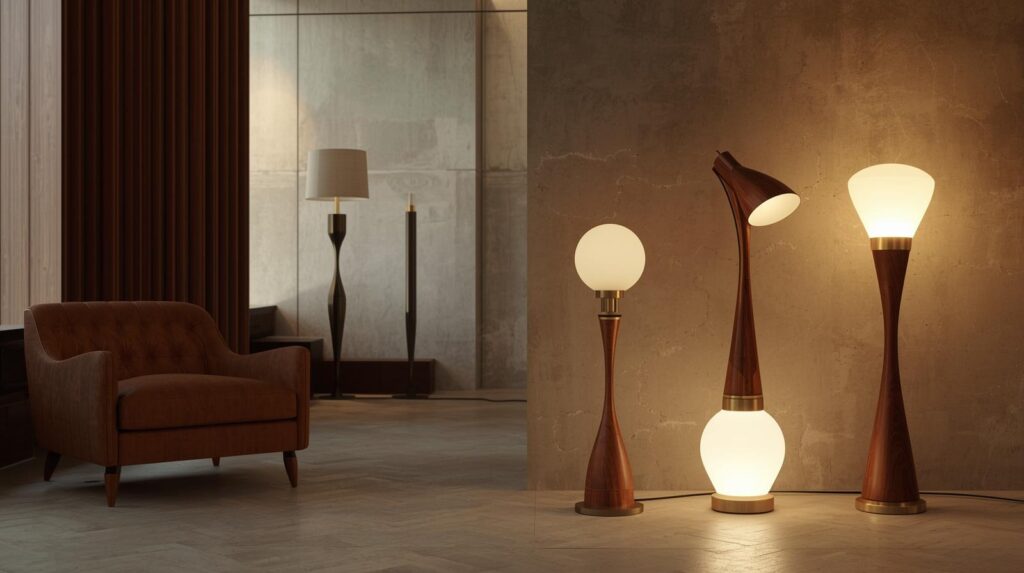
Iconic Mid Century Floor Lamp Designs
Several floor lamp designs from the mid century period have achieved iconic status, remaining in production and inspiring countless interpretations.
The Arco Floor Lamp
Perhaps the most famous mid century floor lamp of all, the Arco was designed in 1962 by Achille and Pier Giacomo Castiglioni for Flos. This extraordinary lamp addresses a common problem: how to provide overhead lighting without drilling into the ceiling. The solution was a dramatic arc of polished stainless steel, rising from a massive Carrara marble base and suspending a perforated aluminum reflector over dining tables or seating areas.
The Arco embodies mid century principles perfectly. Its form follows its function absolutely; every element serves a purpose. The marble base provides stability without additional weight. The arched stem positions light precisely where needed. The perforated reflector diffuses light while creating beautiful patterns on surrounding surfaces. More than six decades after its introduction, the Arco remains in production and continues to appear in design magazines and stylish homes worldwide.
The Tripod Floor Lamp
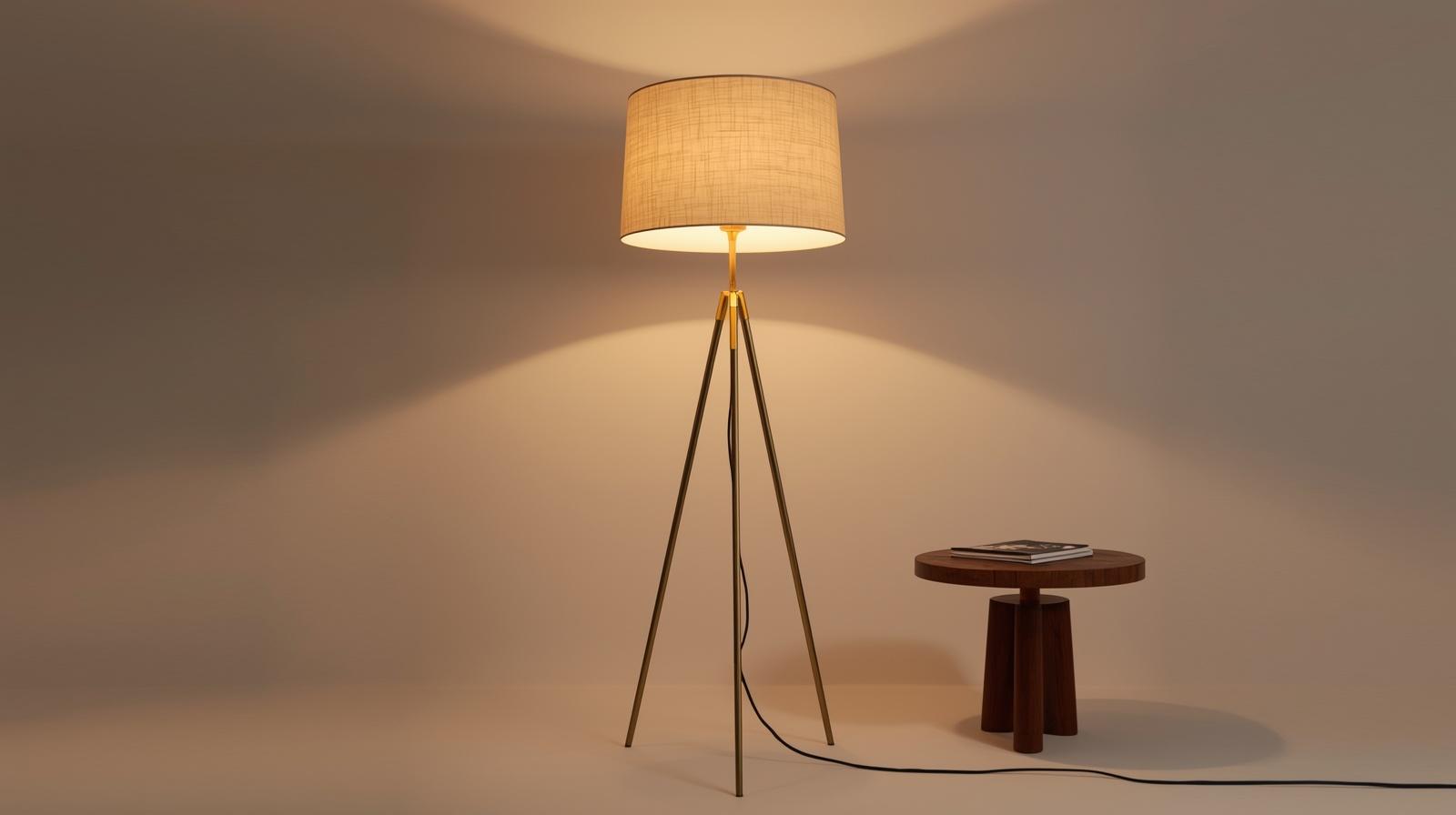
Tripod floor lamps, with three splayed legs supporting a conical shade, became a mid century signature. Designers like Hans Wegner and other Danish modernists embraced the tripod form for its stability and visual lightness. The three legs, often in teak or oak, created an open, airy quality that contrasted with the solid bases of traditional lamps. The shades, typically in metal or fiberglass, directed light downward while adding a sculptural element.
These lamps captured the Danish modern emphasis on organic forms and quality materials. The wooden legs showed off beautiful grain, often with hand-carved details where legs joined the stem. The combination of warm wood and cool metal or fiberglass created visual tension that kept the eye moving.
The Arc Floor Lamp
Beyond the specific Arco design, arc floor lamps in general became mid century staples. These lamps feature a curved stem that extends outward, positioning the light source away from the base. They solved the problem of lighting seating areas without requiring tables for lamps, and they created dramatic sculptural forms that defined spaces.
Arc lamps ranged from minimalist metal tubes to more elaborate designs with counterweights and adjustable arms. Some featured shades that could be rotated to direct light precisely. Others used bare bulbs exposed behind glass or metal screens that created patterns of light and shadow.
The Torchiere Floor Lamp
Torchiere lamps, which direct light upward toward the ceiling, gained popularity during the mid century period. These lamps provided indirect ambient illumination that bounced off ceilings and walls, creating soft, diffuse light perfect for living spaces. The torchiere form, with its upright stem and upward-facing bowl, became a canvas for sculptural expression.
Some torchieres featured simple, elegant bowls in opaline glass or metal. Others, like those designed by Tommi Parzinger, used perforated metal that cast intricate shadow patterns on ceilings. The upward light created a warm glow that made rooms feel larger and more inviting.
Key Characteristics of Mid Century Floor Lamps
While mid century floor lamps vary enormously in specific design, certain characteristics unite them and distinguish them from other periods.
Clean, Expressive Lines
Mid century floor lamps feature lines that are both clean and expressive. There is no extraneous ornament, no decoration applied for its own sake. Yet the lines are not merely functional; they have a sculptural quality that makes each lamp a piece of art. A curve is not just a way to position light but a statement of form. A joint is not just a connection but an opportunity for visual interest.
Honest Materials
Materials in mid century floor lamps are used honestly and expressively. Wood shows its grain, often with minimal finish. Metal may be polished, brushed, or painted, but it always looks like metal. Plastics and fiberglass are celebrated for their unique qualities rather than disguised as something else. This honesty of materials gives mid century lamps their distinctive character and authenticity.
Sculptural Quality
Mid century floor lamps are sculptures as much as lighting devices. They command attention even when not illuminated, contributing to the room’s aesthetic through form alone. Designers thought about how lamps would be seen from all angles, how they would interact with surrounding space, how they would create not just light but shadow and atmosphere.
Integration of Form and Function
Perhaps most importantly, mid century floor lamps achieve perfect integration of form and function. They are not beautiful objects that happen to provide light, nor purely functional devices with beauty as an afterthought. Form and function are inseparable, each arising from the other. This integration gives mid century lamps their timeless quality; they feel as right today as they did sixty years ago because they were designed to solve real problems in beautiful ways.
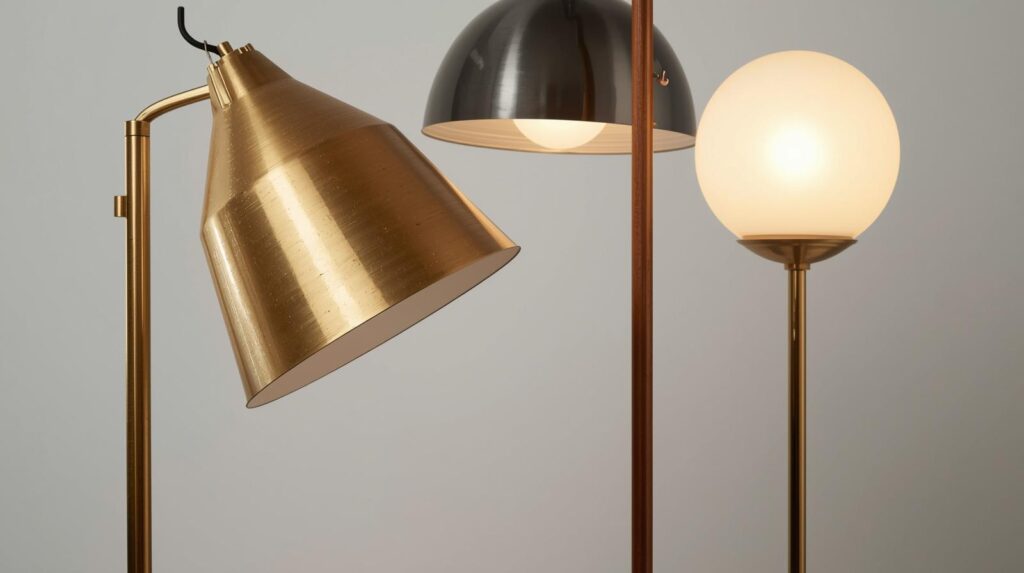
Materials in Mid Century Floor Lamps
The materials used in mid century floor lamps contributed significantly to their distinctive character and continue to define the aesthetic today.
Wood
Wood, particularly teak, oak, and walnut, appears frequently in mid century floor lamps, especially those from Scandinavian designers. The warm tones and organic grain of wood provided contrast to the cool precision of metal and the industrial quality of plastic. Wood was often used for bases and stems, sometimes for entire lamp structures. The Danish modern tradition particularly celebrated wood, with designs that showcased the material’s natural beauty through minimal finishing.
Metal
Metal appears in virtually every mid century floor lamp, whether as primary structure or accent. Brass, often lacquered to prevent tarnishing, brought warmth and luxury. Chrome and polished aluminum contributed to the era’s fascination with modern materials. Black enameled metal provided graphic contrast. Metal was bent, welded, and formed into the graceful curves and precise angles that characterize mid century design.
Glass
Glass played important roles in mid century floor lamps, both as diffusers and as sculptural elements. Opaline glass, with its milky translucence, softened light beautifully. Clear glass allowed bare bulbs to become design elements. Colored glass, particularly amber and green, added warmth and personality. Glass shades ranged from simple cylinders to complex, hand-blown forms.
Fiberglass and Plastics
New materials enabled new forms. Fiberglass, often colored in vibrant hues, could be molded into complex curves impossible with traditional materials. Plastics offered transparency, color, and the ability to create seamless forms. Designers like the Eameses and George Nelson embraced these materials enthusiastically, creating lamps that could only exist in the mid century era.
Authentic Vintage vs. Quality Reproductions
For those seeking mid century floor lamps, the choice between authentic vintage pieces and quality reproductions involves several considerations.
Authentic Vintage
Authentic vintage lamps offer the real thing, objects with history, provenance, and the patina of age. They connect you directly to the design heritage of the mid century period. Each vintage lamp has a story, even if only of the decades it has spent illuminating someone’s home.
However, vintage lamps require careful consideration. Electrical systems may need updating to meet modern safety standards. Original cords may be frayed or unsafe. Sockets may not accommodate modern bulbs. Professional restoration by qualified specialists ensures safety while preserving authenticity. Prices for rare or desirable models can be substantial, though bargains still exist for those willing to search.
Quality Reproductions
Many iconic mid century designs remain in production, licensed by the original manufacturers or their successors. These authorized reproductions offer the exact designs, often with improvements in materials or manufacturing, and with modern electrical components that meet current safety standards. They provide the authentic design experience without the uncertainty of vintage sourcing.
Other manufacturers offer inspired-by interpretations, capturing the spirit of mid century design without copying specific pieces. These range from high-quality designs that honor the aesthetic to budget options that approximate the look. The range of quality and price means options for every budget.
What to Look For
Whether vintage or new, certain qualities distinguish excellent mid century floor lamps. Look for substantial construction; quality materials and careful assembly. Check proportions; a lamp should feel balanced and intentional from every angle. Consider the light quality; good mid century lamps create beautiful illumination, not just attractive forms. And trust your eye; the best lamp for your space is the one that speaks to you.
Incorporating Mid Century Floor Lamps in Contemporary Interiors
Mid century floor lamps work beautifully in a wide range of contemporary settings, from period-authentic rooms to thoroughly modern spaces.
As Statement Pieces
A striking mid century floor lamp can serve as a room’s focal point, drawing the eye and establishing design credentials. Place an Arco lamp to define a dining area. Position a sculptural tripod lamp beside a sofa to create a reading corner. Use a dramatic torchiere to add height and presence to a seating group. When a lamp makes this kind of statement, surrounding elements should be simpler, allowing it to shine.
In Period-Inspired Rooms
For those who love mid century design, floor lamps help create authentic period rooms. Combine with furniture from the same era, perhaps an Eames lounge chair, a Wegner dining table, or a Nelson bench. Use period-appropriate color palettes and materials throughout. The result is a cohesive look that transports you to the golden age of modern design.
As Contrast in Contemporary Spaces
Mid century floor lamps also work beautifully as contrast in thoroughly contemporary spaces. The organic curves of a tripod lamp soften the hard edges of minimalist architecture. The warm wood of a Danish modern design adds warmth to an all-white room. The sculptural quality of a classic lamp provides visual interest in spaces that might otherwise feel too spare. This juxtaposition of old and new, of classic and contemporary, creates dynamic, interesting interiors.
In Eclectic Settings
Mid century floor lamps shine in eclectic spaces that mix periods and styles. A classic arc lamp works alongside contemporary furniture, traditional pieces, and global artifacts. The key lies in finding common threads, perhaps in color, material, or scale, that unite disparate elements. The lamp becomes part of a collected, personal composition rather than a period piece in a period room.
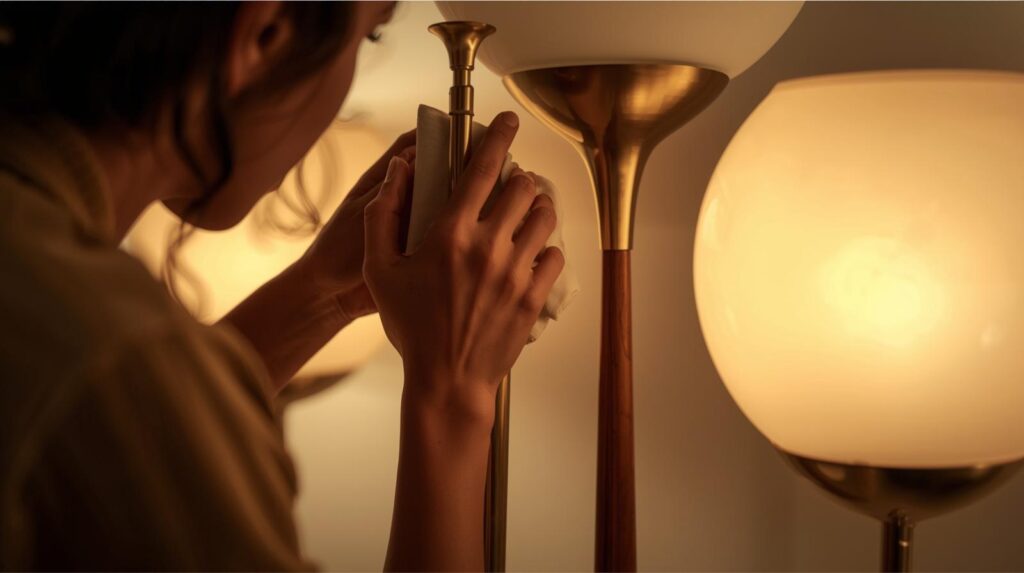
Caring for Mid Century Floor Lamps
Proper care ensures that mid century floor lamps continue to provide beauty and illumination for years to come.
For vintage lamps, professional assessment of electrical systems is essential. Original wiring may be deteriorated or inadequate for modern use. Qualified restoration specialists can rewire safely while preserving original components where possible. This investment protects both the lamp and your home.
Cleaning methods depend on materials. Wood benefits from gentle dusting and occasional conditioning with appropriate products. Metal may be cleaned with specialized polishes; research the specific finish before applying anything. Glass can be cleaned with standard glass cleaners. Fiberglass and plastics require gentle cleaning to avoid scratching.
Placement matters for both safety and preservation. Keep lamps away from direct sunlight, which can fade finishes and damage some materials. Ensure adequate ventilation around electrical components. Position lamps where they won’t be knocked over by traffic or pets.
Conclusion: The Enduring Appeal of Mid Century Floor Lamps
Mid century floor lamps have endured for good reason. They represent a high point of design achievement, objects where form and function achieve perfect balance. They capture the optimism and creativity of an era that believed design could improve daily life. And they continue to illuminate our homes with beauty that transcends trends and generations.
Whether you acquire an authentic vintage piece with decades of history or a quality new version of a classic design, a mid century floor lamp brings something special to your space. It provides not just light but a connection to design heritage, a sculptural presence, and a daily reminder that ordinary objects can be extraordinary when thoughtfully designed.
As you consider adding a mid century floor lamp to your home, take time to understand the options, to appreciate the history behind the designs, and to choose a piece that truly speaks to you. The right lamp will reward you not just with beautiful light but with enduring satisfaction, a design companion for years of living well.