Mid Century Dining: Creating the Perfect Retro-Inspired Gathering Space
There is something special about a dining room furnished in mid century style. It captures an era when dining was an event, when families gathered around tables for conversation and connection, when design believed it could make everyday life more beautiful. Mid century dining design, with its clean lines, organic forms, and honest materials, creates spaces that are simultaneously stylish and welcoming, sophisticated and comfortable. Whether you are a devoted collector of authentic vintage pieces or simply drawn to the aesthetic, understanding mid century dining helps you create gathering spaces that honor design history while serving contemporary life. This comprehensive guide explores the furniture, lighting, accessories, and principles that define mid century dining at its best.
Understanding Mid Century Dining Philosophy
Before exploring specific pieces, it is essential to understand what makes mid century dining distinct. The mid century modern movement, flourishing roughly from 1945 through the 1960s, approached dining with particular philosophy. This was an era of optimism, when families gathered for meals, when entertaining friends at home became central to social life, and when designers believed they could improve daily life through thoughtful design.
Mid century dining design emphasizes several key principles. Functionality comes first; furniture should serve its purpose effectively. Beauty emerges from form, proportion, and material rather than applied decoration. Honest use of materials means wood shows its grain, metal its finish. Comfort matters, but without sacrificing clean lines. The result is dining spaces that feel both elegant and approachable, designed for real use, not just for show.
The mid century dining room was typically more casual than its formal Victorian or Edwardian predecessors. While still a special space, it welcomed family dinners, children’s meals, and casual gatherings alongside more formal entertaining. This flexibility, this ability to serve everyday life while rising to special occasions, remains central to the appeal of mid century dining today.
The Dining Table: Center of It All
The dining table naturally serves as the focal point of any dining room, and in mid century design, it receives particular attention.
Iconic Mid Century Table Designs
Several table designs from the mid century period have achieved iconic status, remaining in production and influencing countless interpretations.
The Eames Dining Table, designed by Charles and Ray Eames, exemplifies mid century principles. With its simple rectangular top and graceful wire base, it achieves remarkable lightness and elegance. The table appears to float, its base providing stability without visual weight. Available in various sizes and finishes, it works in spaces from intimate breakfast nooks to grand dining rooms.
George Nelson’s tables, particularly those with his distinctive pedestal bases, represent another classic approach. The single central support eliminates leg interference, allowing comfortable seating around the entire perimeter. The sculptural bases themselves, often in white or black enameled metal, add visual interest while serving essential function.
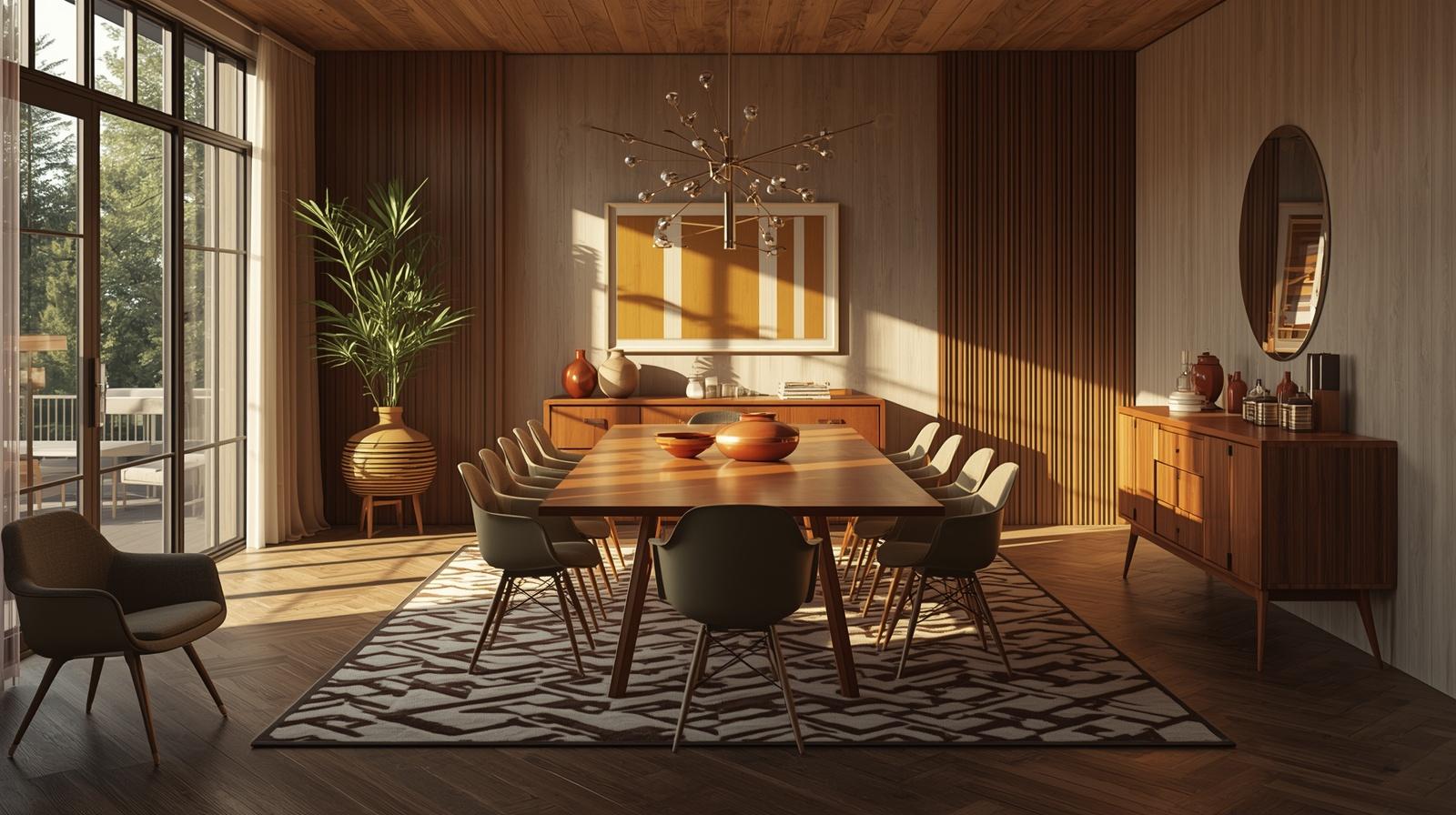
Danish modern tables, with their warm teak or rosewood tops and tapered legs, bring organic warmth to mid century dining. The wood’s beautiful grain, carefully book-matched across the surface, becomes the primary decoration. Simple, elegant, and exquisitely crafted, these tables have become highly collectible.
Choosing Your Mid Century Table
When selecting a mid century dining table, several considerations guide the choice.
Size matters enormously. Allow at least 24 inches of table width per person for comfortable dining, more if you frequently serve family style. Consider the room’s dimensions; a table too large overwhelms, one too small looks insignificant. Standard heights are 29 to 30 inches, comfortable for most dining chairs.
Shape affects both function and flow. Rectangular tables work well in most spaces and accommodate many diners. Round tables encourage conversation and work beautifully in square rooms. Oval tables combine the advantages of both. Consider how you typically use your dining space and choose accordingly.
Material affects both appearance and maintenance. Solid wood requires care but develops beautiful patina over time. Veneered surfaces offer stability and affordability but require protection from moisture and heat. Laminate tops, common in some mid century designs, provide durability and easy cleaning.
Mid Century Dining Chairs
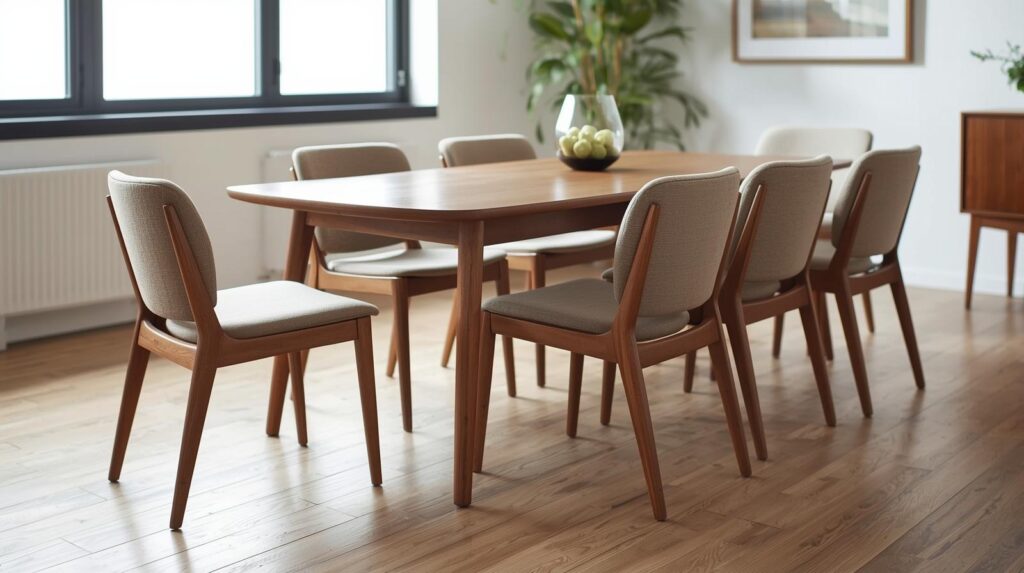
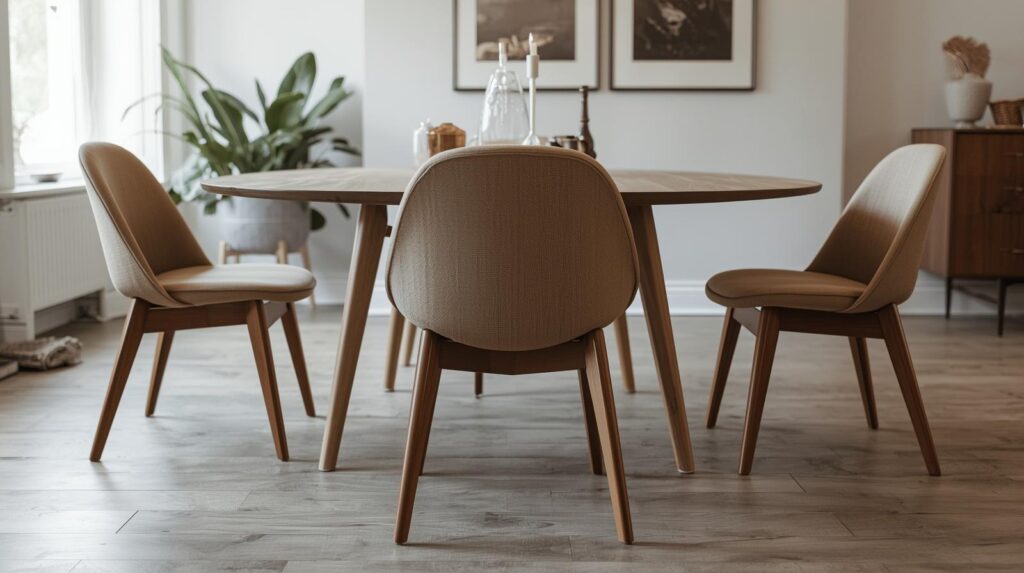
Chairs surround the table and significantly affect both comfort and appearance.
Classic Chair Styles
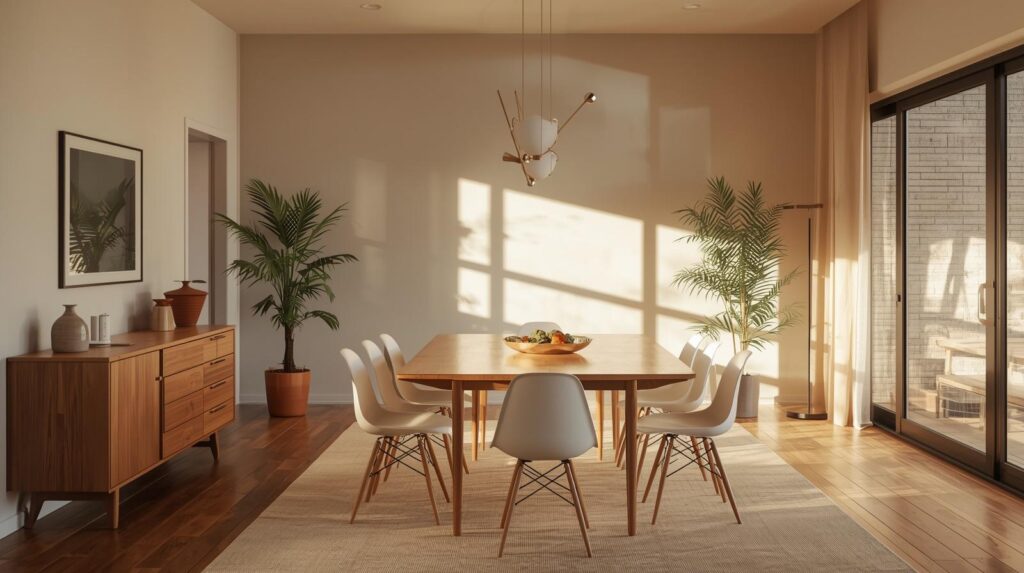
The Eames Dining Chair (DSW) remains perhaps the most iconic mid century dining chair. With its molded plastic or fiberglass seat, wooden legs, and optional armrests, it combines comfort, durability, and distinctive style. The seat’s organic form follows the human body, providing surprising comfort. Available in numerous colors, these chairs allow personal expression while maintaining design integrity.
The Wishbone Chair, designed by Hans Wegner in 1949, represents Danish modern at its finest. Its curved back, Y-shaped splat, and woven paper cord seat create an object of extraordinary beauty and comfort. Each chair requires hours of handcrafting, making it expensive but enduringly valuable.
Tulip chairs, designed by Eero Saarinen, eliminate chair legs entirely with their single pedestal base. The sculptural forms, in white or black enameled fiberglass, create a unified look around any table. The absence of legs allows easy movement and creates visual lightness.
Mixing and Matching
While matched sets create formal unity, mid century dining often embraces mixing. A set of identical Eames chairs around a Danish modern table creates eclectic interest. Vintage chairs mixed with new ones adds collected character. The key lies in finding common threads, perhaps in color, material, or era, that unite disparate pieces.
Consider comfort when selecting chairs. Mid century designs vary in comfort, and what works for a brief meal may prove uncomfortable for long dinner parties. If possible, test chairs before committing, or ensure return policies allow exchanges.
Mid Century Dining Storage
Sideboards, buffets, and hutches provide essential storage while contributing to the room’s design.
Iconic Storage Pieces
The Eames Storage Unit (ESU), designed in 1949, remains highly sought after. With its industrial-inspired frame, colorful panels, and modular configuration, it provides flexible storage while making a design statement. Original ESUs command high prices; reproductions and inspired interpretations offer more accessible options.
Danish modern sideboards, in teak or rosewood, bring warmth and craftsmanship to dining storage. Long, low, and elegantly proportioned, they provide generous storage while serving as buffet surfaces during entertaining. The beautiful wood grain, carefully matched across drawer fronts, provides natural decoration.
George Nelson’s storage pieces, with their distinctive joinery and hardware, offer another classic option. His designs range from simple credenzas to elaborate comprehensive storage systems.
Function and Placement
Consider what you need to store: table linens, serving pieces, dinnerware, bar supplies. Choose pieces with appropriate configurations, drawers for flat items, cabinets for larger pieces. Interior organization, adjustable shelves, felt-lined drawers, adds function.
Placement affects both function and appearance. Sideboards typically sit against walls, serving as buffet surfaces during meals. In larger rooms, they can define spaces or provide room division. Ensure adequate clearance for serving and for opening drawers and doors.
Mid Century Dining Lighting
Lighting transforms the dining experience, creating atmosphere while providing essential illumination.
Iconic Pendant Lights
The Sputnik chandelier, with its explosive arms and multiple lights, makes dramatic statements over mid century dining tables. Its atomic age exuberance captures the era’s optimism while providing abundant light. Available in sizes from intimate to enormous, it works in various spaces.
George Nelson’s bubble lamps, in spherical or organic forms, provide soft, diffused light that flatters diners and food alike. Their translucent membranes create warm glow without glare. Multiple pendants at varying heights add sculptural interest.
Danish modern pendants, in teak, rosewood, or hand-blown glass, bring organic warmth to dining lighting. Their simple, elegant forms direct light downward while concealing the source, creating intimate pools of illumination over tables.
Pendant Placement
Proper pendant height affects both function and appearance. Standard recommendation is 30 to 36 inches above the table surface, adjusted for table height and sight lines across the table. Pendants hung too high lose connection to the table; those hung too low obstruct views.
Consider pendant size relative to table. A good rule is pendant width roughly one-half to two-thirds table width. Multiple smaller pendants can achieve similar effect while adding rhythm.
Dimmers and Controls
Dimmers prove invaluable in dining rooms, allowing adjustment from bright for serving and cleaning to soft for intimate meals. Install dimmers on all dining lighting for maximum flexibility. Smart controls allow preset scenes for different occasions.
Mid Century Dining Colors and Materials
Color and material choices significantly affect the overall feel of mid century dining spaces.
Classic Color Palettes
Mid century dining colors range from warm wood tones to vibrant accent hues. Danish modern spaces often feature natural wood as the dominant color, with walls in white or soft neutrals allowing the grain to shine. American mid century embraced brighter colors, turquoise, pink, yellow, and orange as accents against neutral backdrops.
For authentic period looks, research color combinations from the era. Paint companies offer mid century color collections based on historical research. These authentic palettes ensure historical accuracy while providing harmonious combinations.
Material Mixes
Mid century dining celebrates material honesty. Wood shows its grain; metal its finish; plastic its color and form. Mixing materials adds visual interest while respecting each material’s nature. A wood table with metal chairs, a stone top on a wood base, glass shelves in a metal frame, these combinations create dynamic tension while maintaining design integrity.
Natural materials, wood, stone, leather, bring warmth and authenticity. Manufactured materials, plastic, fiberglass, laminate, add color and possibilities. The key lies in using each appropriately, celebrating rather than disguising their nature.
Mid Century Dining Accessories
The finishing touches bring personality and completeness to mid century dining spaces.
Tableware
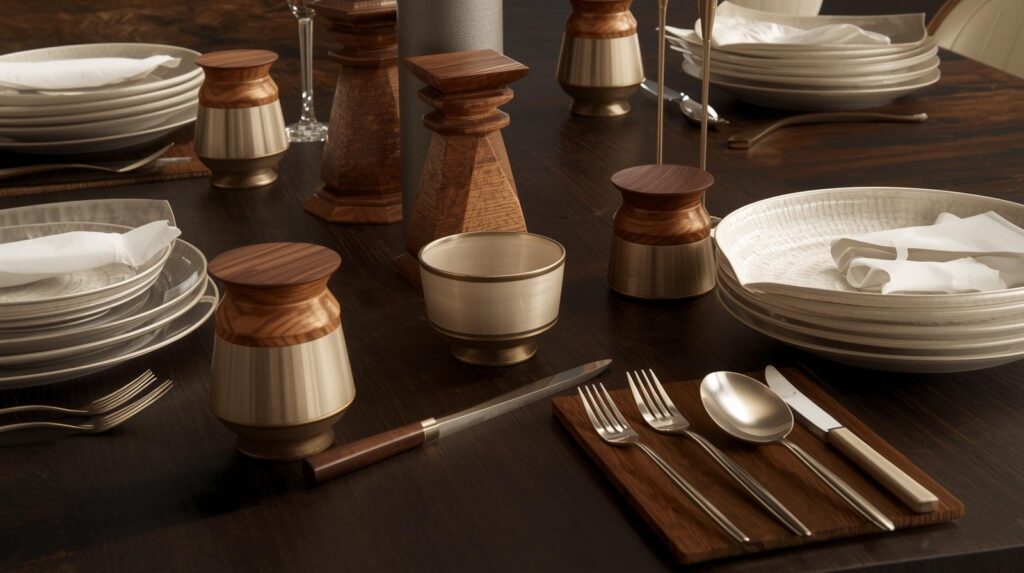
Mid century tableware designs, from Russel Wright’s American Modern to Eva Zeisel’s Hallcraft, remain highly collectible. Their organic forms, bright colors, and thoughtful designs elevate everyday dining. Mixing vintage pieces with contemporary tableware creates eclectic tablescapes with mid century spirit.
For special occasions, mid century serving pieces, casseroles, platters, and pitchers, add authenticity and charm. Many are still readily available and surprisingly affordable, allowing you to build collections over time.
Centerpieces
Mid century centerpieces tend toward the sculptural rather than the floral. Abstract ceramic pieces, wood sculptures, and glass forms provide visual interest without blocking conversation. When flowers appear, they’re often arranged simply, a few dramatic blooms rather than abundant bouquets.
Candlesticks and candleholders in ceramic, wood, or metal add warmth and ambiance. Mid century designs range from simple tapers to elaborate multi-armed holders. Groupings of varying heights create dynamic compositions.
Textiles
Table linens in mid century patterns add color and pattern while protecting surfaces. Vintage fabrics feature atomic prints, abstract patterns, and bold geometries. Reproduction fabrics offer similar looks with modern durability.
Placemats and runners in natural materials, woven straw, bamboo, or grass cloth, add texture while protecting tables. Their organic warmth complements wood and ceramic beautifully.
Creating the Complete Mid Century Dining Room
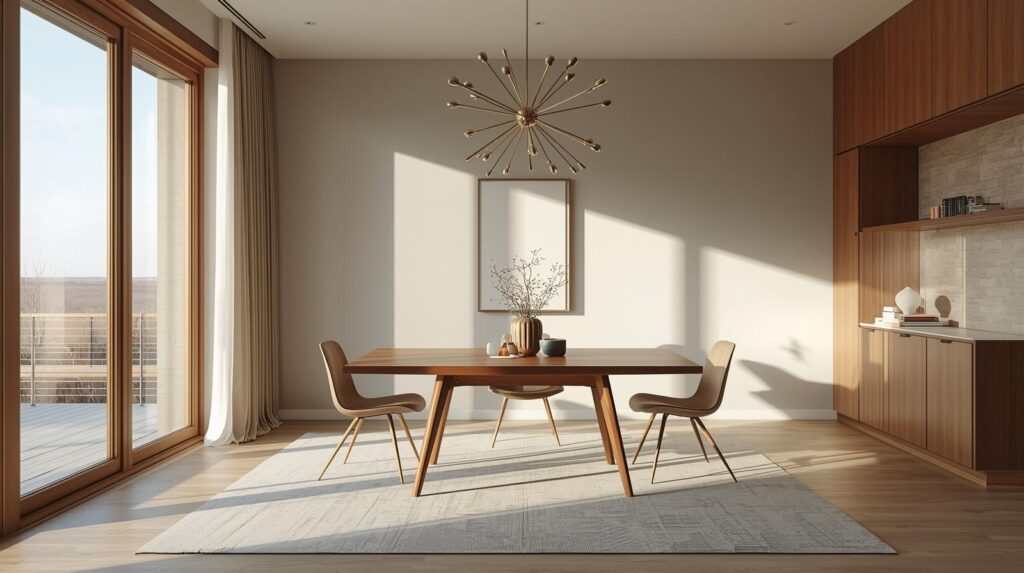
Beyond individual pieces, successful mid century dining requires thoughtful composition.
Flow and Function
Consider how people will move through the space. Allow at least 36 inches between table and walls or furniture for comfortable passage. Ensure serving pieces are accessible from the table without awkward reaching. Consider sight lines from other rooms; the dining room should look inviting from adjacent spaces.
Wall Treatment
Wall treatments in mid century dining range from simple paint to more elaborate applications. Period-appropriate colors include warm whites, soft grays, and muted earth tones. Accent walls in bolder colors, pumpkin, turquoise, or mustard, add drama without overwhelming.
Wallpaper, when used, features period-appropriate patterns, abstract geometries, atomic motifs, or subtle textures. Many companies offer mid century reproduction papers based on original designs.
Artwork
Artwork completes the mid century dining room. Period-appropriate choices include abstract expressionist prints, mid century graphic design, and period photography. Choose pieces that speak to you personally while contributing to the overall aesthetic.
Scale matters; one large piece often works better than multiple small ones. Consider how art relates to the table, visible during meals but not competing with conversation.
Authentic Vintage vs. Quality Reproductions
The choice between authentic vintage and quality reproduction involves several considerations.
Authentic vintage pieces carry history, character, and the patina of age. Each has a story, evident in minor wear, original finishes, and period details. Vintage furniture may require restoration and careful handling. For collectors and purists, nothing else will do.
Quality reproductions offer the look with modern construction, updated materials, and often lower prices. Some reproductions are licensed by original manufacturers, ensuring design accuracy. Others offer inspired interpretations that capture the spirit without copying specific pieces.
Most mid century dining rooms benefit from a mix, statement pieces in authentic vintage, supporting elements in quality reproduction, and personal touches that make the space uniquely yours.
Conclusion: Dining Well in Mid Century Style
A mid century dining room offers far more than period decor. It creates a space where meals become events, where conversation flows, where design supports connection. The clean lines, honest materials, and thoughtful proportions that define mid century design create an atmosphere that is both elegant and welcoming, sophisticated and comfortable.
Whether you are building a period-authentic room with carefully sourced vintage pieces or simply incorporating mid century elements into your existing decor, the principles of mid century design guide you toward spaces that serve real life while celebrating beauty. Form follows function, but function need not be ugly. Materials used honestly bring warmth and authenticity. Comfort and style coexist.
As you create your mid century dining space, take time to understand the history behind the designs, to appreciate the craftsmanship of original pieces, to choose elements that truly speak to you. The result will be a dining room that serves not just for meals but for memories, a space where family and friends gather, where conversation flows, where the enduring appeal of mid century design enriches everyday life.