
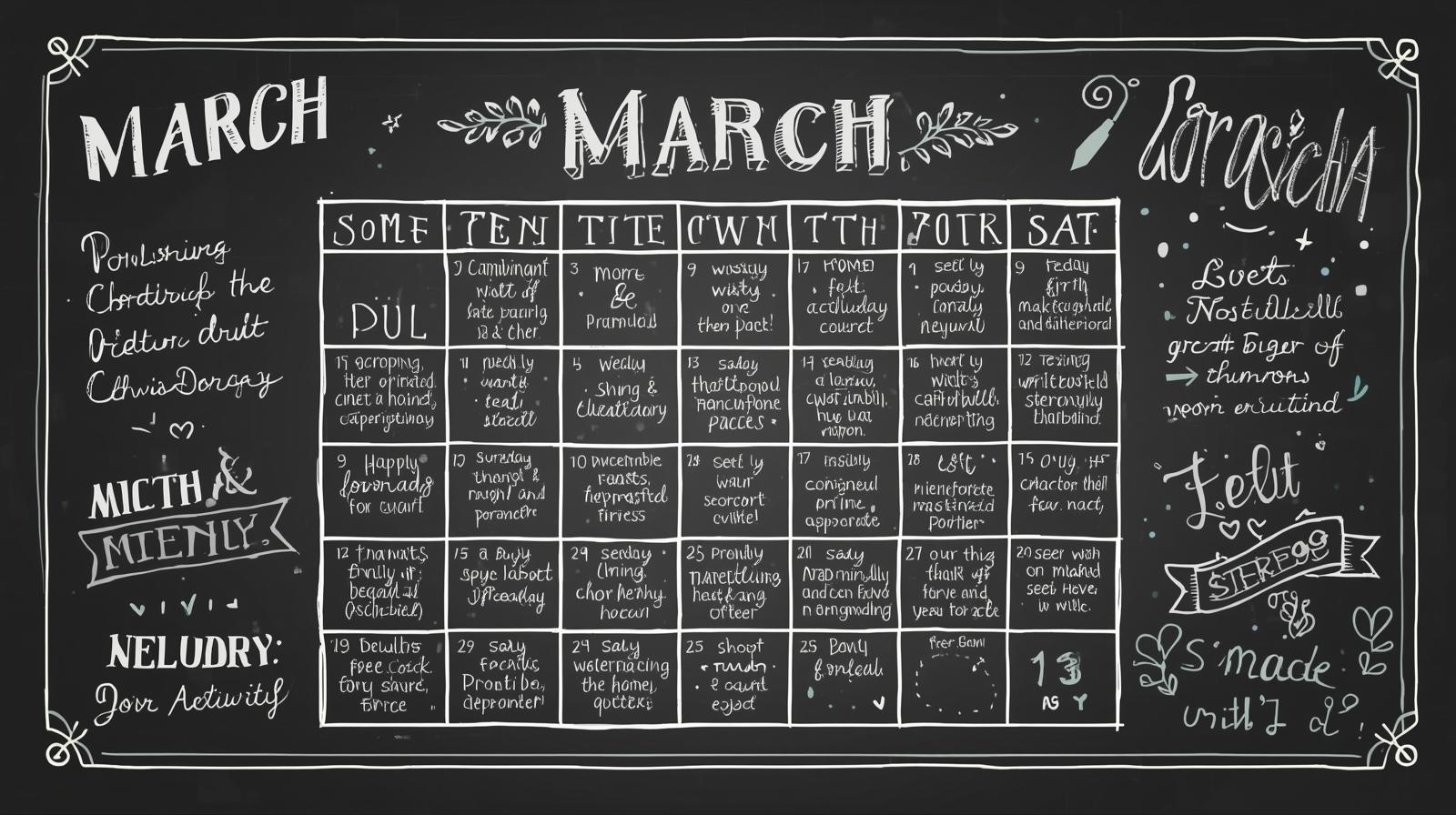
March Chalkboard Calendar: Organizing Your Month with Style and Creativity
There is something uniquely satisfying about a chalkboard calendar. Unlike digital calendars that live in our phones or paper planners that get lost in bags, a chalkboard calendar occupies physical space in your home, visible to everyone, inviting interaction and creativity. March, with its transitional weather, shifting holidays, and anticipation of spring, offers rich opportunities for a calendar that is both practical and beautiful. A March chalkboard calendar helps you track appointments, celebrate special days, and organize family life while adding charm to your walls. Whether you have a dedicated chalkboard wall, a large framed board, or a simple portable chalkboard, creating a monthly calendar combines organization with artistic expression in ways that digital tools cannot match. This comprehensive guide explores everything you need to know about creating and using a March chalkboard calendar.

The Appeal of a Chalkboard Calendar
Before diving into specific March ideas, it is worth understanding why chalkboard calendars have become so popular in homes. Unlike digital calendars that require opening an app or paper calendars that remain unchanged until next month, a chalkboard calendar is always visible, always present. Family members see it multiple times daily, absorbing information without effort.
The public nature of a chalkboard calendar also encourages shared responsibility. Everyone can see what’s happening, add their own events, and feel invested in family scheduling. Children learn to check the calendar for their activities, and the visual nature helps even pre-readers understand daily rhythms through colors and symbols.
The creative aspect adds another dimension. A chalkboard calendar is not merely functional; it is also decorative. The act of creating it each month becomes a ritual, a chance to express seasonal themes and personal style. March’s unique character, from St. Patrick’s Day to the first day of spring, provides endless inspiration for calendar designs that are both organized and beautiful.
Planning Your March Chalkboard Calendar
Before picking up chalk, thoughtful planning ensures your calendar meets your needs while leaving room for creativity.
Choosing Your Format
March chalkboard calendars come in many formats, each suited to different spaces and needs. A full-month grid, similar to traditional wall calendars, provides the most comprehensive view. This format works well for families with multiple schedules to track. Decide on the number of rows and columns based on the month’s layout; March always has 31 days, but the starting day of the week varies.
A weekly format, with space for each day of the current week, allows more detail for each day. This works well for kitchens where space is limited or for families who prefer focusing on the immediate future. The drawback is losing the month-long view that helps with advance planning.
A combination approach uses a small month grid for overview and a larger weekly section for details. This hybrid format provides the best of both worlds but requires more space.
Measuring and Layout
Before drawing, measure your chalkboard and plan your grid. Lightly mark the perimeter of your calendar area with chalk, then divide accordingly. For a month grid, calculate the space needed for each day based on your board dimensions. Allow room for the month title at the top and perhaps a notes section at the bottom.
Use a level to ensure straight lines; even slight angles become obvious in a grid. Mark corner points first, then connect with a straight edge. For perfect boxes, measure and mark at regular intervals before drawing full lines.
Essential Information to Include
Every March chalkboard calendar should include certain basic information. The month and year, prominently displayed, establish context. Days of the week, abbreviated or full, label each column. Dates in each box ensure everyone can find the right day.
Beyond these basics, consider what else belongs. Family members’ names or initials help identify whose activity is whose. Color coding by person or activity type adds visual organization. Space for notes, whether a separate section or room within each day, captures additional information.
March-Specific Calendar Elements
March brings unique scheduling considerations that your chalkboard calendar should accommodate.
Key March Dates
Certain March dates deserve prominent placement on your calendar. St. Patrick’s Day on March 17th is the month’s most widely celebrated holiday. The vernal equinox, typically March 20th or 21st, marks astronomical spring’s beginning. Daylight Saving Time begins in March for much of the United States, an important date for adjusting clocks and schedules.
Other March observances vary by family and location. School spring breaks often occur in March. Religious observances like Purim or Lenten milestones may appear. Family birthdays and anniversaries deserve special marking. Research what matters to your household and note it appropriately.
Weather and Seasonal Transitions
March weather famously fluctuates, and your calendar can acknowledge this. A small weather symbol in each day’s box, a sun, cloud, raindrop, or snowflake, adds visual interest while tracking conditions. For families with children, this becomes an engaging daily ritual.
Seasonal transitions also deserve recognition. Early March might feature winter’s last gasps, while late March bursts with spring imagery. Your calendar can reflect this progression, with drawings that evolve as the month advances.
Spring Break Planning
For families with school-aged children, spring break is often March’s most significant scheduling event. Your chalkboard calendar should prominently feature break dates, with space for noting daily activities, camp schedules, or travel plans. A separate section for “Spring Break Plans” helps organize this special week.
Countdown to spring break builds anticipation, especially for children. A small “_ days until spring break” in a corner of your calendar creates excitement and helps everyone track approaching vacation.
Designing Your March Chalkboard Calendar
Beyond function, your March chalkboard calendar should delight the eye and reflect the month’s character.
March Color Palettes
March offers rich color inspiration for your calendar. Early March might feature winter’s last blues and whites, transitioning to the fresh greens and pastels of spring. St. Patrick’s Day brings emerald greens and rainbow colors. The equinox calls for the soft yellows of daffodils and pinks of early blossoms.
Consider using color meaningfully within your grid. Green for St. Patrick’s Day events, pastels for spring activities, perhaps a special color for each family member’s commitments. Consistent color coding makes the calendar more functional while adding visual appeal.
Decorative Elements
Beyond the basic grid, decorative elements bring your March calendar to life. Corner decorations, whether shamrocks, daffodils, or simple geometric patterns, frame the calendar beautifully. A decorative border, perhaps of vines or Celtic knots, adds polish.
Seasonal motifs scattered throughout add charm. A small shamrock in the corner of March 17th, a butterfly on the equinox, raindrops on expected rainy days, these touches make the calendar feel personal and connected to the month.
Lettering Styles
The lettering on your calendar affects both function and beauty. Month and day labels deserve the most elaborate treatment, perhaps with decorative capitals or special fonts. Daily information should be clear and legible above all; save fancy scripts for headers where readability matters less.
Practice lettering on paper before committing to your board. Consistent style throughout creates cohesion, even if you vary sizes and treatments. For those less confident in lettering, stencils provide guidance while still looking handcrafted.

Making Your Calendar Interactive
A chalkboard calendar’s greatest advantage over printed versions is its interactivity. Encourage family participation in several ways.
Daily Updates
Make calendar updating a daily ritual. Each morning, check what’s happening and add any new information. Each evening, erase completed items and prepare for tomorrow. This routine keeps the calendar current and builds the habit of consulting it.
Color Coding by Person
Assign each family member a color for their activities. Mom’s work events in blue, Dad’s meetings in green, each child’s activities in their chosen color. At a glance, everyone can see who is doing what and when. This system proves particularly valuable for busy families with multiple schedules to coordinate.
Symbol System
Develop simple symbols that communicate quickly. A birthday cake icon for birthdays, a soccer ball for sports, a book for school events, a heart for special occasions. Even pre-readers learn to recognize these symbols, making the calendar accessible to all ages.
Family Contributions
Encourage everyone to add their own events. Children can write in playdates and activities, learning responsibility and calendar skills. Partners can note their commitments without relying on a single family scheduler. This shared ownership reduces mental load on the primary organizer while building family teamwork.
March Themes for Your Calendar
Beyond basic scheduling, thematic elements make your March calendar special.
St. Patrick’s Day Theme
For March 17th, consider a mini-theme within your calendar. Draw a pot of gold at the end of a rainbow arching across that week. Add tiny shamrocks to the days leading up to the holiday. Include Irish blessings or sayings in the notes section. These touches celebrate the holiday without overwhelming the calendar’s primary function.
Spring Equinox Theme
The equinox deserves its own recognition. Mark the day with a special symbol, perhaps a sun half above and half below the horizon, representing equal day and night. Draw emerging flowers around this date. Include a note about the astronomical change, connecting your family to natural rhythms.
March Birthdays
If March brings birthdays in your family, give them prominent treatment. Draw balloons or a birthday cake on the date. Use the birthday person’s color more prominently that week. Include a countdown in the days before, building anticipation and ensuring everyone remembers to celebrate.
Weekly and Monthly Reviews
Your chalkboard calendar supports both immediate planning and longer-term perspective through regular reviews.
Sunday Evening Planning
Each Sunday evening, gather as a family to review the upcoming week. Look at the calendar together, discuss any conflicts or preparations needed, and ensure everyone knows what to expect. This brief meeting prevents surprises and builds family communication.
Month Preview
At March’s beginning, review the entire month together. Highlight major events, discuss travel or schedule changes, and identify days that require special preparation. This overview helps everyone mentally prepare for the month ahead.
Month in Review
As March ends, take a moment to appreciate what you’ve accomplished and experienced. Erase the calendar together, perhaps with a brief reflection on the month’s highlights. This ritual marks time’s passage and creates family memories.

Photographing and Preserving Your Calendars
Given their temporary nature, photographing your March chalkboard calendars preserves them beyond the month.
Weekly or Monthly Photos
Take a photo of your completed calendar at the end of each week or month. These images create a visual record of your family’s life, documenting not just schedules but also your evolving artistic expression. Years later, these photos become cherished memories of ordinary days.
Creating a Calendar Album
Consider creating a digital album or physical scrapbook of your monthly calendars. Include photos alongside notes about what happened that month, what mattered to your family, how life unfolded. This record becomes a unique family history, documenting the rhythm of your days.
Sharing with Distant Family
For families separated by distance, sharing calendar photos keeps grandparents and other relatives connected to daily life. They see not just what you’re doing but how you’re living, the rhythms and routines that fill your days.
Conclusion: The Gift of an Organized March
A March chalkboard calendar offers far more than a way to track appointments. It provides a central organizing tool that reduces family stress and confusion. It creates a beautiful focal point that changes with the season. It builds habits of planning and communication that serve families well beyond any single month.
Most importantly, a chalkboard calendar becomes part of how your family lives together. The daily ritual of checking and updating, the weekly planning meetings, the shared responsibility for keeping everyone informed, these practices build connection and cooperation. In a busy world, these small rituals matter enormously.
As you create your March chalkboard calendar, remember that perfection is not the goal. The calendar that works for your family, that actually gets used and consulted, is better than any beautiful design that sits ignored. Find the format, the systems, the decorative touches that make your calendar genuinely useful, and you’ll have created something far more valuable than mere organization.
So gather your chalk, measure your board, and prepare to welcome March with intention and creativity. Let your calendar capture not just appointments but the unique character of this transitional month, its holidays and weather, its anticipation and beauty. And as you erase it at month’s end, know that you’ve participated in a simple, beautiful tradition that organizes your days while connecting your family.