Japandi Bathroom Ideas: The Perfect Blend of Scandinavian Simplicity and Japanese Zen
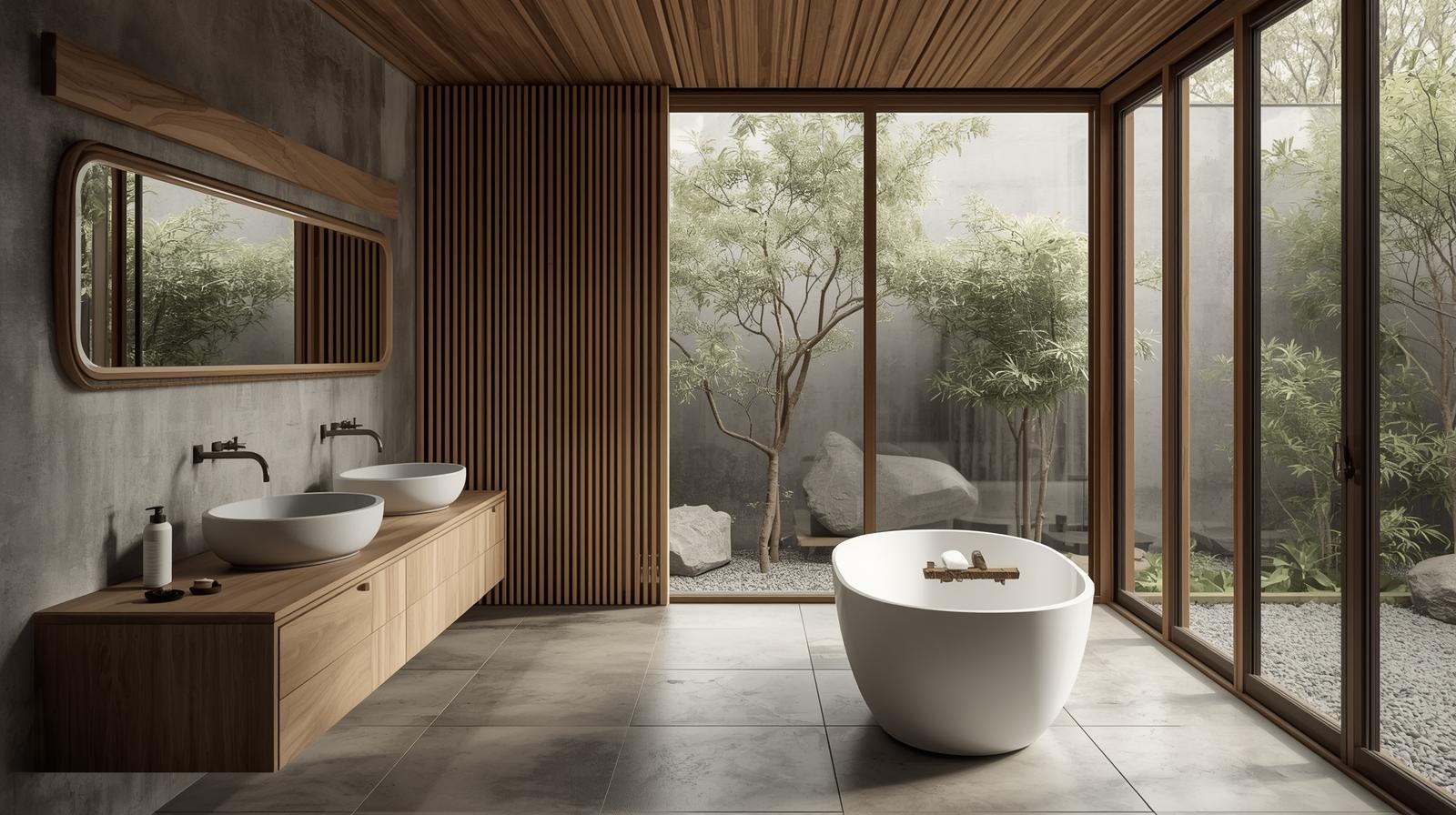
The Japandi design aesthetic has taken the interior design world by storm, and for good reason. This harmonious fusion of Japanese minimalism and Scandinavian functionality creates spaces that are simultaneously serene, practical, and deeply beautiful. Nowhere is this design philosophy more appropriate than in the bathroom, a space dedicated to cleansing, relaxation, and personal renewal. The Japandi bathroom combines the best of both traditions: the warm, organic coziness of Scandinavian hygge with the disciplined, meditative calm of Japanese Zen. The result is a bathing space that nurtures both body and spirit, a true sanctuary within the home. This comprehensive guide explores everything you need to know about creating a Japandi bathroom, from foundational principles to finishing touches.
Understanding the Japandi Aesthetic
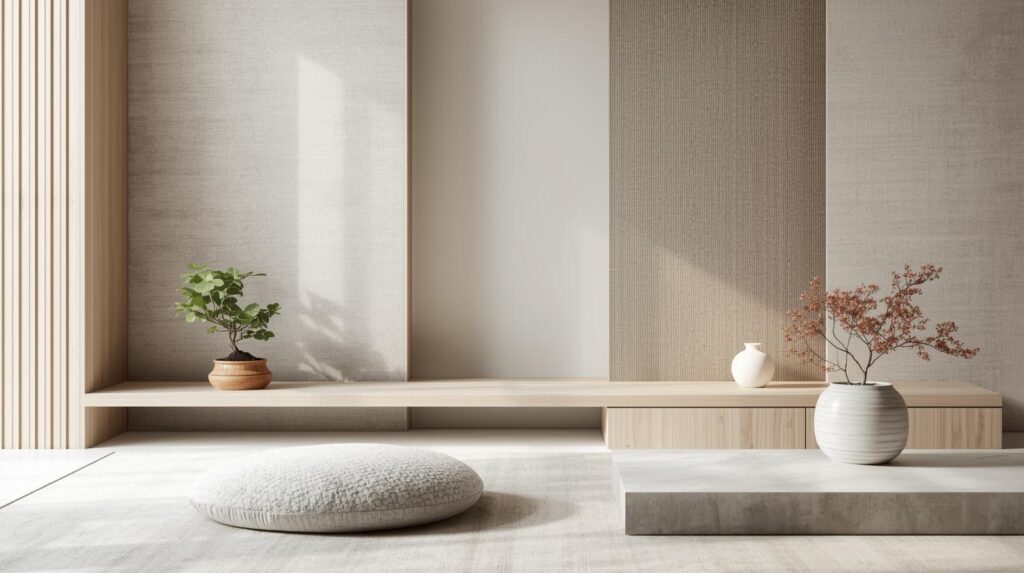
Before diving into specific design elements, it is essential to understand what makes Japandi distinct from other design styles. Japandi is not merely a mixture of Japanese and Scandinavian elements; it is a thoughtful fusion that emphasizes the values shared by both traditions.
Both Japanese and Scandinavian design prioritize simplicity, functionality, and a deep connection to nature. Both reject excess and ornamentation for its own sake, favoring clean lines and purposeful objects. Both celebrate craftsmanship and the beauty of natural materials. These shared values create a solid foundation for a unified aesthetic that feels cohesive rather than eclectic.
At its core, Japandi design seeks to create spaces that promote well-being through balance, harmony, and intentionality. Every element serves a purpose, and nothing extraneous disturbs the visual calm. The bathroom, as a space for cleansing and renewal, provides the perfect canvas for this philosophy. A Japandi bathroom becomes more than a place to shower and use the toilet; it becomes a daily retreat, a space for ritual and restoration.
Key Principles of Japandi Bathroom Design
Several fundamental principles guide the creation of a successful Japandi bathroom. Understanding these principles helps you make intentional choices that support the overall aesthetic.
Simplicity stands at the forefront of Japandi design. This does not mean emptiness or starkness, but rather the elimination of the unnecessary. Every element in a Japandi bathroom should earn its place, contributing to the overall harmony rather than creating visual noise. Surfaces remain clear, storage is concealed, and only essential objects remain visible.
Functionality guides every design decision. In the Japandi bathroom, beauty and usefulness are not separate qualities. A beautiful object that serves no purpose has no place, while purely functional objects are crafted with such care that they become beautiful. This integration of form and function creates spaces that are both practical and pleasing.
Natural materials form the foundation of Japandi aesthetics. Wood, stone, bamboo, linen, cotton, and other natural elements bring warmth, texture, and connection to the natural world. These materials age gracefully, developing patina over time rather than appearing worn or dated. Their imperfections, the knots in wood and variations in stone, are celebrated rather than hidden.
Neutral color palettes create calm, cohesive backgrounds. Whites, creams, beiges, grays, and soft earth tones predominate, with darker accents providing contrast and depth. Color, when it appears, comes from natural materials or from carefully chosen accessories rather than from painted surfaces or patterned textiles.
Light and shadow receive careful attention. Japandi design embraces the interplay between light and dark, creating spaces that feel dynamic throughout the day as natural light shifts. Layered lighting allows for different moods and functions, from bright task lighting for morning routines to soft, atmospheric illumination for evening baths.
The Japandi Color Palette for Bathrooms
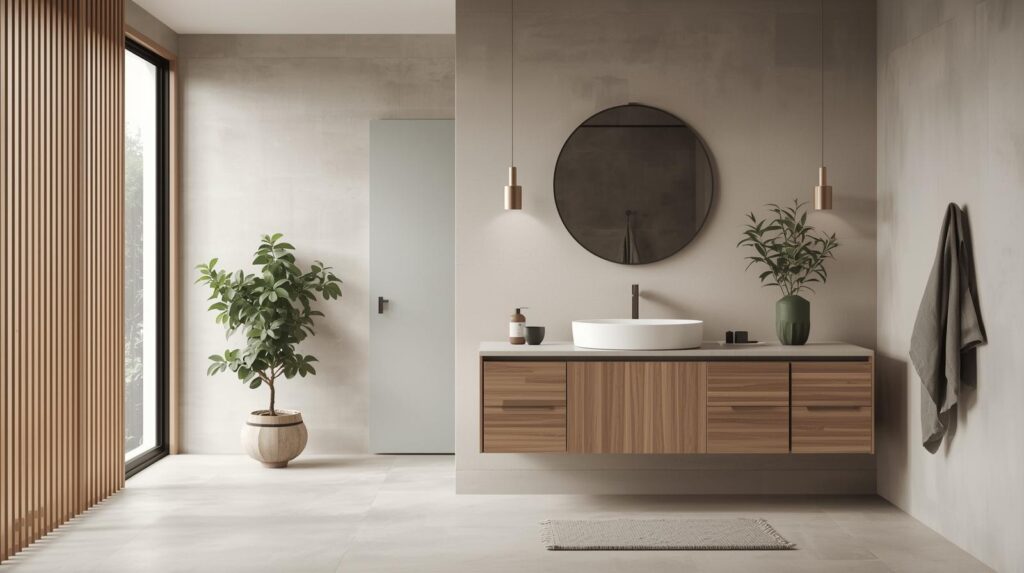
The Japandi color palette draws inspiration from nature, favoring muted, organic tones that create calm, restful spaces. Understanding this palette helps you make color choices that support the overall aesthetic.
White serves as the foundation of most Japandi bathrooms. Unlike the stark, clinical white often found in modern design, Japandi whites have warmth and depth. Off-whites, cream, ivory, and shades with subtle gray or beige undertones create soft, welcoming backgrounds that feel natural rather than manufactured. These warm whites reflect light beautifully while maintaining visual softness.
Beige and greige provide additional neutral options that add warmth without introducing color. These versatile shades bridge the gap between white and darker elements, creating smooth transitions and visual cohesion. In a Japandi bathroom, beige might appear in wall paint, stone surfaces, or natural fiber textiles.
Gray appears in both warm and cool variations, adding sophistication and depth. Soft, warm grays complement wood tones beautifully, while cooler grays work well with stone and concrete elements. Gray provides excellent contrast to white while maintaining the neutral palette essential to Japandi aesthetics.
Brown, in the form of wood tones, brings essential warmth to the Japandi bathroom. From pale ash to rich walnut, wood adds organic texture and visual interest while grounding the space in nature. The specific wood tones you choose affect the overall mood, with lighter woods creating airy, expansive feelings and darker woods adding coziness and drama.
Black appears sparingly but purposefully, providing contrast and definition. Black window frames, faucets, or light fixtures create graphic interest against pale backgrounds, anchoring the space and preventing it from feeling washed out. The key lies in using black thoughtfully, as an accent rather than a dominant color.
Green, when it appears, comes from natural elements rather than paint. Plants bring the only significant color to most Japandi bathrooms, their fresh green providing vibrant contrast to the neutral palette. This connection to living things reinforces the design’s emphasis on nature and well-being.
Natural Materials in the Japandi Bathroom
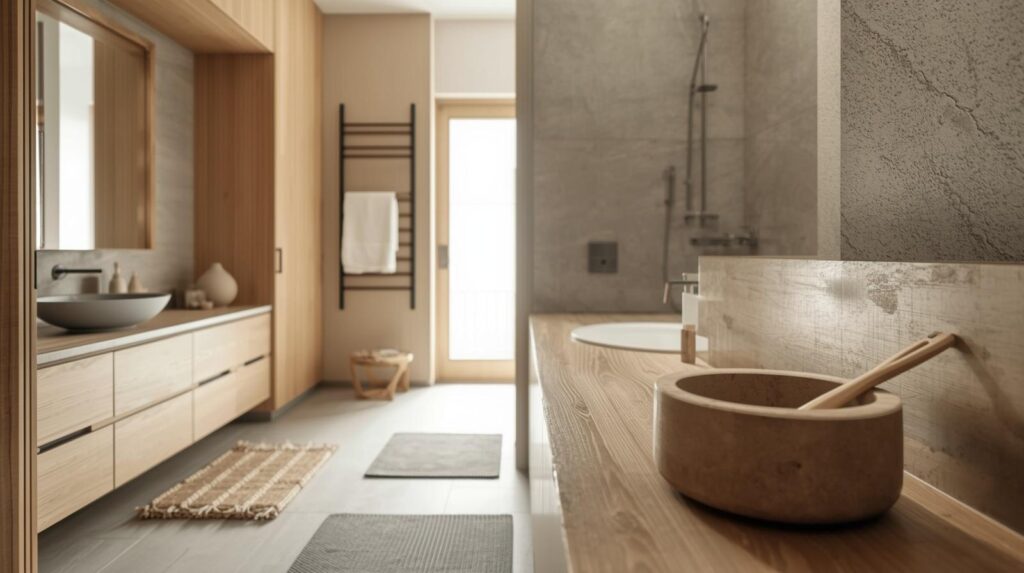
Natural materials form the heart of Japandi bathroom design, bringing warmth, texture, and authenticity to the space. Thoughtful material selection creates a foundation for the entire aesthetic.
Wood stands as the most important material in Japandi design. In the bathroom, wood requires careful selection and treatment to withstand moisture. Teak, cedar, and other naturally water-resistant woods work beautifully for vanities, shelving, and accent walls. Treated woods can also be used successfully with proper ventilation and care. The warmth of wood balances the coolness of stone and tile, creating visual and textural harmony.
Stone brings permanence and natural beauty to the Japandi bathroom. Limestone, travertine, slate, and marble all work beautifully, each offering unique colors and patterns. Stone used for flooring, countertops, or wall cladding connects the space to the earth, grounding it in natural materials. Honed finishes, which reduce shine and emphasize texture, suit Japandi aesthetics better than high-polish surfaces.
Concrete, when used thoughtfully, adds industrial edge softened by natural elements. Polished concrete floors or vanities provide clean, minimal surfaces that contrast beautifully with warm wood and soft textiles. The key lies in balancing concrete’s cool austerity with ample warmth from other materials.
Bamboo offers sustainable beauty that aligns with Japandi values. This rapidly renewable resource brings the warmth of wood with distinctive grain patterns and cultural connection to Japanese aesthetics. Bamboo works beautifully for shelving, accessories, and even flooring when properly treated.
Linen and cotton bring softness to the Japandi bathroom through towels, bath mats, and window treatments. These natural fibers absorb moisture effectively while adding textural softness that contrasts with harder surfaces. Their neutral tones and organic textures reinforce the connection to nature essential to Japandi design.
Ceramics appear in tiles, vessels, and accessories. Handmade tiles with subtle variations and imperfections bring artisanal quality to the space. Simple ceramic vessels for soap, toothbrushes, and other necessities provide beauty in everyday objects.
Minimalist Vanity and Storage Solutions
Storage in a Japandi bathroom prioritizes concealment and simplicity, keeping surfaces clear and visual noise to a minimum. Thoughtful storage solutions maintain the calm aesthetic while providing practical function.
Floating vanities create an airy, open feeling while providing essential storage. Mounted directly to the wall with no visible legs, these vanities appear to hover above the floor, making the space feel larger and cleaner. Wood floating vanities bring warmth, while painted options in neutral tones blend seamlessly with walls.
Integrated sinks eliminate the visual break between counter and basin, creating smooth, uninterrupted surfaces. These sinks, often made from the same material as the countertop, contribute to the minimalist aesthetic while proving highly functional. Natural stone or ceramic integrated sinks suit Japandi bathrooms beautifully.
Concealed storage keeps necessities out of sight. Drawers with simple, handleless fronts, cabinets that blend with surrounding millwork, and recessed medicine cabinets all contribute to the clean, uncluttered look essential to Japandi design. When storage is visible, it should be beautifully organized, with baskets and containers in natural materials.
Open shelving, used sparingly, provides opportunities for display. A single shelf in natural wood holding a few carefully chosen objects, folded towels, or a small plant adds visual interest without creating clutter. The key lies in restraint, leaving generous negative space around displayed items.
Japandi Bathtubs and Showers
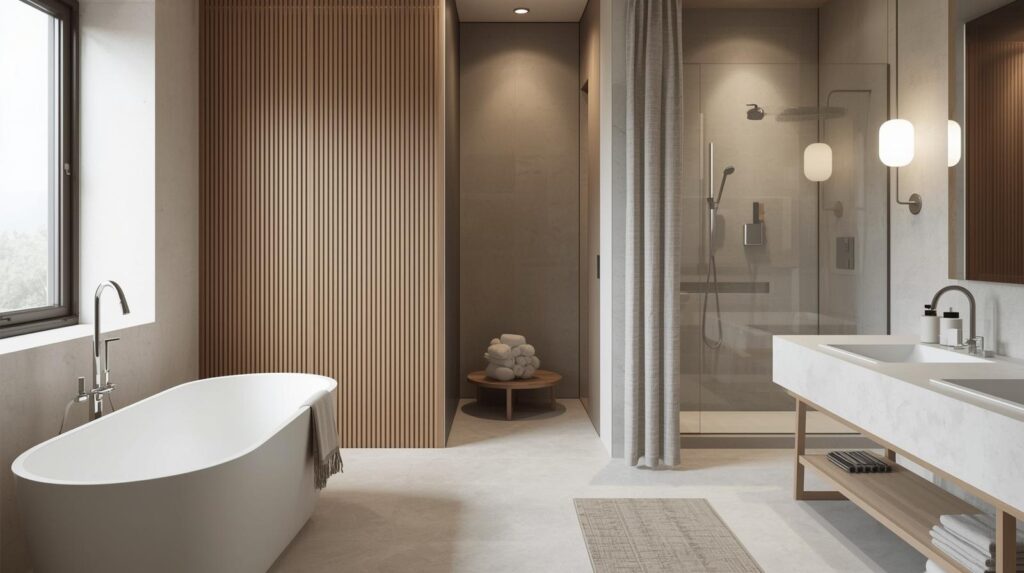
The bathing area serves as the focal point of the Japandi bathroom, deserving particular attention in design and material selection. Both Japanese and Scandinavian traditions honor the ritual of bathing, making this area especially significant.
Freestanding bathtubs embody Japandi aesthetics beautifully. Simple, sculptural forms in materials like natural stone, solid surface, or enameled steel become artistic focal points. Oval, rectangular, or organic shapes all work, provided they maintain clean lines and avoid excessive ornamentation. A freestanding tub positioned to take advantage of natural light or a garden view creates a true retreat.
Japanese soaking tubs, or ofuro, represent the ultimate expression of bathing in Japandi design. These deep, short tubs allow the bather to immerse completely, with water reaching the shoulders while sitting upright. Traditional wood construction brings warmth and authenticity, though modern interpretations in stone or acrylic also work beautifully.
Walk-in showers with minimal thresholds create seamless transitions between wet and dry areas. Frameless glass enclosures maintain visual openness, while eliminating doors altogether, where practical, maximizes the sense of space. Natural stone flooring, perhaps with a linear drain, provides beautiful, functional surfaces.
Dual showerheads, including rainfall options and handheld wands, accommodate different preferences while adding luxury. Simple, architectural fixtures in matte black, brushed brass, or polished nickel complement the aesthetic without drawing undue attention. The focus remains on the experience of bathing rather than on the hardware itself.
Flooring and Wall Treatments
Surface materials significantly affect the overall feel of a Japandi bathroom, providing the backdrop against which all other elements are seen. Thoughtful choices create cohesion and support the design philosophy.
Natural stone flooring brings enduring beauty and connection to the earth. Large-format tiles minimize grout lines, creating smooth, seamless surfaces. Honed finishes reduce shine and emphasize the stone’s natural texture. Underfloor heating adds luxury while addressing the practical concern of cold stone underfoot.
Wood-look tile offers the warmth of wood with the water resistance required in bathrooms. High-quality porcelain tiles convincingly replicate wood grain and texture while providing complete moisture protection. These tiles work beautifully for a cohesive look throughout the bathroom, including in wet areas.
Traditional wood flooring, properly sealed and maintained, can work in well-ventilated bathrooms with careful moisture management. Engineered wood offers greater stability than solid hardwood, making it a practical choice for bathrooms. The warmth and natural beauty of real wood justify the additional care required.
Wall treatments range from simple painted surfaces to more elaborate natural materials. Paint in warm whites or soft neutrals provides clean, calm backdrops. Wood slat walls or paneling add warmth and texture, particularly effective on a single accent wall. Stone or tile used on walls creates visual weight and connection to nature.
Large-format wall tiles minimize grout lines and visual busyness. Matte finishes suit Japandi aesthetics better than gloss, reducing reflections and emphasizing the material itself. Neutral colors keep the focus on texture and form rather than pattern.
Lighting the Japandi Bathroom
Lighting in a Japandi bathroom serves both practical and atmospheric functions, with careful attention to the interplay of light and shadow throughout the day.
Natural light stands as the most important light source. Windows positioned to admit maximum daylight while maintaining privacy connect the bathroom to the outdoors and the natural rhythms of the day. Frosted glass, strategic placement, or exterior shading provide privacy without blocking light.
Layered lighting allows for different functions and moods. Bright, even task lighting around the vanity supports morning grooming routines. Softer, ambient lighting creates relaxation for evening baths. Accent lighting highlights special features like a beautiful tub or piece of art.
Minimalist fixtures in natural materials complement the aesthetic without competing for attention. Wood, bamboo, paper, and natural fiber shades bring warmth to artificial light. Simple geometric forms in black metal provide graphic contrast against neutral walls.
Backlit mirrors create soft, flattering illumination for the vanity area while adding a gentle glow to the room. The light appears to emanate from behind the mirror, eliminating harsh shadows and creating a warm, diffused effect.
Dimmers allow adjustment of light levels to suit different times of day and activities. Bright light for morning routines can transition to soft, candle-like illumination for evening baths, all from the same fixtures.
Japandi Bathroom Accessories and Textiles
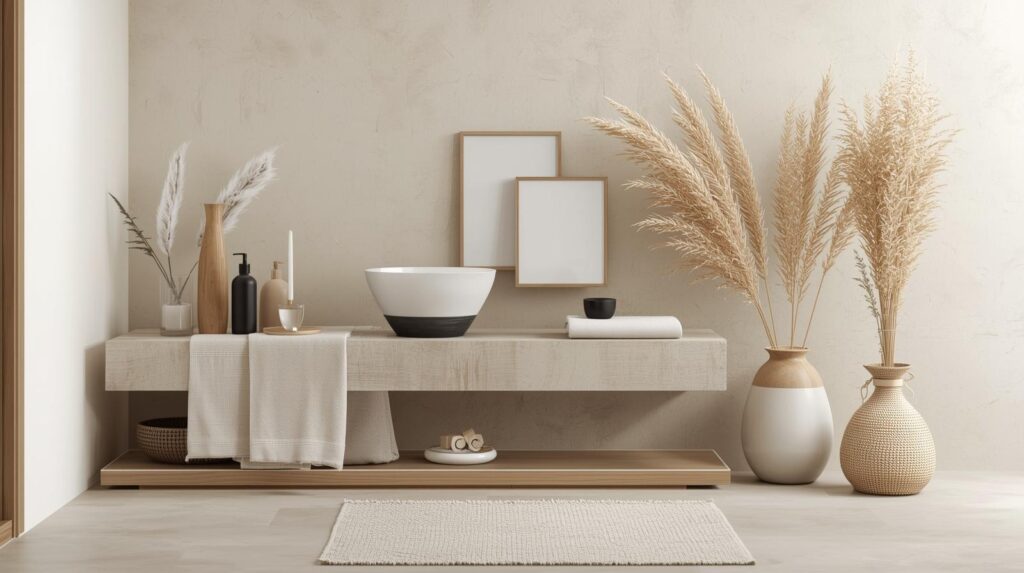
Accessories in a Japandi bathroom are few but carefully chosen, each serving a purpose while contributing to the overall aesthetic. Textiles add softness and warmth to the primarily hard surfaces.
Towels in natural materials provide both function and visual texture. Organic cotton, linen, or bamboo towels in neutral colors complement the palette while feeling luxurious against the skin. Simple folding and stacking techniques turn necessary items into design elements.
Bath mats in natural fibers add softness underfoot while reinforcing the connection to nature. Sea grass, jute, or organic cotton mats provide texture and warmth. Like towels, they should be in neutral tones that harmonize with the overall palette.
Storage vessels for everyday items maintain the clean aesthetic while providing practical function. Ceramic jars for cotton balls, glass bottles for soap, and wooden trays for organizing countertop essentials turn necessities into decorative elements. The key lies in choosing beautiful versions of functional objects.
Plants bring the only significant color to most Japandi bathrooms while purifying air and connecting the space to nature. Moisture-loving varieties like ferns, orchids, and bamboo thrive in bathroom conditions. A single carefully placed plant often provides more impact than multiple smaller ones.
Art, used sparingly, adds personality without disrupting calm. A single piece with natural themes, simple composition, and muted colors works best. The art should complement rather than compete with the overall aesthetic.
Creating Ritual and Mindfulness
Beyond physical design elements, the Japandi bathroom philosophy encourages the creation of rituals that transform daily routines into mindful practices. This aspect of the design may be the most important for overall well-being.
Consider how your bathroom supports or hinders moments of calm in your day. Does the space encourage you to slow down, or does it contribute to morning rush and evening stress? Simple adjustments, like a small stool for sitting while drying feet or a tray for arranging bath products beautifully, can transform how you experience the space.
Natural elements throughout the bathroom connect you to the larger world even as you attend to personal care. A view of sky or garden, a fresh flower on the counter, or the texture of natural stone underfoot all ground you in the present moment.
The ritual of bathing, whether quick shower or long soak, becomes more meaningful in a thoughtfully designed space. Lighting a candle, arranging towels with care, or simply taking a moment to appreciate the beauty around you transforms necessary hygiene into mindful self-care.
Conclusion: The Japandi Bathroom as Personal Sanctuary
The Japandi bathroom offers far more than a place to wash. It provides a daily retreat, a space where the principles of simplicity, functionality, and natural beauty combine to support well-being and mindfulness. By embracing the best of both Japanese and Scandinavian design traditions, you create a bathroom that nurtures both body and spirit.
Whether you are undertaking a complete renovation or simply refreshing your existing space, the Japandi philosophy offers guidance for every decision. Choose natural materials over synthetic. Prioritize function without sacrificing beauty. Eliminate the unnecessary while celebrating the essential. Create space for ritual and calm in your daily routines.
The result will be a bathroom that serves its practical purpose while offering something more precious: a space of genuine peace and renewal within your home. In our busy, demanding world, such a sanctuary is not a luxury but a necessity, a place where you can begin and end each day grounded, centered, and restored.