Rustic Charm Reimagined: A Comprehensive Guide to Farmhouse Wallpaper Ideas
In the landscape of interior design, few styles have demonstrated the staying power and emotional resonance of farmhouse aesthetics. What began as a nostalgic nod to rural living has evolved into a sophisticated design language that speaks to our collective longing for authenticity, warmth, and connection to simpler times. As we move through 2026, farmhouse style continues to captivate homeowners, not as a reproduction of actual farm life, but as an interpretation of its most cherished qualities—honesty, comfort, and timeless beauty.
Wallpaper has emerged as the perfect medium for expressing this aesthetic. Gone are the days when farmhouse interiors relied solely on shiplap and bare walls. Today’s farmhouse embraces pattern, texture, and color in ways that honor tradition while feeling thoroughly contemporary. Whether your farmhouse dreams lean toward the pristine whites of modern farmhouse style, the weathered charm of rustic authenticity, or the layered richness of farmhouse maximalism, the right wallpaper can transform your space from merely decorated to deeply felt. This guide will walk you through the most inspiring farmhouse wallpaper ideas to help you create a home that feels both timeless and distinctly your own.
The Evolution of Farmhouse Style: Where We’ve Been and Where We’re Going
Before exploring specific wallpaper ideas, it’s worth understanding how farmhouse style has evolved and where it stands today. This context will inform your choices and help you create spaces that feel current rather than dated.
From Authentic to Aspirational
The original farmhouse aesthetic emerged from necessity rather than design choice. Farmhouses were practical spaces, furnished with what was available and durable enough to withstand the demands of rural life. The current farmhouse movement romanticizes these qualities, elevating rough-hewn beams, apron-front sinks, and weathered wood to objects of desire. This shift from authentic to aspirational has opened the door for more curated, intentional design choices—including wallpaper—that capture the spirit of farmhouse living without slavishly reproducing its limitations.
The Modern Farmhouse Phenomenon
The modern farmhouse interpretation, popularized over the past decade, brought farmhouse style to the mainstream with its emphasis on crisp whites, black accents, and clean lines. While this version remains beloved, design trends for 2026 show a move toward greater warmth, texture, and personality. The all-white kitchen is giving way to richer neutrals, the industrial elements are softening, and pattern is making a confident return. Wallpaper, once considered too fussy for farmhouse spaces, is now recognized as an essential tool for adding the depth and character that today’s farmhouse desires.
The Foundation: Understanding Farmhouse Wallpaper Aesthetics
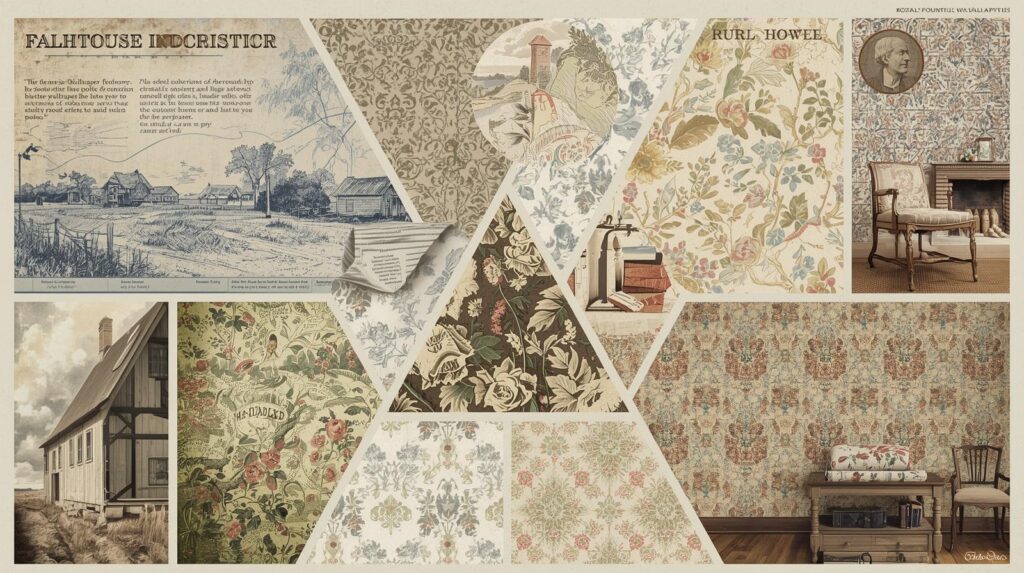
Farmhouse wallpaper encompasses a surprisingly wide range of styles, from subtle textures to bold prints. Understanding the core aesthetic categories will help you identify what speaks to you.
The Rustic Authentic
This category embraces the raw, unpolished beauty of farm life. Wallpapers in this vein mimic natural materials—weathered wood planks, aged plaster, timeworn stone, rustic brick. They bring the texture and patina of authentic farmhouse elements to walls that may lack original architectural interest. The appeal lies in their honesty, their celebration of wear and imperfection as beautiful rather than flawed.
The Vintage Inspired
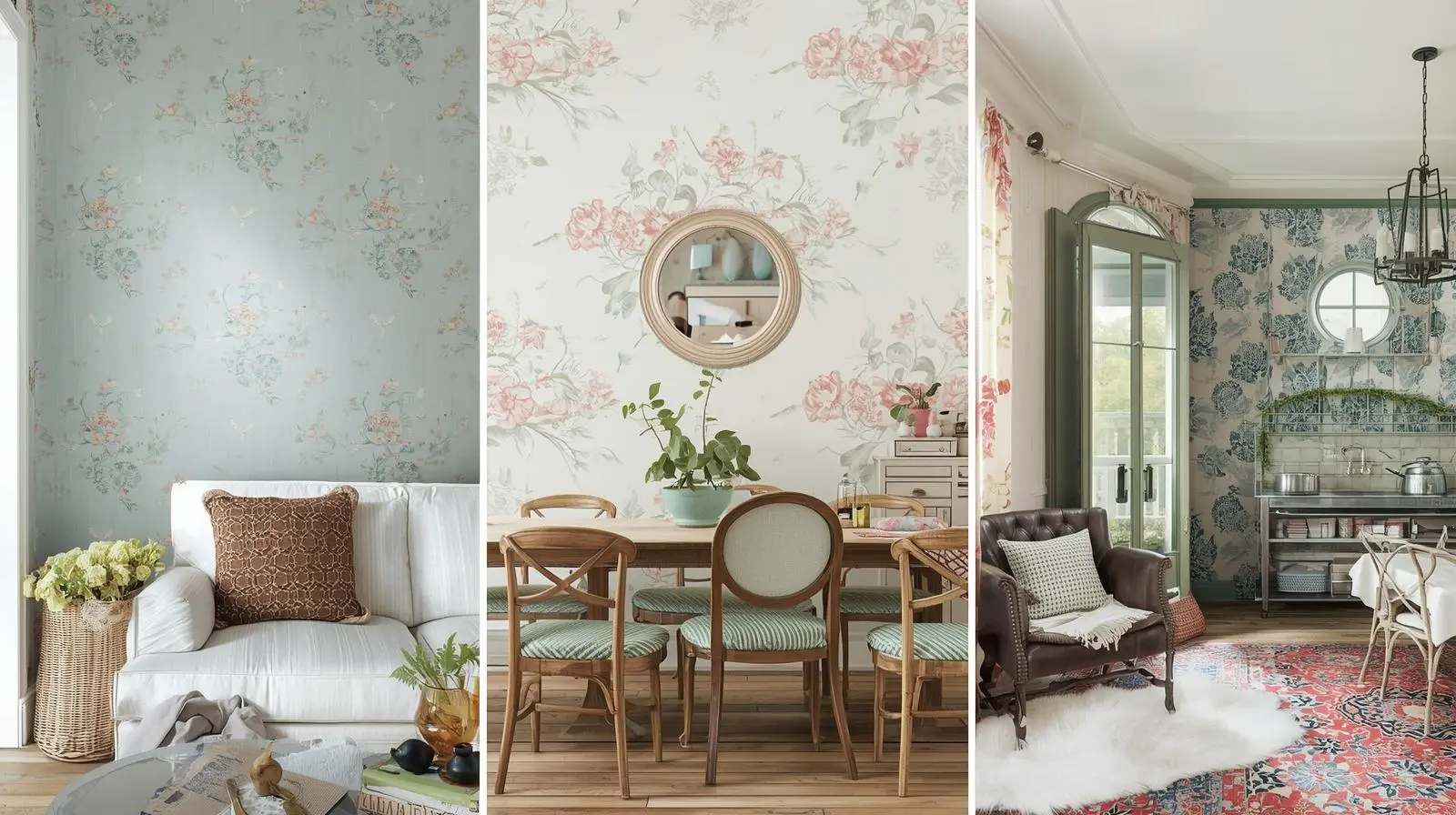
Drawing on the decorative traditions of rural homes past, vintage-inspired farmhouse wallpapers feature patterns that would have been at home in a nineteenth-century farmhouse. Think small-scale florals, delicate toile scenes, subtle stripes, and classic ginghams. These patterns bring a sense of history and romance to modern spaces, connecting us to the generations of women who papered their walls with whatever pretty paper they could find.
The Modern Farmhouse
Cleaner, crisper, and more graphic, modern farmhouse wallpapers update traditional motifs for contemporary sensibilities. Subway tile patterns, subtle geometrics, overscale botanicals, and graphic buffalo checks fall into this category. They provide pattern and interest without the fussiness that can make traditional wallpapers feel dated, bridging the gap between farmhouse warmth and modern minimalism.
Weathered Wood and Rustic Plank: Bringing the Barn Indoors
For many, the essence of farmhouse style lies in wood—the warmer, more weathered, the better. Wood-look wallpapers offer a way to bring this essential element into spaces where actual wood siding isn’t practical or possible.
The Beauty of Reclaimed Wood
Wallpapers that replicate the look of reclaimed barn wood capture every knot, grain, and nail hole that gives authentic aged wood its character. The color palette ranges from silvery grays of weather-beaten barns to warm browns of tobacco-curing sheds to the soft whites of painted farmhouse kitchens. These wallpapers create instant architectural interest, transforming a plain wall into a feature that feels rich with history. Use them on a single accent wall behind a dining table or floor-to-ceiling in a powder room for maximum impact.
Horizontal vs. Vertical Plank Orientation
The orientation of your wood-look wallpaper dramatically affects the room’s perception. Horizontal planks visually expand a space, drawing the eye along the wall’s length—ideal for narrow hallways or small rooms you want to feel wider. Vertical planks draw the eye upward, emphasizing ceiling height and adding a sense of grandeur to rooms with standard eight-foot ceilings. Consider the effect you want to achieve when choosing your pattern.
Whitewashed and Limed Finishes
For a lighter, more modern take on wood walls, consider whitewashed or limed wood-look wallpapers. These finishes soften the wood’s natural color while allowing the grain and texture to remain visible. They brighten a space while maintaining the organic warmth that wood provides, making them perfect for farmhouse kitchens, bedrooms, and living areas where you want the character of wood without the darkness.
Timeless Toile: Scenes of Pastoral Romance
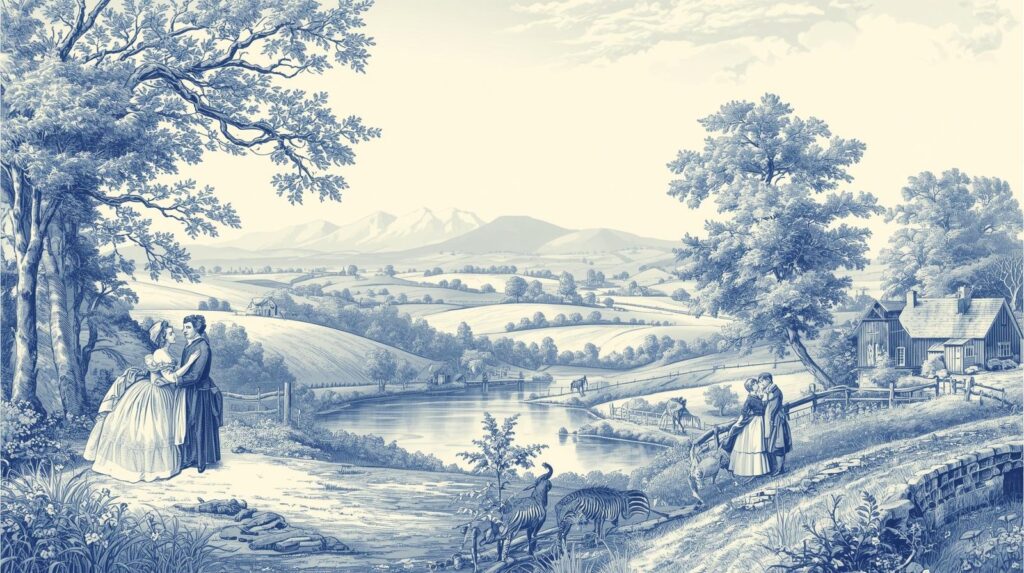
Toile de Jouy—often simply called toile—is perhaps the most quintessentially farmhouse of all wallpaper patterns. Its detailed scenes of rural life, pastoral landscapes, and romantic vignettes capture the idyllic vision of country living that farmhouse style celebrates.
The Classic Toile Palette
Traditional toile features a single color printed on a light background—deep blue on cream, rich red on off-white, forest green on natural linen. These classic combinations bring sophistication and history to a space while maintaining the rural charm that makes them appropriate for farmhouse settings. A toile feature wall in a dining room or primary bedroom creates an instant focal point that feels both elegant and welcoming.
Modern Toile Interpretations
Contemporary designers have reimagined toile for today’s homes, introducing unexpected colorways and updated scenes. Gray toile on soft white feels fresh and modern while maintaining traditional appeal. Black toile on cream adds graphic drama. Some modern toiles even update the scenes themselves, featuring contemporary rural life or whimsical interpretations of farm animals and country pursuits. These fresh takes allow you to enjoy toile’s narrative quality without the formality of traditional versions.
Where Toile Works Best
Toile’s detailed patterns reward close viewing, making it ideal for spaces where you have time to linger and explore. Dining rooms, bedrooms, and reading nooks are perfect candidates. In smaller doses, toile can be stunning in a powder room or inside a built-in cabinet backing. The key is to let it breathe—avoid competing patterns and keep furnishings simple so the toile remains the star.
Gingham and Checks: The Comfort of Classic Patterns
Few patterns say “farmhouse” quite like gingham and buffalo check. These classic prints bring a sense of comfort, nostalgia, and cheerful simplicity to any space.
The Enduring Appeal of Gingham
Gingham’s simple checked pattern has adorned farmhouse kitchens for generations, appearing on curtains, tablecloths, and aprons. As wallpaper, gingham brings the same homespun charm to entire walls. Small-scale gingham in soft colors—buttermilk yellow, faded blue, sage green, dusty pink—creates a subtle backdrop that reads almost as texture from a distance. Larger gingham patterns make a bolder statement, their graphic quality adding energy and playfulness to casual spaces.
Buffalo Check: Farmhouse Bold
Buffalo check’s larger, bolder squares bring a rugged, masculine energy to farmhouse interiors. Traditional black and white buffalo check makes a dramatic statement, while softer combinations—charcoal and cream, navy and natural, forest green and oatmeal—offer the same graphic impact with greater subtlety. Use buffalo check wallpaper on a single accent wall, behind open shelving, or in a mudroom where its boldness feels appropriately energetic.
Mixing Checks with Other Patterns
For the confident decorator, gingham and buffalo check can mix beautifully with other patterns. The key is scale and color connection. Pair a large-scale buffalo check with a small-scale floral that shares a color from the check. Use gingham as a neutral backdrop for busier patterns in furnishings and textiles. The consistency of color throughout will unite even the most eclectic pattern mixing.
Florals for the Farmhouse: From Delicate to Dramatic
Floral wallpapers have always had a place in farmhouse interiors, but today’s options range far beyond the tiny, repetitive blooms of decades past.
Small-Scale Vintage Florals
Delicate, scattered florals on light backgrounds capture the romantic spirit of vintage farmhouse style. These patterns feel almost like fabric, their soft colors and gentle forms adding femininity and warmth without overwhelming a space. They work beautifully in bedrooms, breakfast nooks, and any room where you want to create a cozy, inviting atmosphere. The key is choosing florals with enough variation and negative space to feel fresh rather than fussy.
Overscale Botanicals for Modern Impact
For a more contemporary farmhouse feel, consider overscale botanical prints. Huge cabbage roses, massive peonies, or dramatic branches create wall-sized art that brings the garden indoors. These large-scale prints feel modern and confident while maintaining the connection to nature that farmhouse style celebrates. In a dining room or entryway, an overscale botanical wallpaper creates instant drama and sets a welcoming tone.
Wildflower Meadows and Field Grasses
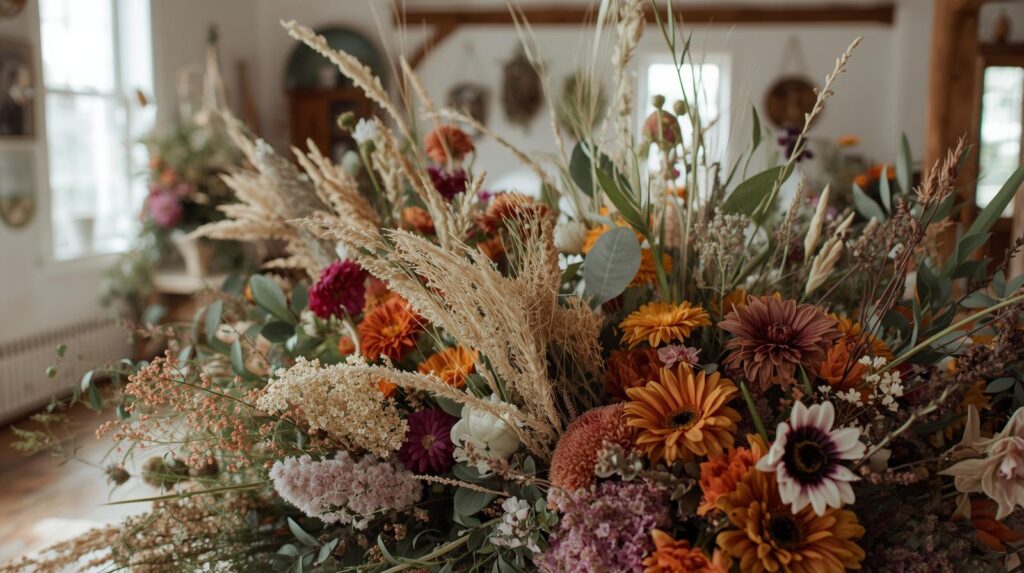
Floral wallpapers that capture the untamed beauty of wildflower meadows or prairie grasses bring a sense of freedom and natural abundance to farmhouse spaces. These designs feel less structured than traditional florals, their organic forms scattering across the wall like seeds on the wind. Paired with simple furnishings in natural materials, they create spaces that feel both wild and welcoming.
Architectural Elements: Shiplap, Board and Batten, and Beyond
Farmhouse style has always celebrated architectural detail, and wallpaper offers a way to incorporate these elements even in homes that lack original character.
The Shiplap Alternative
Shiplap became synonymous with farmhouse style through its extensive use in modern farmhouse interiors. Shiplap wallpaper offers the look of authentic board-and-batten siding without the installation complexity or permanence. The dimensional quality of these wallpapers—with actual grooves creating shadow lines—adds convincing texture that flat prints cannot match. Paintable versions allow you to customize the color to perfection, matching your trim or creating a subtle tonal variation.
Faux Tin Ceilings and Pressed Tin Walls
Pressed tin ceilings and wall panels adorned historic farmhouses with affordable elegance. Today’s embossed wallpapers replicate this look with surprising authenticity, bringing the same dimensional pattern and vintage charm to modern spaces. Use them on ceilings for an unexpected moment of interest, or cover a powder room walls for a compact dose of farmhouse glamour.
Beadboard and Wainscoting Effects
Beadboard wallpaper captures the classic look of traditional wainscoting, adding architectural interest and a subtle linear pattern to lower walls. Painted white and paired with a contrasting wallcovering above, it creates the appearance of custom millwork at a fraction of the cost. This approach works beautifully in dining rooms, hallways, and farmhouse bathrooms where traditional detailing feels appropriate.
Neutral Textures: Subtle Grounding for Farmhouse Spaces
Sometimes the most effective wallpaper is the one you barely notice—the textured ground that provides warmth and depth without demanding attention.
Natural Fiber Looks
Wallpapers that mimic natural fibers—linen, burlap, grasscloth—bring organic texture to farmhouse walls. Their subtle variations in tone and weave add visual interest that changes with the light throughout the day. Unlike authentic grasscloth, which can be delicate and difficult to clean, these printed versions offer the same aesthetic appeal with greater durability and easier maintenance.
Plaster and Stucco Finishes
The look of aged plaster or limewash brings Old World warmth to farmhouse interiors. These wallpapers capture the subtle color variations and soft texture of hand-troweled finishes, creating walls that feel timeless and artisanal. They provide the perfect backdrop for farmhouse furnishings, allowing wood tones and textiles to take center stage while contributing their own quiet beauty.
Subtle Stripes and Weaves
Wallpapers with barely-there patterns—ticking stripes, woven textures, tone-on-tone geometrics—add structure and interest without competing with other elements. They read as neutral from a distance but reward closer viewing with subtle detail. These versatile backgrounds work in any farmhouse room, providing the perfect foundation for layered textiles, collected accessories, and statement furniture.
Murals and Scenic Wallpapers: Bringing the Outdoors In
For the ultimate farmhouse statement, consider a mural or scenic wallpaper that transforms your wall into a window on rural life.
Pastoral Landscapes
Scenic wallpapers depicting rolling hills, grazing livestock, and peaceful farmsteads capture the idyllic vision at the heart of farmhouse style. These immersive scenes bring the outdoors in, creating walls that invite contemplation and daydreaming. In a dining room, a pastoral landscape sets a relaxed, welcoming tone for shared meals. In a bedroom, it creates a serene retreat that feels connected to nature.
Botanical Murals
For those who prefer plants to animals, botanical murals offer another way to bring the rural landscape indoors. Massive trees, lush greenery, or flowering meadows create a sense of being surrounded by nature. These murals work particularly well in spaces that lack actual views of the outdoors, providing a verdant escape within urban and suburban homes.
The Magic of Hand-Painted Effects
Many scenic wallpapers are designed to mimic the look of hand-painted murals, with visible brushstrokes and artistic interpretation adding to their charm. These papers feel more like art than decoration, their painterly quality elevating the entire room. Choose a scene that resonates with you personally—perhaps the landscape of your childhood or the countryside you dream of visiting—and let it become the heart of your space.
Mixing and Matching: Creating Curated Farmhouse Walls
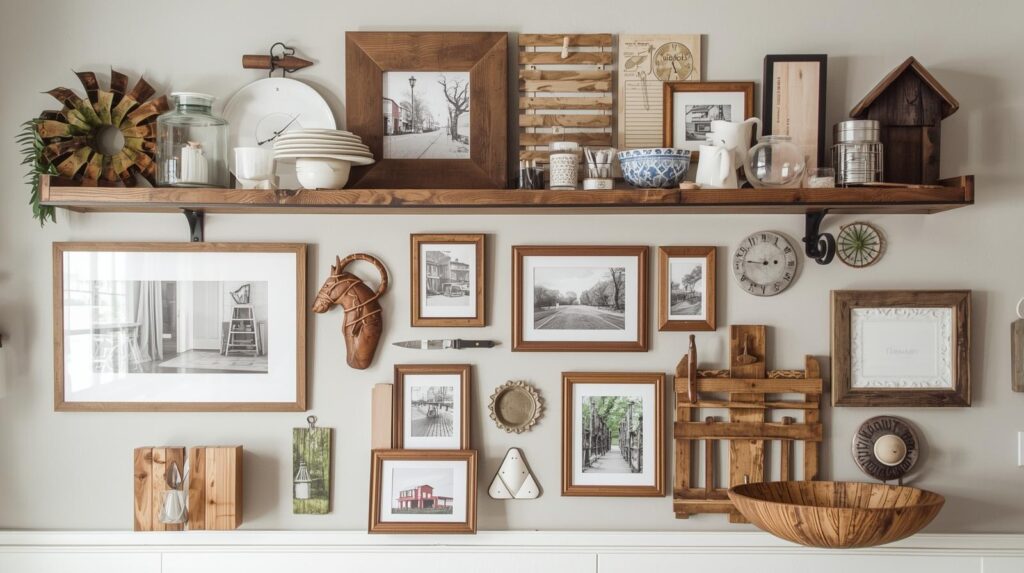
The most interesting farmhouse interiors don’t stop at one wallpaper—they layer patterns, textures, and styles for a collected, personal effect.
The Accent Wall Approach
For those new to pattern, starting with a single accent wall allows you to enjoy the impact of wallpaper without committing to an entire room. Choose the wall that naturally draws the eye—behind the bed, at the end of a hallway, the wall with the dining table—and make it your focal point. Paint the remaining walls in a coordinating color pulled from the wallpaper for a cohesive, designed look.
Combining Patterns in One Space
For the pattern-confident, combining multiple wallpapers in a single space creates richness and personality. Use a bold pattern on the main walls and a coordinating stripe in a powder room or closet. Paper the ceiling in a subtle pattern while keeping walls neutral. Create a wallpaper “feature” inside open shelving or cabinet backs. The key is maintaining a consistent color story that unites the different patterns.
Seasonal Swaps and Temporary Options
For renters or the pattern-hesitant, removable and peel-and-stick wallpapers offer the flexibility to experiment without commitment. Use them to create temporary feature walls, to line the back of a bookshelf, or to transform a small powder room. When the seasons change or your taste evolves, simply peel them away and start fresh. This low-commitment approach allows you to enjoy farmhouse wallpaper without the permanence of traditional installation.
Practical Considerations: Choosing and Installing Farmhouse Wallpaper
Before falling in love with a pattern, consider the practical aspects that will affect your satisfaction with the finished result.
Scale and Proportion
The scale of your wallpaper pattern should relate to the size of your room. In small spaces, large-scale patterns can feel overwhelming, while tiny patterns in large rooms can get lost. Consider the pattern’s repeat—how often the design repeats vertically and horizontally—as this affects both visual impact and the amount of waste during installation.
Light and Color
Consider how your chosen wallpaper will look in your room’s specific light. The same pattern can appear dramatically different in north-facing light versus south-facing, in morning sun versus evening. Order samples and view them on your walls at different times of day before committing. Paint large sheets of paper with your wall color and view them against the wallpaper sample to ensure harmony.
Durability and Maintenance
Different rooms demand different levels of durability from their wallcoverings. In dining rooms, where walls may encounter food splatters, choose washable vinyl or vinyl-coated papers. In high-humidity bathrooms, look for moisture-resistant options. In high-traffic hallways, darker colors and forgiving patterns will show less wear than pale solids. Match your wallpaper choice to the demands of your space.
Conclusion: Walls That Tell Your Farmhouse Story
Farmhouse style, at its best, is about creating a home that feels honest, warm, and deeply personal. It celebrates the beauty of everyday life, the comfort of familiar things, and the connection to traditions that ground us. Wallpaper, far from being a departure from this aesthetic, offers a powerful tool for expressing exactly these qualities.
Whether you’re drawn to the weathered authenticity of reclaimed wood looks, the romantic narratives of toile, the cheerful simplicity of gingham, or the immersive beauty of scenic murals, the right wallpaper can transform your farmhouse interior from a collection of furnishings into a space with soul. It adds the layer of pattern, texture, and personality that makes a house feel like a home—a home with history, with warmth, with stories waiting to be told.
As you embark on your farmhouse wallpaper journey, remember that the best choices are those that resonate with you personally. Ignore rigid rules about what “should” go together and instead trust your eye and your heart. The farmhouses that inspire us—whether authentic antiques or modern interpretations—were not decorated by committee but shaped by the people who lived in them, one choice at a time.
So take your time, explore the possibilities, and choose wallpapers that make you smile every time you walk into the room. Let your walls tell the story of your family, your values, your vision of home. In the end, that personal connection is what farmhouse style has always been about—and it’s what will make your farmhouse wallpaper ideas not just beautiful, but truly yours.