Farmhouse Pantry Ideas: Organizing with Rustic Charm and Function
There is something deeply satisfying about a well-organized pantry. In the farmhouse tradition, the pantry has always held a place of honor, serving as the storage heart of the home where provisions are kept, meals are planned, and the household’s nourishment is secured. Today’s farmhouse pantries continue this tradition while embracing modern organizational principles and design aesthetics. Whether you are working with a spacious walk-in pantry or a small closet off the kitchen, farmhouse style offers countless ideas for creating a storage space that is both beautiful and highly functional. A thoughtfully designed farmhouse pantry not only makes meal preparation easier but also adds character and charm to your home. This comprehensive guide explores everything you need to know about creating a farmhouse pantry that combines rustic appeal with practical organization.
The Farmhouse Pantry Philosophy
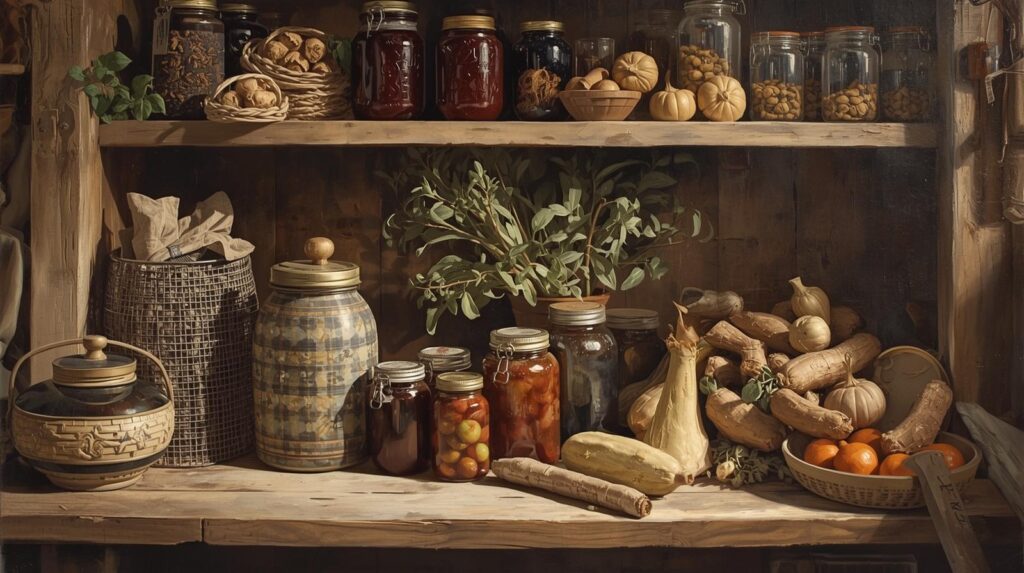
Before diving into specific design elements, it is helpful to understand what makes a farmhouse pantry distinct from other storage approaches. The farmhouse philosophy emphasizes practicality, simplicity, and connection to tradition. In historical farmhouses, the pantry was not a design statement but an essential workspace where food was stored, preserved, and prepared for family meals.
This practical origin shapes the farmhouse pantry aesthetic today. The goal is not perfection or showroom sterility but rather a warm, functional space where everything has its place and daily tasks feel more pleasant. Visible food storage, rather than being hidden away, becomes part of the decorative scheme, with colorful packages and glass jars adding visual interest. The farmhouse pantry celebrates the beauty of everyday provisions while keeping them organized and accessible.
Assessing Your Space and Needs
Every successful pantry project begins with honest assessment of available space and actual storage needs. Understanding what you have to work with and what you need to store guides all subsequent decisions.
Start by measuring your pantry space thoroughly. Note the dimensions of walls, the location of doors and windows, and any obstacles like outlets or light switches. Ceiling height matters for shelving planning, as does floor space for any freestanding furniture you might incorporate.
Next, inventory what you actually need to store. Consider your cooking habits, family size, and shopping patterns. Do you buy in bulk and need space for large packages? Do you can or preserve foods that require specific storage conditions? Do you have small appliances that belong in the pantry? Understanding your actual storage requirements prevents designing a beautiful space that doesn’t meet your practical needs.
Consider also how you use your pantry. Do you need counter space for meal preparation? A spot for a coffee station? Room for a second refrigerator or freezer? These functional considerations shape the overall design.
Farmhouse Pantry Shelving Ideas
Shelving forms the backbone of any pantry, and farmhouse style offers numerous options for creating storage that is both beautiful and functional.
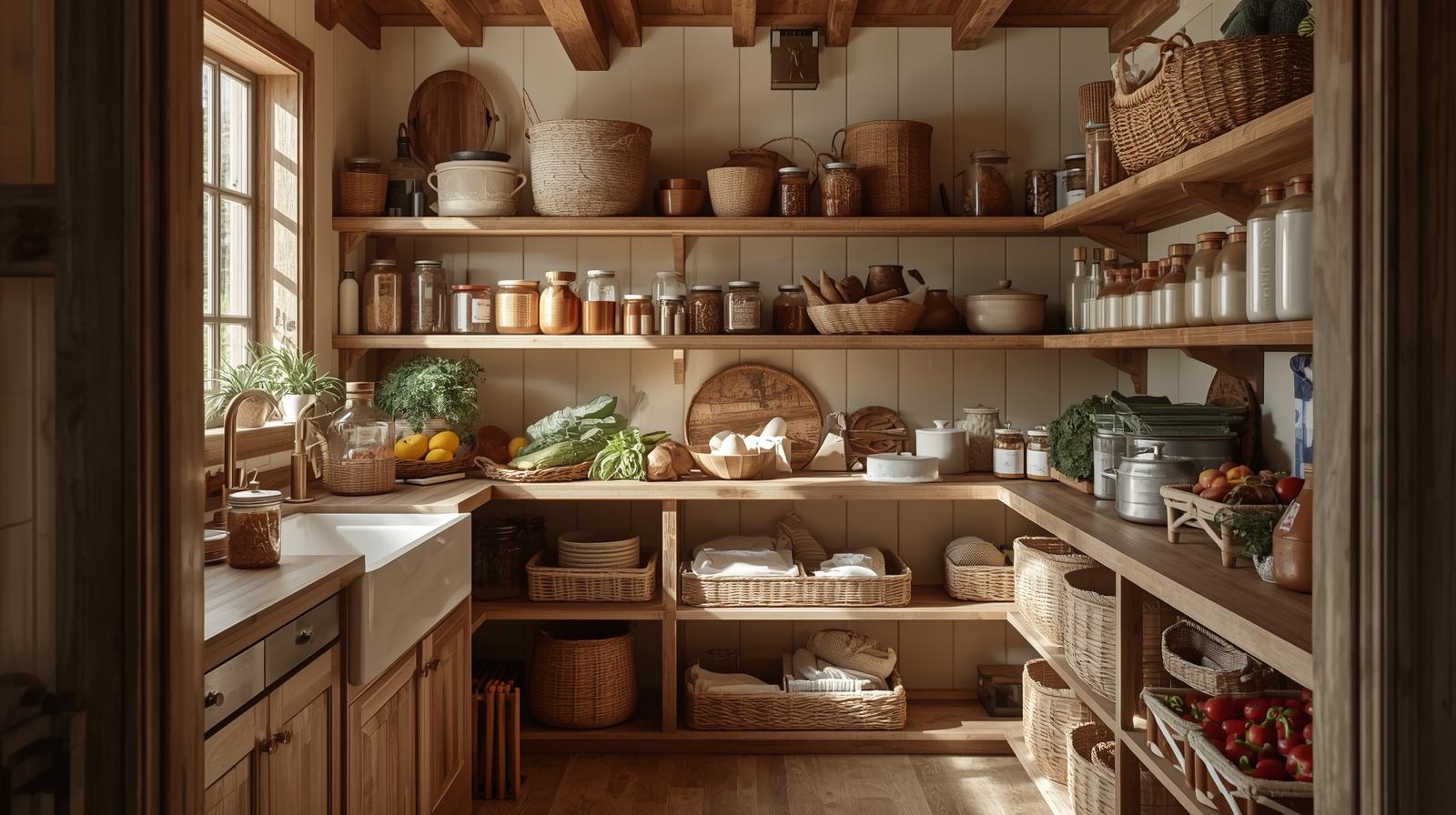
Open shelving stands as a hallmark of farmhouse pantries. Unlike closed cabinets that hide contents, open shelves display your provisions while keeping them easily accessible. Wood shelves in natural finishes or painted white create the classic farmhouse look. Consider the weight they must support; sturdy brackets and proper installation ensure safety with heavy loads.
Floating shelves offer clean, minimal lines while providing substantial storage. These shelves, mounted with hidden hardware, appear to float on the wall, creating an airy, uncluttered look. In a farmhouse pantry, wood floating shelves in reclaimed barn wood or painted finishes add character while maximizing visual space.
Floor-to-ceiling shelving makes the most of vertical space, essential in smaller pantries. Adjustable shelves accommodate items of varying heights, from tall cereal boxes to short spice jars. In a farmhouse pantry, consider mixing open shelving with closed storage below for a balanced look.
Corner shelving utilizes often-wasted space. Lazy Susans, pull-out shelves, or simple fixed shelves in corners add valuable storage. In a farmhouse pantry, consider a corner cabinet with a swinging door that provides access to both sides.
Bracket styles contribute to the farmhouse aesthetic. Simple iron brackets in black or aged metal, wooden brackets with decorative cutouts, or even vintage architectural brackets repurposed as shelf supports all add character while serving practical function.
Farmhouse Cabinet and Drawer Options
While open shelving dominates the farmhouse pantry aesthetic, cabinets and drawers provide essential closed storage for items better kept out of sight.
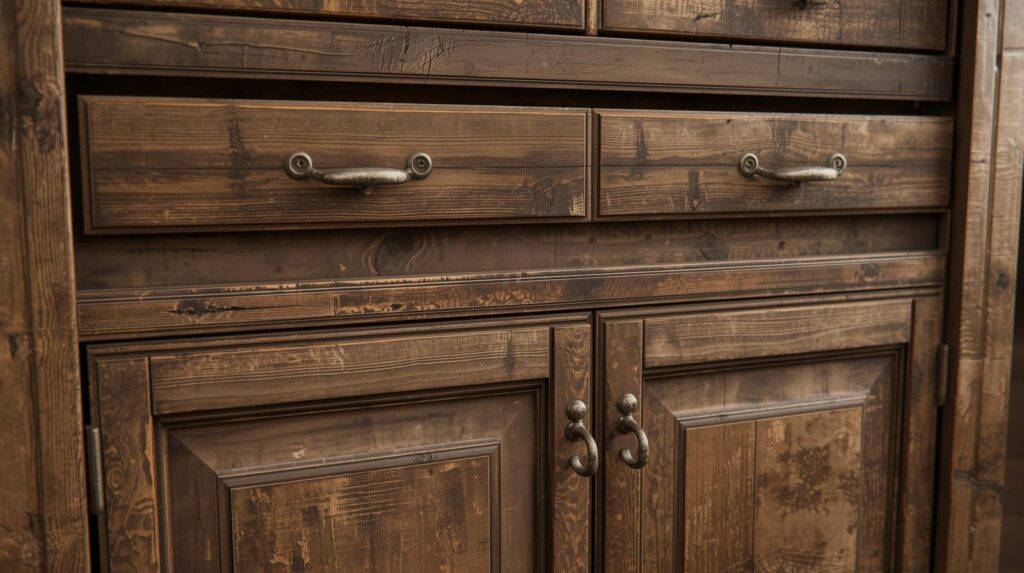
Base cabinets with doors conceal less attractive items while providing substantial storage. In a farmhouse pantry, consider cabinet fronts with simple shaker styling, perhaps with glass inserts in upper doors to maintain visual lightness. Paint colors in white, cream, soft gray, or sage green suit the farmhouse aesthetic.
Pull-out drawers within base cabinets maximize accessibility. No more reaching to the back of deep cabinets; pull-outs bring everything forward for easy viewing and retrieval. These work particularly well for canned goods, spices, and smaller packaged items.
Drawer banks provide organized storage for specific categories. Deep drawers for potatoes and onions, shallow drawers for linens and towels, and everything in between. In a farmhouse pantry, consider mixing wood and painted finishes for visual interest.
Basket drawers combine the accessibility of drawers with the ventilation of baskets. These work beautifully for produce storage, allowing air circulation while keeping items contained. Woven baskets on drawer slides add farmhouse texture while providing practical function.
Farmhouse Pantry Organization Systems
Beyond the basic shelving and cabinets, specific organization systems make a farmhouse pantry truly functional. These tools turn storage space into an efficient workspace.
Glass jars stand as perhaps the most iconic farmhouse pantry accessory. Transferring dry goods like flour, sugar, pasta, and cereal into glass containers creates uniform, attractive storage while keeping contents fresh. Mason jars, in particular, embody farmhouse aesthetics perfectly. Label jars clearly with chalkboard labels, handwritten tags, or simple adhesive labels for easy identification.
Baskets and bins provide flexible storage for items that don’t fit neatly on shelves or in jars. Woven baskets in natural materials add farmhouse texture while corralling snacks, produce, or small packages. Galvanized metal bins bring industrial farmhouse appeal. Wire baskets allow visibility of contents while providing structure.
Pull-out shelving maximizes accessibility in deep pantries. These sliding shelves bring back-row items forward, eliminating the frustration of items lost at the back. Install them in base cabinets or between fixed shelves for full-pantry accessibility.
Lazy Susans make corner cabinets and deep shelves infinitely more usable. Spinning shelves bring items to the front with a simple turn, perfect for oils, vinegars, and condiments. In a farmhouse pantry, consider wood or wire lazy Susans that suit the aesthetic.
Tiered shelving creates stadium seating for canned goods and spices. These stepped shelves allow viewing of all items at once, with nothing hidden behind others. Simple wire or wood versions suit farmhouse aesthetics while providing practical function.
Labeling transforms a collection of containers into an organized system. Chalkboard labels on glass jars, handwritten tags on baskets, or printed labels on shelf edges all contribute to the farmhouse look while making everything easy to find. Consistent labeling creates visual cohesion even with varied containers.
Farmhouse Pantry Color and Materials
The colors and materials you choose significantly affect the overall feel of your farmhouse pantry. Thoughtful selections create cohesion and reinforce the aesthetic.
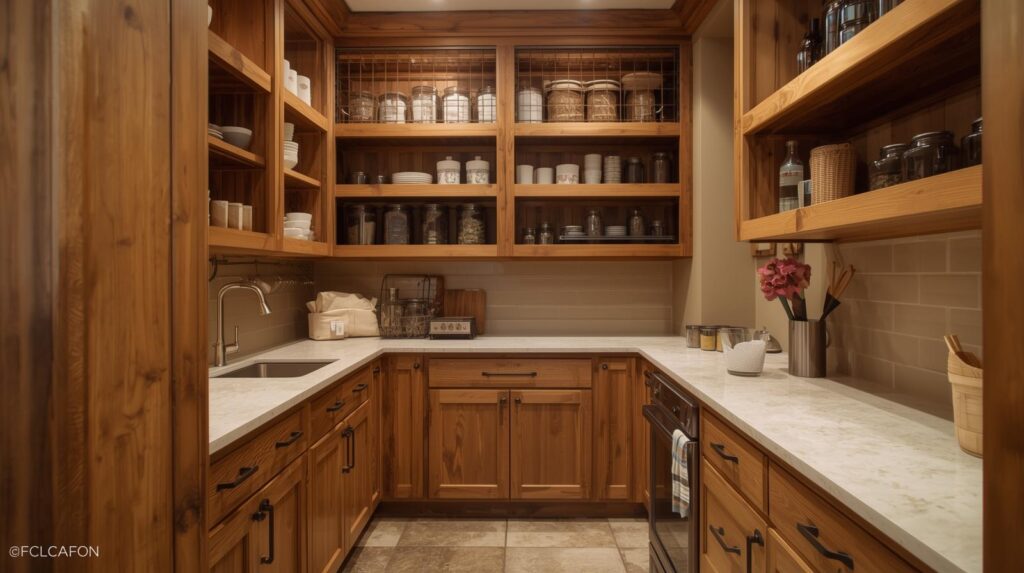
White dominates most farmhouse pantries, and for good reason. White walls, white shelving, and white cabinets create a clean, bright backdrop that makes the space feel larger and more welcoming. White also provides neutral contrast to the colorful packages and natural materials that fill the pantry.
Wood brings essential warmth to the farmhouse pantry. Natural wood shelving, butcher block countertops, and wood flooring add organic texture that prevents the space from feeling too sterile. Reclaimed wood carries particular authenticity, with its knots, nail holes, and varied grain telling stories of previous lives.
Black provides dramatic contrast in farmhouse pantries. Black metal brackets, black cabinet hardware, or a black chalkboard wall add graphic definition against white backgrounds. Used sparingly, black prevents the space from feeling washed out or overly sweet.
Natural materials extend beyond wood to include stone, metal, and fiber. Stone countertops, if your pantry includes them, add permanence and natural beauty. Galvanized metal containers bring industrial farmhouse appeal. Woven baskets and natural fiber rugs add texture and warmth.
Farmhouse Pantry Flooring Options
Flooring in a farmhouse pantry should be both practical and beautiful, able to withstand foot traffic and occasional spills while contributing to the overall aesthetic.
Wide-plank wood flooring, whether real or engineered, brings authentic farmhouse character. Light to medium stains show less dirt than dark floors while allowing natural grain to shine through. In a pantry, ensure wood flooring is properly sealed to resist moisture.
Wood-look tile offers the beauty of wood with superior water resistance. Modern porcelain tiles convincingly replicate wood grain and texture while providing durability that real wood cannot match. This practical choice suits pantries that may see spills or heavy use.
Painted wood floors offer charming farmhouse appeal with practical benefits. White or cream paint brightens the space and conceals minor imperfections. For added interest, consider a checkerboard pattern or stenciled design that adds personality without overwhelming.
Natural stone tile brings enduring beauty and connection to the earth. Limestone, slate, or travertine tiles add organic texture while providing durable, long-wearing surfaces. In a farmhouse pantry, stone flooring grounds the space in natural materials.
Farmhouse Pantry Lighting
Proper lighting transforms a pantry from merely functional to genuinely pleasant. Farmhouse style offers several approaches to illumination.
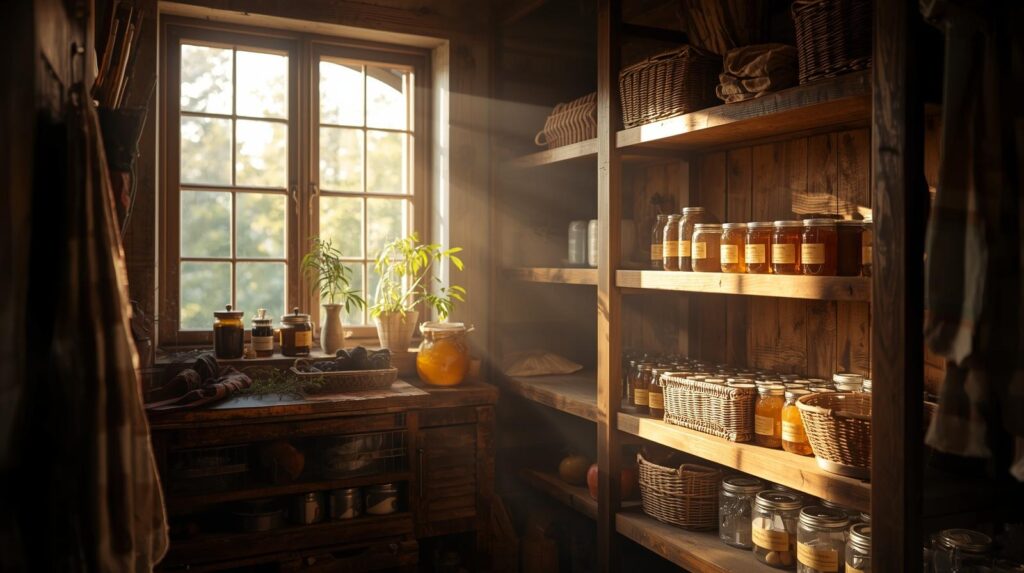
Natural light, when available, creates the most appealing pantry environment. If your pantry has a window, maximize its contribution with minimal window treatments. Even a small window brings daylight that artificial light cannot replicate.
Pendant lights over islands or counters add task lighting while contributing to the farmhouse aesthetic. Look for fixtures in metal, wood, or glass that suit the style. Schoolhouse pendants, industrial cages, or simple globes all work beautifully.
Under-shelf lighting illuminates dark corners and makes item identification easier. Battery-operated LED strip lights install easily without electrical work, casting light exactly where needed. In a farmhouse pantry, choose fixtures with warm color temperature for the most flattering light.
Can lighting provides general illumination without visual clutter. Recessed lights keep the ceiling clean while providing even light throughout the space. Dimmers allow adjustment for different tasks and times of day.
Farmhouse Pantry Counter and Workspace
If space allows, including counter space in your farmhouse pantry adds tremendous functionality. A place to set groceries, assemble ingredients, or perform small tasks makes the pantry a true workspace rather than mere storage.
Butcher block countertops embody farmhouse practicality. Wood provides a warm, inviting surface that stands up to heavy use. With proper sealing and care, butcher block lasts for years while developing beautiful patina. It also provides a surface for occasional food preparation.
Stone countertops offer durability and timeless beauty. Soapstone, limestone, or granite provide long-wearing surfaces that resist stains and heat. In a farmhouse pantry, stone grounds the space in natural materials while providing practical function.
A small prep sink adds tremendous utility to a pantry. Washing produce, filling water glasses, or cleaning up small messes becomes infinitely easier with a sink nearby. Choose a farmhouse apron-front sink for maximum authenticity.
Open space beneath the counter accommodates stools or small appliances. If your pantry includes counter seating, even just a spot for a single stool, it becomes a place for casual meals, coffee drinking, or recipe planning.
Farmhouse Pantry Door Options
The pantry door, often overlooked, provides an opportunity to reinforce farmhouse style while serving practical functions.
A classic five-panel door in painted white suits most farmhouse pantries beautifully. Simple, traditional, and unfussy, it blends seamlessly with surrounding architecture while clearly marking the pantry entrance.
Barn doors have become enormously popular in farmhouse design, and for good reason. Sliding barn doors save space while adding authentic rustic character. Mounted on exposed hardware, they make a statement while providing practical function. Glass inserts in barn doors add visual lightness.
French doors, if space allows, create an elegant entrance while allowing light into the pantry. Frosted or seeded glass provides privacy while maintaining the light transmission that makes French doors appealing.
Screen doors, less common but charming, add farmhouse authenticity. A simple wood screen door with decorative hardware creates a casual, welcoming entrance to the pantry.
Farmhouse Pantry Decor and Personal Touches
Beyond the essential functional elements, decorative touches add personality and charm to your farmhouse pantry. These details transform a storage space into a room with character.
Vintage scales, whether functional or purely decorative, add farmhouse authenticity. An old kitchen scale on a counter or shelf connects the space to culinary traditions while providing visual interest.
Ceramic pitchers and crocks hold utensils or stand alone as decorative objects. Salt-glazed pottery, creamware, or simple stoneware all suit farmhouse aesthetics. Group them on upper shelves or use them to corral frequently used items.
Chalkboard surfaces provide practical function while adding farmhouse character. A chalkboard wall for shopping lists and reminders, chalkboard labels on jars, or a small chalkboard board for daily menus all contribute to the aesthetic while serving real purposes.
Fresh herbs growing in small pots bring life and fragrance to the pantry. A sunny windowsill or counter spot accommodates basil, rosemary, mint, or other culinary herbs, ready for snipping during meal preparation.
Artwork, used sparingly, adds personality. A botanical print, vintage advertising sign, or simple landscape painting contributes to the collected, personal feel of a well-loved farmhouse pantry.
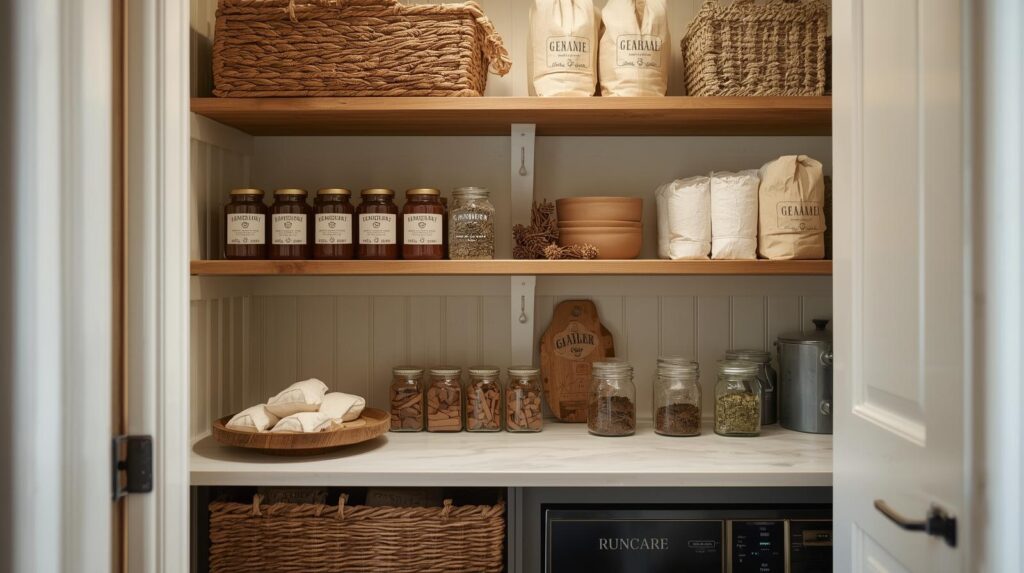
Farmhouse Pantry for Small Spaces
Not everyone has room for a walk-in pantry, but small-space solutions can bring farmhouse organization to even the tiniest storage areas.
Closet pantries utilize existing space efficiently. Remove the closet door and install open shelving for a mini-pantry that feels intentional rather than makeshift. Add a curtain in farmhouse fabric for a soft, attractive closure.
Freestanding furniture provides pantry storage without construction. A vintage hutch, Hoosier cabinet, or simple shelving unit can hold pantry items while adding character. These pieces move with you if you relocate, making them ideal for renters.
Wall-mounted shelving maximizes vertical space in small areas. Floor-to-ceiling shelves against a kitchen wall create substantial storage without consuming floor space. Add baskets and bins for organized, attractive storage.
Magnetic strips on walls hold metal-lidded jars and spice tins, freeing shelf space. In a small pantry, every square inch counts, and vertical magnetic storage makes use of otherwise wasted wall space.
Conclusion: The Heart of Farmhouse Hospitality
A thoughtfully designed farmhouse pantry represents far more than organized storage. It embodies the values at the heart of farmhouse living: practicality, simplicity, connection to tradition, and hospitality. In this space, you prepare nourishment for those you love, drawing on provisions stored with care and intention.
Whether you are creating a spacious walk-in pantry or organizing a small closet, the principles of farmhouse design guide you toward a space that is both beautiful and functional. Natural materials, thoughtful organization, and personal touches combine to create a pantry that makes daily tasks more pleasant while adding character to your home.
So take time to plan your farmhouse pantry with care. Measure thoughtfully, choose materials wisely, and add those personal touches that make the space uniquely yours. The result will be a pantry that serves your family well while embodying the enduring appeal of farmhouse style, a space where practical function and rustic beauty exist in perfect harmony.