Farmhouse Nursery Ideas: Creating a Warm and Welcoming Space for Baby
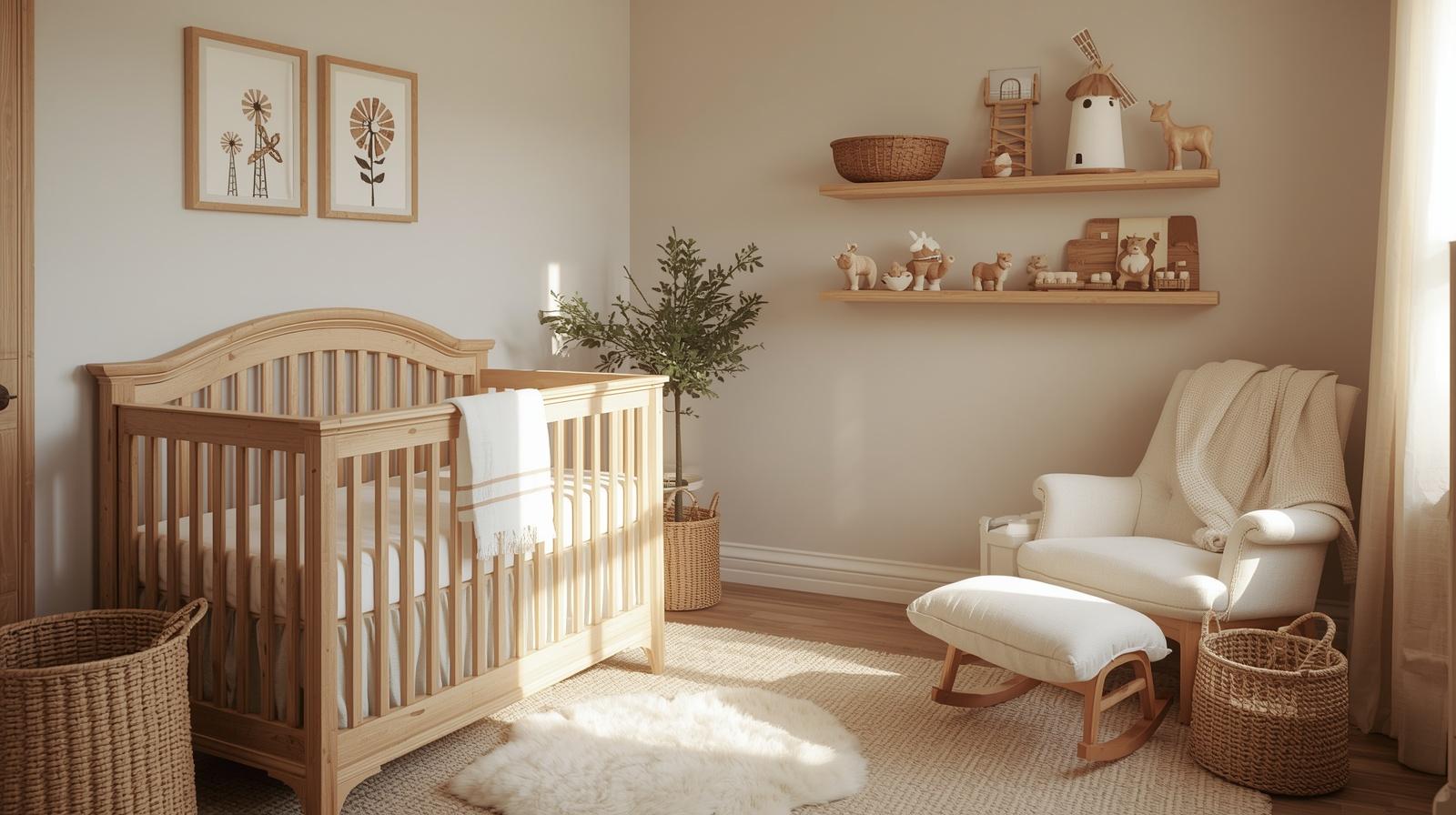
There is something incredibly special about preparing a nursery for a new arrival. This small room, often the most thoughtfully designed space in a home, represents hopes, dreams, and the promise of new life. The farmhouse aesthetic, with its emphasis on warmth, simplicity, and authentic materials, provides the perfect foundation for creating a nursery that is both beautiful and nurturing. A farmhouse nursery combines rustic charm with practical functionality, creating a space where both baby and parents will feel calm, comfortable, and completely at home. Whether you are expecting your first child or adding to your family, these farmhouse nursery ideas will inspire you to create a space that welcomes your little one with warmth and style.
The Philosophy of Farmhouse Nursery Design
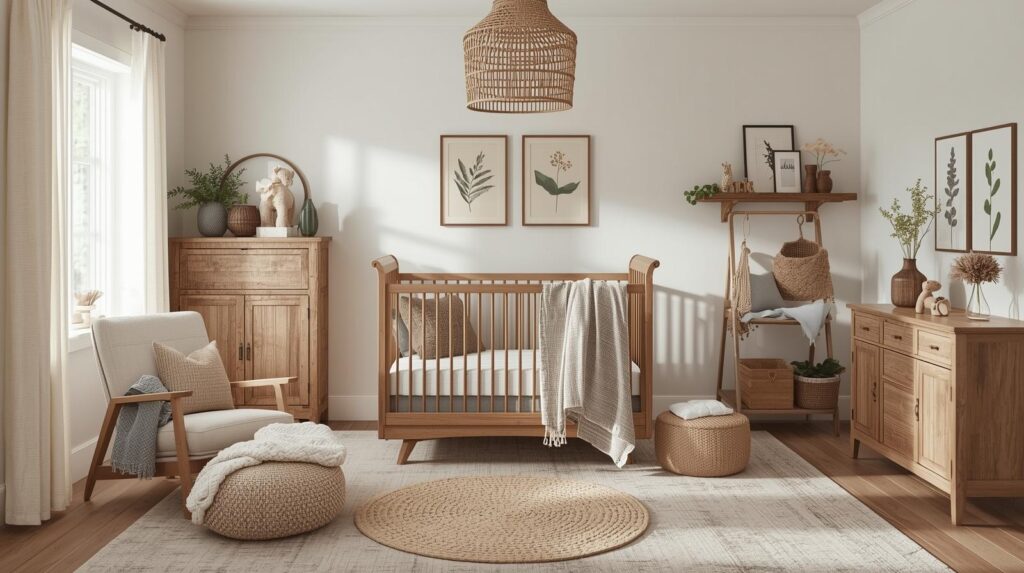
Before exploring specific design elements, it is helpful to understand what makes a farmhouse nursery distinct from other approaches. The farmhouse aesthetic draws inspiration from historical rural homes, where nurseries were simple, practical spaces filled with love rather than excess. This philosophy translates beautifully to modern nursery design.
At its core, a farmhouse nursery prioritizes comfort, safety, and warmth over trends or perfection. The goal is not a showroom-worthy space that looks beautiful in photographs but a room where real life happens, where feedings occur in the middle of the night, where first steps will be taken, and where countless memories will be made. Materials should be natural and safe, furniture should be sturdy and functional, and decor should be personal and meaningful.
The farmhouse nursery embraces imperfection and authenticity. A crib that has been in the family for generations, a handmade quilt from a grandmother, a rocking chair that shows the wear of comforting countless babies, these elements carry more meaning than anything purchased new from a store. The farmhouse nursery tells a story, the story of family and the new life joining it.
The Farmhouse Nursery Color Palette
Color sets the foundation for any nursery, and farmhouse style offers a palette that promotes calm while providing versatility for personal expression.
White stands as the quintessential farmhouse nursery color. Crisp white walls create a fresh, clean backdrop that makes the room feel larger and brighter. White also provides the perfect neutral canvas for other colors and textures, allowing them to shine without competition. In a nursery, white has the additional benefit of being gender-neutral, perfect for parents who prefer not to declare their baby’s sex through decor.
Cream and ivory offer softer alternatives to pure white, bringing warmth and gentleness to the nursery. These colors create cozy, enveloping spaces that feel nurturing and calm. Cream walls with white trim provide subtle contrast while maintaining the light, airy quality essential to farmhouse design.
Soft gray provides sophisticated neutrality that works beautifully in farmhouse nurseries. From pale silver to warm greige, gray offers endless possibilities for creating calm, inviting spaces. Warm grays with brown undertones create cozy atmospheres, while cooler grays contribute to crisper aesthetics.
Muted blues and greens appear frequently in farmhouse nurseries, drawn from the colors of the natural landscape. Soft sage green, dusty blue, or serene seafoam add gentle color without overwhelming the space. These hues promote calm and connection to nature, making them particularly appropriate for a baby’s room.
Blush pink, used thoughtfully, adds warmth without sweetness. In a farmhouse nursery, blush appears in textiles, accessories, or as a subtle wall color rather than in overwhelming quantities. Paired with plenty of white and natural wood, blush feels fresh and modern rather than overly feminine.
Warm wood tones provide essential contrast and grounding. The natural colors of oak, pine, and reclaimed wood appear in furniture, flooring, and accessories, adding warmth and authenticity to the neutral palette.
Essential Farmhouse Nursery Furniture
The furniture in a farmhouse nursery should be sturdy, safe, and beautiful, with pieces that can potentially serve for years or even generations.
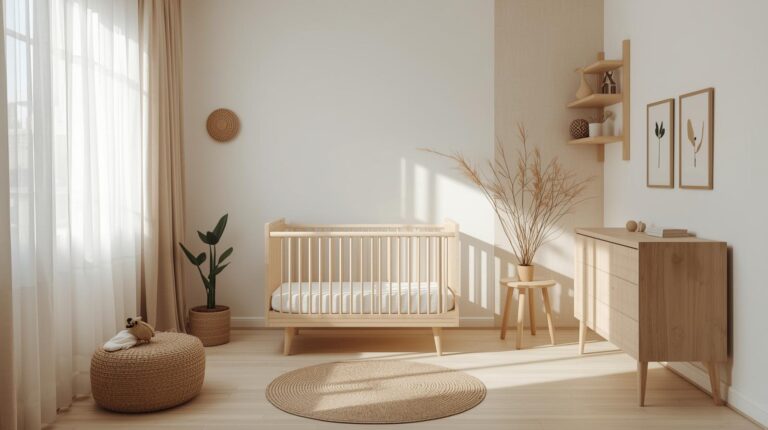
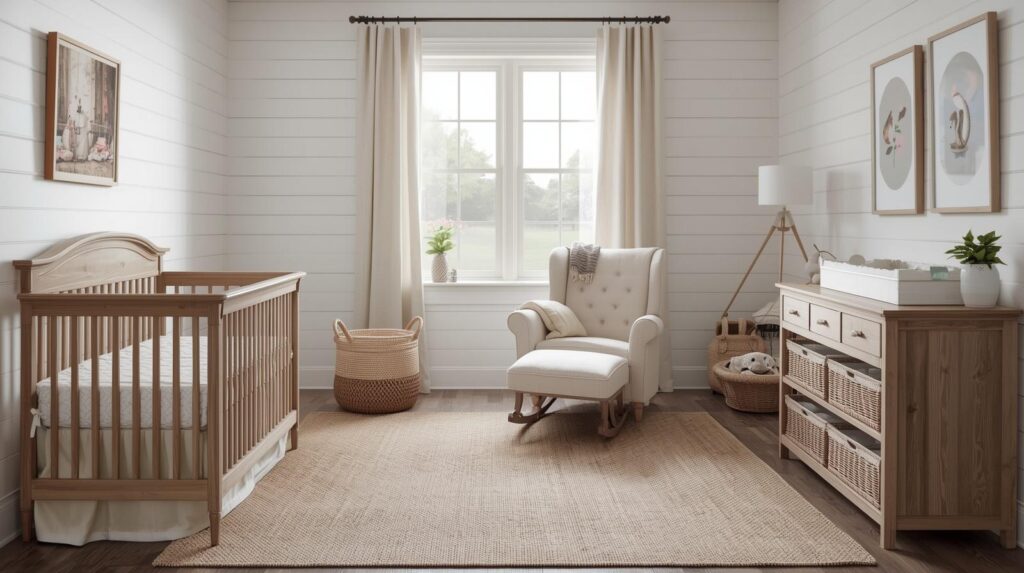
The crib naturally serves as the focal point of any nursery. In farmhouse style, look for cribs with simple, classic lines rather than overly ornate designs. Wood cribs in natural finishes or painted white embody farmhouse aesthetics beautifully. Convertible cribs that transform into toddler beds and eventually full-size beds provide excellent value and longevity. Ensure any crib meets current safety standards regardless of its style.
A comfortable chair for feeding and comforting is perhaps the most used piece of nursery furniture. In farmhouse style, a classic rocking chair or glider in wood with comfortable cushions works beautifully. For true farmhouse authenticity, consider a vintage rocking chair that has soothed babies for generations. Whatever style you choose, prioritize comfort for those long nights of feeding and soothing.
A dresser provides essential storage for baby’s clothing and supplies. In a farmhouse nursery, look for pieces with classic lines, perhaps in wood or painted finishes. Many dressers can also serve as changing tables with the addition of a changing pad on top. Choose a dresser with sturdy construction and smooth-gliding drawers that will withstand years of use.
A changing table, whether a dedicated piece or a dresser with a changing top, should be at comfortable working height and include storage for diapers, wipes, and changing supplies. In a farmhouse nursery, a simple wood changing table with open shelving below provides accessible storage while maintaining the aesthetic.
A bookcase or shelf provides space for books, display, and storage. Open shelving in wood allows for attractive display of books and treasures. In a farmhouse nursery, consider a low bookcase that baby can eventually reach independently, fostering early independence and love of reading.
A small side table beside the feeding chair holds a lamp, water bottle, and other essentials for those middle-of-the-night feedings. A simple wood table or small cabinet suits farmhouse aesthetics perfectly.
Farmhouse Nursery Bedding and Textiles
Bedding and textiles play an enormous role in creating the cozy, nurturing atmosphere essential to a farmhouse nursery. Safety considerations, however, must always come first.
Crib bedding should follow current safety guidelines, which recommend a firm mattress with a tight-fitting sheet and nothing else in the crib. Fitted crib sheets in soft, natural fabrics provide the foundation. Look for organic cotton, bamboo, or other natural fibers in colors that complement your palette. A few well-chosen sheets allow for rotation during inevitable middle-of-night accidents.
Swaddles and blankets for supervised use add softness and warmth. Muslim swaddles in neutral tones, lightweight knit blankets, and small receiving blankets all serve practical purposes while adding to the nursery’s textile layers. Store them in baskets or on shelves for easy access.
A crib skirt conceals storage beneath the crib while adding softness to the room’s lower level. Choose a simple style in linen, cotton, or muslin that complements your bedding. Neutral colors work best, allowing flexibility as the nursery evolves.
Window treatments should provide adequate light control for naps while maintaining the farmhouse aesthetic. Roman shades in natural fabrics, simple curtains in linen or cotton, or bamboo shades all work beautifully. Blackout liners can be added to any treatment for maximum darkness during daytime sleep.
A soft rug defines the nursery space and provides comfortable surface for play and tummy time. Natural fiber rugs like wool or cotton provide durability and easy cleaning. Choose a rug large enough to accommodate play and large enough that it doesn’t slip or slide. A soft, washable rug pad underneath adds comfort and safety.
Farmhouse Nursery Storage Solutions
Babies come with astonishing amounts of stuff, making thoughtful storage essential in any nursery. Farmhouse style offers numerous attractive solutions.
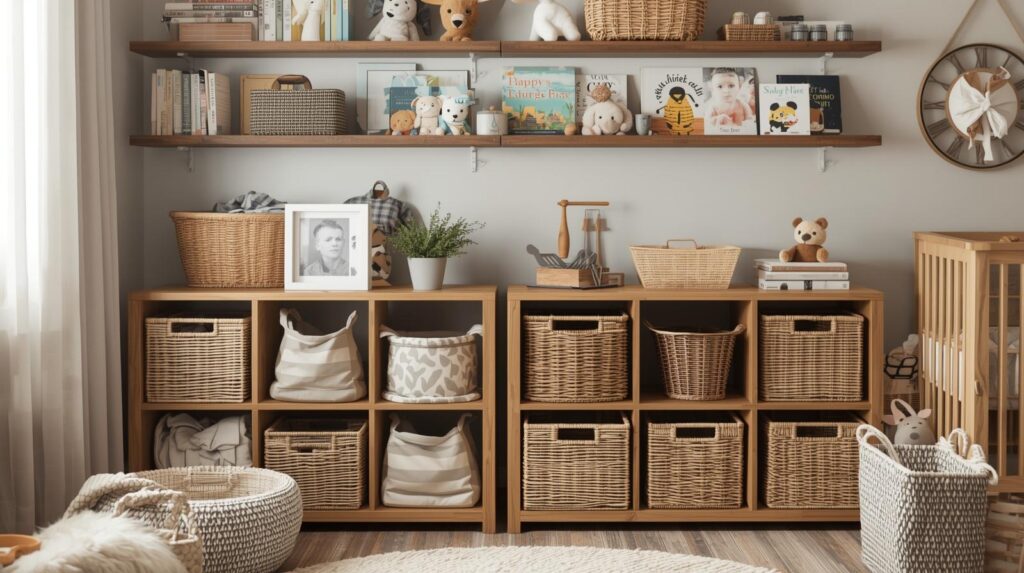
Baskets in natural materials provide flexible, attractive storage for everything from diapers to toys to extra blankets. Woven baskets in seagrass, wicker, or rope add farmhouse texture while containing clutter. Use them on shelves, under changing tables, and in corners for accessible, attractive storage.
Open shelving displays books and treasures while keeping them accessible. In a farmhouse nursery, wood shelves mounted at child height eventually allow baby to choose their own books. Style shelves simply, with books facing forward for easy selection and a few special objects for visual interest.
Fabric bins in neutral tones corral smaller items on shelves or in cubbies. Choose bins in linen, cotton, or canvas that complement your color palette. Labels, whether chalkboard or simple tags, help keep organized as the nursery evolves.
A wardrobe or armoire provides substantial storage for clothing, particularly in nurseries without built-in closets. Look for pieces with character, perhaps an antique armoire or a simple painted wardrobe. Inside, add organizers for shelves, hanging space, and drawers.
Wall-mounted hooks provide convenient hanging for robes, bags, and frequently used items. In a farmhouse nursery, simple hook racks in wood or black metal add character while serving practical function. Mount them at adult height for parents’ use and lower for when baby grows.
Farmhouse Nursery Wall Treatments
Walls provide the backdrop for all other elements in a farmhouse nursery, deserving careful consideration in material and finish.
Paint remains the simplest and most versatile wall treatment. High-quality paint in eggshell or matte finish provides subtle depth while minimizing reflections. Classic farmhouse colors include soft whites, warm creams, gentle grays, and muted blues or greens. For a subtle accent, consider painting the ceiling a slightly softer version of the wall color for a cozy, enveloping effect.
Wallpaper has returned to favor in nursery design, and for good reason. Modern wallpapers offer endless patterns that add depth and personality to nurseries. In a farmhouse nursery, look for patterns like delicate florals, subtle stripes, or charming toile. Use wallpaper on all walls for immersive pattern, or on a single accent wall for more restrained effect.
Shiplap, that hallmark of farmhouse style, adds texture and architectural interest to nurseries. White-painted shiplap creates a clean, fresh backdrop that feels both rustic and modern. Even a single shiplap accent wall behind the crib can transform the room’s character.
Board and batten adds vertical interest and traditional charm. Painted white or in soft colors, it provides subtle texture while maintaining the light, airy quality essential to farmhouse design. This treatment works particularly well on lower walls, with paint above.
Beadboard, with its characteristic vertical grooves, adds cottage charm to farmhouse nurseries. Used on lower walls as wainscoting or on entire walls, beadboard brings texture and traditional character. Painted white, it brightens spaces while adding architectural interest.
Farmhouse Nursery Lighting
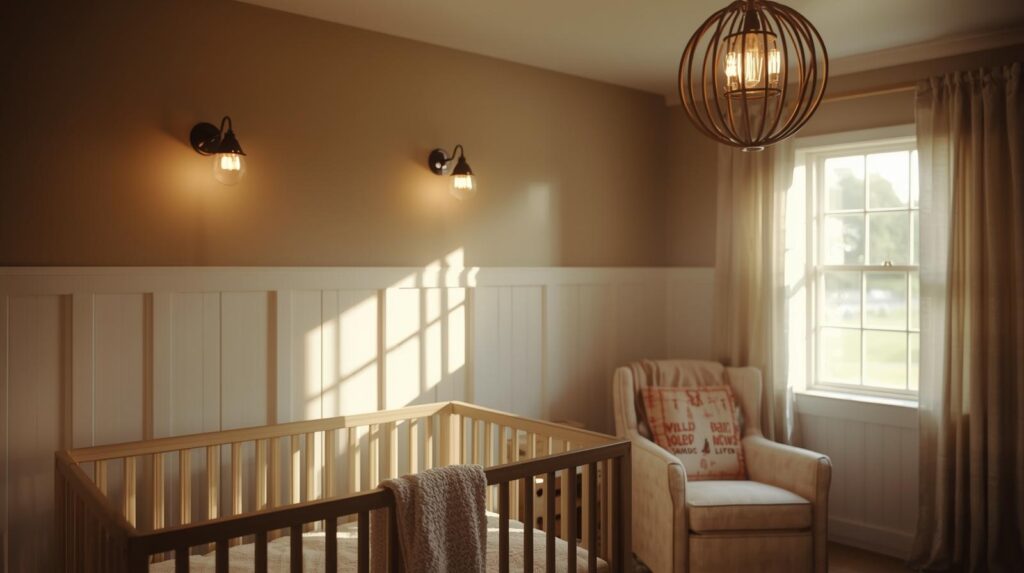
Lighting in a farmhouse nursery should be layered to accommodate different activities and times of day, with fixtures that contribute to the overall aesthetic.
Natural light remains the most important light source during daytime hours. Maximize window exposure and keep window treatments minimal enough to admit daylight when desired. The connection to natural rhythms helps regulate baby’s developing sleep-wake cycles.
Overhead lighting provides general illumination. A beautiful light fixture, whether a chandelier, pendant, or flush mount, adds character while serving practical function. In farmhouse nurseries, look for fixtures in materials like wood, iron, or glass with simple, classic lines. A drum shade in linen or a simple wooden pendant both work beautifully.
A dimmer switch on overhead lighting allows adjustment from bright for cleaning and play to soft for calming and nighttime feedings. This simple addition significantly increases the room’s versatility.
Nursery lighting for feeding and comforting should be soft and warm. A table lamp on the side table beside the feeding chair provides gentle illumination for those middle-of-the-night feedings without being so bright that it fully wakes baby. Look for lamps with fabric shades that diffuse light softly.
A nightlight provides orientation during nighttime visits without disrupting sleep. Choose a simple plug-in nightlight with warm glow, or consider smart bulbs that can be adjusted from your phone.
Nursery projectors that cast gentle images on the ceiling can soothe babies at bedtime while adding whimsy to the room. Choose simple, calming projections like stars or gentle animals rather than overly stimulating patterns.
Farmhouse Nursery Decor and Personal Touches
The finishing touches in a farmhouse nursery should be personal and meaningful, chosen with care rather than accumulated carelessly.
Artwork adds personality and visual interest. In a farmhouse nursery, choose pieces that speak to you personally rather than merely matching the decor. Botanical prints, animal illustrations, simple typography with meaningful words, and family photographs all suit farmhouse aesthetics. Frame pieces simply in wood or white, allowing the art itself to shine.
A name sign or letters personalizes the space for your baby. Wood letters mounted on the wall, a hand-painted sign, or a simple embroidery hoop with the baby’s name all add personal touch without overwhelming.
Family photographs connect the nursery to family history. Photos of parents as babies, grandparents, and other loved ones surround the new arrival with visual reminders of their place in the family story.
A mobile above the crib provides visual stimulation for baby while adding whimsy to the room. In a farmhouse nursery, look for mobiles in natural materials like wood, felt, or fabric. Simple designs with animals, clouds, or leaves suit the aesthetic beautifully.
Stuffed animals and soft toys, kept to a reasonable few, add warmth and personality. Choose quality toys in natural materials when possible, and display them thoughtfully rather than accumulating excess.
A special blanket or quilt, perhaps handmade by a family member or friend, adds meaning and warmth. Drape it over a chair or shelf where it can be seen and appreciated even when not in use.
Greenery brings life and color to the nursery. Low-maintenance plants like snake plants or peace lilies thrive in nursery conditions while purifying air. Ensure any plants are non-toxic and placed safely out of baby’s reach.
Farmhouse Nursery Flooring
Flooring in a farmhouse nursery should be safe, comfortable, and easy to clean, while contributing to the overall aesthetic.
Hardwood floors in light to medium tones provide warmth and natural beauty while being easy to clean. Area rugs add softness and comfort for play and tummy time. Choose rugs with natural fibers like wool or cotton that are easy to clean and free of harmful chemicals.
Engineered wood offers greater stability in varying humidity while providing the look of real wood. This practical choice works well in nurseries where moisture from spills and cleaning is inevitable.
Luxury vinyl plank that convincingly replicates wood provides durability, water resistance, and easy maintenance at a lower price point. Modern vinyl offers remarkably realistic wood looks while being completely baby-safe.
Carpet, if chosen, should be low-pile for easy cleaning and made from natural fibers or materials with low VOC emissions. Wall-to-wall carpet provides softness and warmth but requires more intensive cleaning when accidents occur.
Natural fiber rugs over hard flooring provide soft, safe play surfaces. Choose rugs made from wool, cotton, or other natural materials that are easy to clean and free from harmful chemicals. A rug pad underneath prevents slipping and adds cushioning.
Creating a Gender-Neutral Farmhouse Nursery
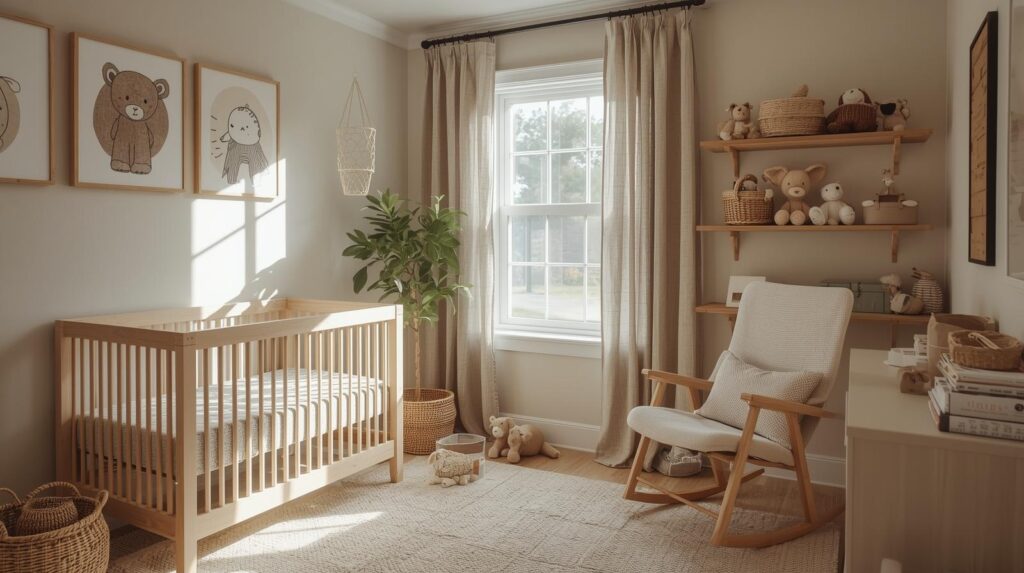
Many modern parents prefer gender-neutral nurseries, and farmhouse style lends itself beautifully to this approach. By focusing on natural materials, neutral colors, and classic design elements, you create a nursery that works for any child regardless of sex.
The farmhouse color palette naturally lends itself to gender-neutral design. Whites, creams, grays, and soft earth tones provide foundations that work for any baby. Add color through accessories that can be easily changed as the child grows.
Natural materials like wood, wicker, and cotton have no gender associations, making them perfect for gender-neutral nurseries. A wood crib, wicker baskets, and cotton bedding create a warm, welcoming space without declaring the baby’s sex.
Animal themes work beautifully in gender-neutral farmhouse nurseries. Woodland creatures, farm animals, and birds appear in artwork, mobiles, and accessories, adding whimsy without gender coding.
Botanical elements, whether real plants or botanical prints, bring nature indoors without gender associations. A gallery wall of botanical prints, a mobile of felt leaves, or simple fresh flowers all add organic beauty.
Stars, moons, and celestial themes transcend gender while adding wonder to the nursery. A star mobile, constellation prints, or a night-sky mural create magic for any child.
Conclusion: Welcoming Baby Home
A thoughtfully designed farmhouse nursery represents far more than a beautiful room. It embodies the love and anticipation surrounding a new arrival, the hopes and dreams that parents hold for their child, and the warmth of family that will surround the baby as they grow. In this small space, the values of farmhouse living, simplicity, authenticity, and genuine comfort, come together to create a true welcome for the newest family member.
Whether you are preparing for your first child or adding to your family, the principles of farmhouse design guide you toward a nursery that is both beautiful and nurturing. Natural materials, comfortable furniture, personal touches, and thoughtful attention to detail combine to create a space where baby will feel safe, loved, and completely at home.
So take time to plan your farmhouse nursery with care. Choose materials that are safe and beautiful, furniture that will serve for years, and decor that tells your family’s story. The result will be a nursery that welcomes your little one with warmth and style, a space where the enduring appeal of farmhouse design meets the profound love of family.