Chalkboard: The Timeless Appeal of a Classic Surface
There is something inherently nostalgic about a chalkboard. The matte black surface, the distinctive scratch of chalk, the cloud of dust that follows erasing, these sensory experiences connect us to classrooms of our youth, to diners with specials boards, to pubs advertising daily pints. Yet the chalkboard is far more than a relic of educational past. In recent decades, this humble surface has experienced a remarkable renaissance, finding its way into homes, businesses, and creative spaces in countless innovative forms. From entire chalkboard walls in kitchens to tiny chalkboard tags on gift jars, from elaborate restaurant menus to simple family message centers, the chalkboard’s versatility and charm have secured its place in contemporary life. This comprehensive guide explores the history, types, uses, and enduring appeal of chalkboards, celebrating a surface that continues to inspire creativity and communication.
The History of Chalkboards
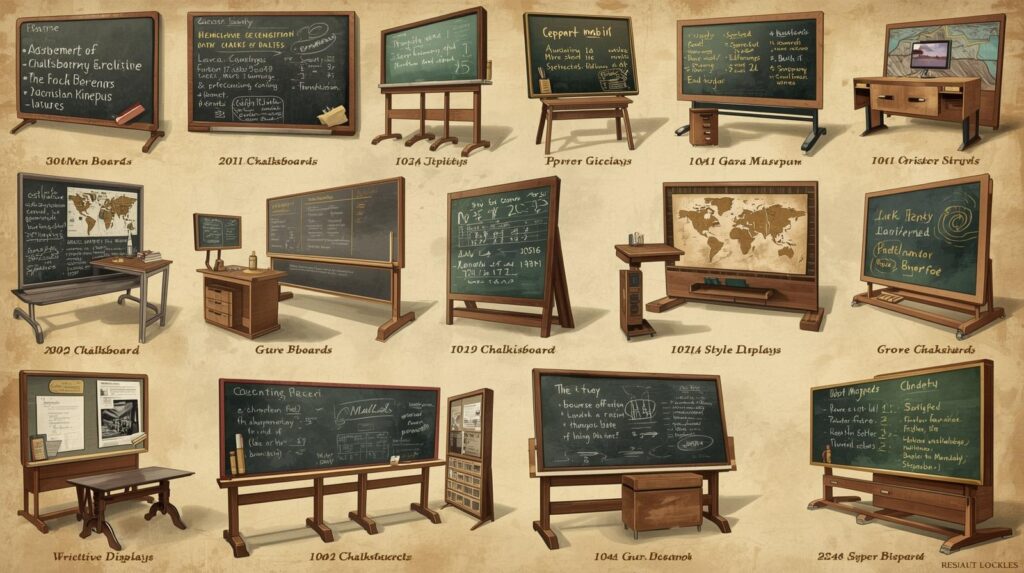
Understanding the chalkboard’s journey through history enriches our appreciation of this everyday object. While chalk has been used for writing on dark surfaces for centuries, the modern chalkboard emerged in the early nineteenth century as educational reformers sought more effective teaching tools.
Before chalkboards, students used individual slates, small personal tablets of slate or wood on which they wrote with chalk or slate pencils. Teachers had no way to present information to entire classes simultaneously. The introduction of large wall-mounted boards, originally made of slate, revolutionized education. For the first time, teachers could write lessons visible to all students, demonstrate problems step by step, and maintain everyone’s attention on a single focal point.
These early chalkboards were exactly what their name suggests, boards of actual slate, quarried, cut, and framed in wood. They were heavy, expensive, and fragile, but they transformed classroom dynamics. As demand grew, manufacturers developed cheaper alternatives, including painted wood and composition boards that eventually evolved into the materials we use today.
By the late nineteenth century, chalkboards had become standard equipment in classrooms throughout the developed world. Generations of students learned their letters, solved equations, and diagrammed sentences on these ubiquitous green or black surfaces. The chalkboard became so deeply associated with education that its image alone evokes memories of school days.
Types of Chalkboards
Modern chalkboards come in numerous forms, each suited to different applications and aesthetics.
Traditional Slate Chalkboards
Authentic slate chalkboards, made from natural quarried slate, represent the original material. These boards have a distinctive look and feel that synthetic materials cannot replicate. The surface has subtle variations, occasional fossil inclusions, and a satisfying weight and solidity. Slate boards are prized for their authenticity and beauty, appearing in historic renovations, upscale restaurants, and homes seeking genuine vintage character.
Slate’s natural color ranges from deep gray to almost black, with subtle variations that add visual interest. The material is extremely durable, lasting centuries with proper care. However, genuine slate is heavy, expensive, and can be difficult to source in large sizes.
Composition Chalkboards
Most modern chalkboards use composition materials rather than natural slate. These boards consist of a hardboard or MDF core coated with a special paint or laminate that accepts chalk. They are lighter, less expensive, and available in larger sizes than natural slate.
Composition boards come in the traditional green, often called “chalkboard green,” as well as black and various colors. The surface may be slightly textured to hold chalk or smooth for use with chalk markers. Quality varies significantly; better boards accept chalk easily, erase cleanly, and resist ghosting (faint remaining images after erasing).
Chalkboard Paint
One of the most exciting developments in recent decades is chalkboard paint, which transforms almost any surface into a chalkboard. Available in brush-on and spray formulations, this paint creates a surface that accepts chalk on walls, furniture, and objects.
Chalkboard paint has democratized the medium, allowing anyone to create custom chalkboards in any size, shape, or location. Entire walls become family communication centers. Ordinary furniture becomes interactive. Jars, plant pots, and household objects become labelable. The possibilities are limited only by imagination.
The paint requires proper preparation and application. Surfaces must be clean and smooth. Multiple thin coats work better than one thick coat. After drying, the surface must be “seasoned” by rubbing chalk over the entire area and erasing, which prevents ghosting of first markings.
Chalkboard Vinyl and Contact Paper
For temporary or rental-friendly applications, chalkboard vinyl and contact paper offer removable alternatives. These materials stick to smooth surfaces and can be peeled off without damage, perfect for dorm rooms, rental apartments, or temporary projects.
Quality varies widely; better products erase cleanly and accept chalk well, while cheaper versions may never fully erase. Look for products specifically designed for chalk use rather than general vinyl that may not hold chalk properly.
Chalkboard Magnets and Small Surfaces
Small chalkboard surfaces appear on magnets, tags, signs, and countless products. These miniature boards bring chalkboard functionality to specific applications, labeling jars, marking desks, creating customizable gift tags. Their small size makes them perfect for detailed work and precise applications.
Chalkboard Uses in Homes
The chalkboard’s versatility makes it invaluable in home settings, serving countless practical and decorative functions.
Kitchen Communication Centers
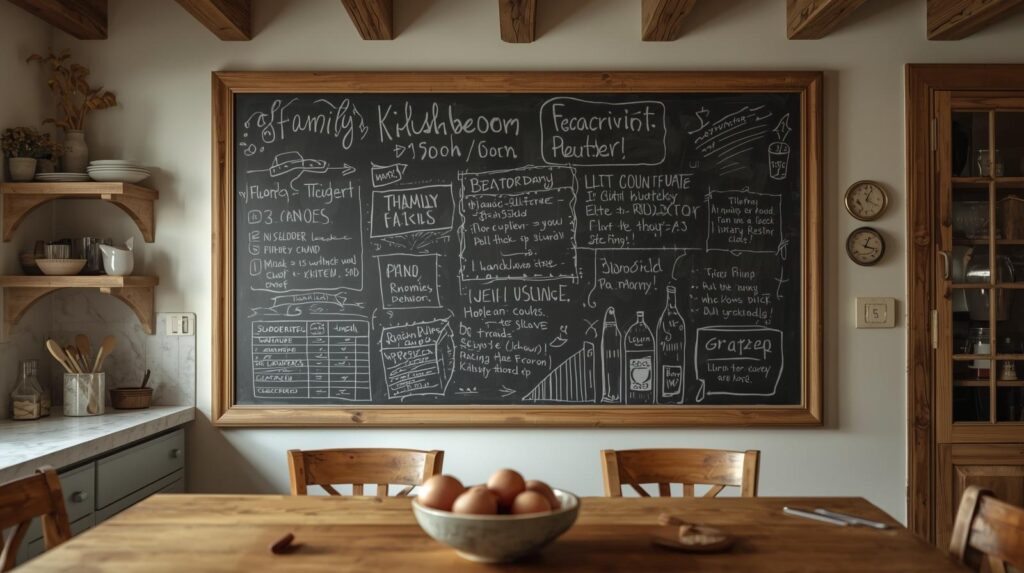
Kitchens represent the most popular location for home chalkboards. A chalkboard wall, large board, or collection of smaller boards creates a central communication hub for families. Meal plans appear alongside shopping lists. Schedules get posted and updated. Family members leave messages for each other. Children’s artwork shares space with important reminders.
The kitchen chalkboard becomes the family’s information center, visible to everyone multiple times daily. Its central location ensures messages are seen, and its mutable nature allows constant updating as needs change.
Menu and Recipe Boards
Dedicated menu boards help with meal planning and answer the daily “what’s for dinner” question before it’s asked. A small chalkboard in the kitchen can display the week’s dinner menu, reducing decision fatigue and building anticipation for favorite meals.
Recipe boards hold current recipes for reference while cooking, eliminating the need to consult cookbooks or devices with messy hands. A simple chalkboard propped on the counter displays ingredients and steps for tonight’s dinner.
Family Message Centers
Entryway chalkboards catch family members as they come and go. Reminders of today’s activities, notes about schedule changes, and cheerful messages greet everyone arriving home. Children can leave notes for parents, parents can remind children of after-school expectations, and everyone stays connected despite busy schedules.
Children’s Rooms and Playrooms
Chalkboards in children’s spaces encourage creativity and provide endless entertainment. A chalkboard wall in a playroom invites drawing, games, and learning. Smaller boards at child height allow independent creation. The erasable surface forgives mistakes and encourages experimentation.
Educational uses abound. Children practice letters, solve math problems, play hangman, and create artwork, all on the same surface. The chalkboard grows with children, serving different purposes at different ages.
Home Offices and Creative Spaces
In home offices, chalkboards track projects, brainstorm ideas, and display schedules. The visible, changeable surface supports creative thinking and project planning. Unlike digital tools that hide information behind screens, a chalkboard presents everything at once, encouraging connections and insights.
Creative spaces benefit from chalkboard surfaces for sketching ideas, working out compositions, and displaying inspiration. Artists, writers, and makers find the erasable surface invaluable for preliminary work.
Chalkboard Uses in Businesses
Beyond homes, chalkboards serve numerous business purposes, adding charm and functionality to commercial spaces.
Restaurant and Cafe Menus
Perhaps no business has embraced chalkboards more enthusiastically than restaurants and cafes. Daily specials appear on chalkboards, easily updated as items sell out or change. Coffee shop menus on chalkboards create a warm, artisanal atmosphere. Bakery chalkboards announce today’s offerings with hand-lettered charm.
The flexibility of chalkboards suits the hospitality industry perfectly. Menus change constantly; chalkboards change with them. The hand-lettered look conveys authenticity and craftsmanship that printed menus cannot match.
Retail Displays
Retailers use chalkboards for signage, pricing, and promotions. A chalkboard sign on the sidewalk announces sales and draws customers. Interior chalkboards highlight featured products and share information. The handcrafted appearance suggests small business authenticity and personal attention.
Event and Wedding Signage
Chalkboards have become essential elements of event decor, particularly for weddings and celebrations. Welcome signs, seating charts, menu boards, and directional signage all appear on chalkboards, creating cohesive, customized looks. The ability to match any color scheme through chalk choices and to incorporate personal messages makes chalkboards ideal for special events.
Office Organization
Offices use chalkboards for project tracking, brainstorming, and team communication. A large chalkboard in a meeting room captures ideas during discussions, visible to all participants. Project boards track progress and deadlines. The mutable surface encourages revision and collaboration in ways that permanent displays cannot.
Chalkboard Art and Lettering
The rise of chalkboard culture has elevated chalk marking from simple writing to sophisticated art form.
Hand Lettering
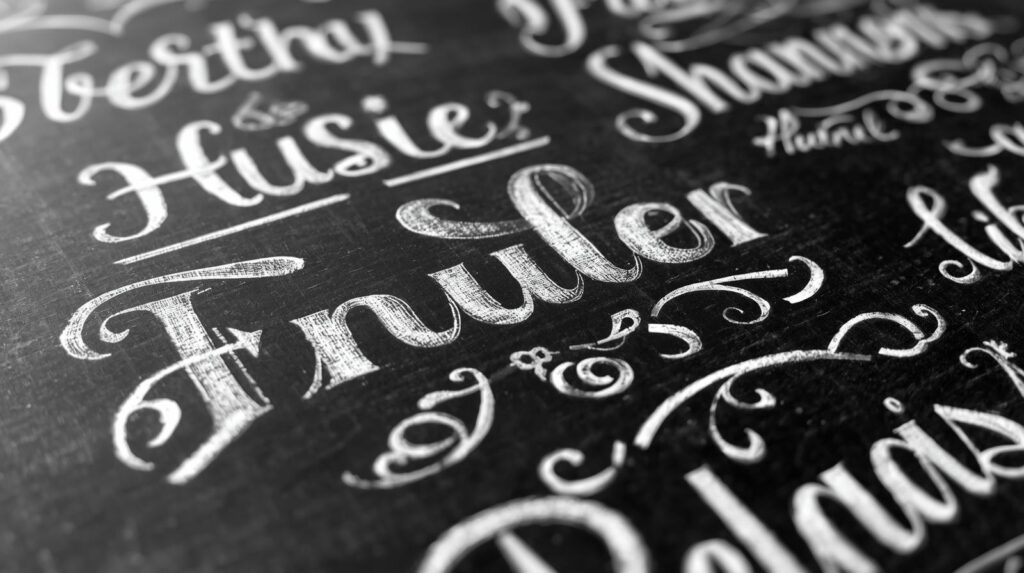
Chalkboard hand lettering has become a recognized skill, with artists specializing in beautiful typography on chalkboard surfaces. Techniques range from simple printed letters to elaborate script, from casual chalk writing to precise lettering achieved with chalk markers and tools.
The chalkboard’s dark background makes white and colored letters pop dramatically. Shadows, highlights, and dimensional effects create depth and interest. Artists exploit these qualities to create stunning visual displays that function as both information and art.
Illustration and Doodling
Beyond lettering, chalkboard art includes illustration of all kinds. Seasonal scenes, decorative borders, and thematic drawings transform chalkboards from simple communication tools into works of art. Restaurants commission elaborate chalkboard drawings that become part of their brand identity. Homes feature chalkboard art that changes with seasons and holidays.
The erasable nature of chalkboards encourages artistic risk-taking. Mistakes erase easily, and styles can evolve constantly. Artists develop signature styles while enjoying the freedom to change their work whenever inspiration strikes.
Seasonal and Holiday Art
Chalkboards excel at seasonal expression. A kitchen chalkboard can feature fall leaves in October, snowflakes in December, hearts in February, and flowers in April. This seasonal rotation keeps the board fresh and engaging while celebrating the passage of time.
Holiday-specific art adds festive spirit to homes and businesses. Elaborate Christmas chalkboards, spooky Halloween scenes, and cheerful Easter designs appear on boards of all sizes, spreading seasonal cheer.
Chalkboard Maintenance and Care
Proper care ensures chalkboards remain beautiful and functional for years.
Seasoning New Boards
New chalkboards require seasoning before first use. Rub the side of a chalk stick over the entire surface, then erase. This process fills microscopic pores and prevents first markings from ghosting permanently. Neglecting this step leads to faint images that never fully erase.
Daily Cleaning
For regular cleaning, a dry felt eraser removes most chalk. For more thorough cleaning, a damp cloth followed by drying with a soft towel restores the surface. Avoid excessive water, which can damage composition boards and promote rust on metal frames.
Dealing with Ghosting
Over time, faint images may remain even after erasing. This ghosting can be minimized by regularly cleaning with specialized chalkboard cleaner or a mixture of water and vinegar. Some recommend running a dry eraser over the board in one direction to redistribute chalk dust evenly, then erasing normally.
When to Replace
Even with excellent care, chalkboards eventually wear out. Surfaces become too smooth to hold chalk, or too rough to erase cleanly. Composition boards may warp or delaminate. When cleaning no longer restores function, replacement becomes necessary.

The Future of Chalkboards
Despite digital alternatives, chalkboards continue to evolve and find new applications. Combination boards integrate chalk surfaces with bulletin boards, magnetic surfaces, and even digital displays. New materials offer improved erasability and durability. Chalk markers provide vibrant colors and fine lines impossible with traditional chalk.
The chalkboard’s enduring appeal lies in its simplicity and tangibility. In an increasingly digital world, the physical act of writing on a chalkboard, the immediate visibility of marks, the ability to change and erase, these qualities become more precious, not less. The chalkboard reminds us that sometimes the oldest tools remain the best.
Conclusion: The Enduring Chalkboard
The chalkboard has journeyed from nineteenth-century classrooms to twenty-first-century homes and businesses, adapting and evolving while maintaining its essential character. Its appeal transcends generations, connecting us to educational traditions while serving contemporary needs with remarkable versatility.
Whether you have a massive chalkboard wall in your kitchen, a small framed board in your entryway, or simply a collection of chalkboard labels on pantry jars, you participate in a tradition stretching back centuries. You engage with a surface that has taught millions, communicated countless messages, and provided endless creative satisfaction.
The scratch of chalk, the cloud of dust, the satisfaction of a beautifully lettered message, these experiences remain uniquely satisfying. In a world of screens and notifications, the chalkboard offers something different: a quiet, patient surface waiting to be marked, erasable and reusable, always ready for whatever you want to say. That enduring utility, combined with undeniable charm, ensures the chalkboard will continue inspiring creativity and communication for generations to come.