Calendar Aesthetic: The Art of Beautiful Planning
There is something deeply satisfying about a beautiful calendar. In an age where our phones buzz with reminders and our computers ping with notifications, the physical calendar has survived not despite its analog nature but because of it. A calendar on your wall does not demand attention; it simply waits, ready to be consulted, a quiet presence that organizes time while adding beauty to your space. The calendar aesthetic recognizes that planning tools can be more than functional, that they can delight the eye, express personality, and bring joy to the daily task of organizing life. From minimalist designs that whisper to elaborate creations that shout, calendar aesthetics have evolved into a rich field of personal expression. This comprehensive guide explores the many dimensions of calendar aesthetics, helping you find or create the perfect calendar for your space and style.

Understanding the Calendar Aesthetic
Before exploring specific styles, it is helpful to understand what we mean when we speak of a calendar aesthetic. Unlike purely decorative objects, calendars must serve a practical function while also pleasing the eye. The successful calendar aesthetic integrates these two purposes seamlessly, creating something that is both useful and beautiful.
The calendar aesthetic encompasses several elements. Visual design includes color, typography, layout, and imagery. Materiality involves paper quality, binding, and physical presence. Functionality affects how easily the calendar can be used and updated. Together, these elements create an object that structures our days while enriching our environment.
The appeal of beautiful calendars speaks to something deeper than mere decoration. Time is abstract and often overwhelming; calendars make it visible, tangible, manageable. A beautiful calendar transforms the daunting task of organizing time into a pleasurable ritual. The act of marking dates, turning pages, and watching months progress becomes meaningful rather than merely mechanical.
Types of Calendar Aesthetics
Calendar aesthetics vary enormously, from minimalist designs that barely register to maximalist creations that command attention. Understanding the main categories helps you identify what speaks to you.
Minimalist Calendar Aesthetic
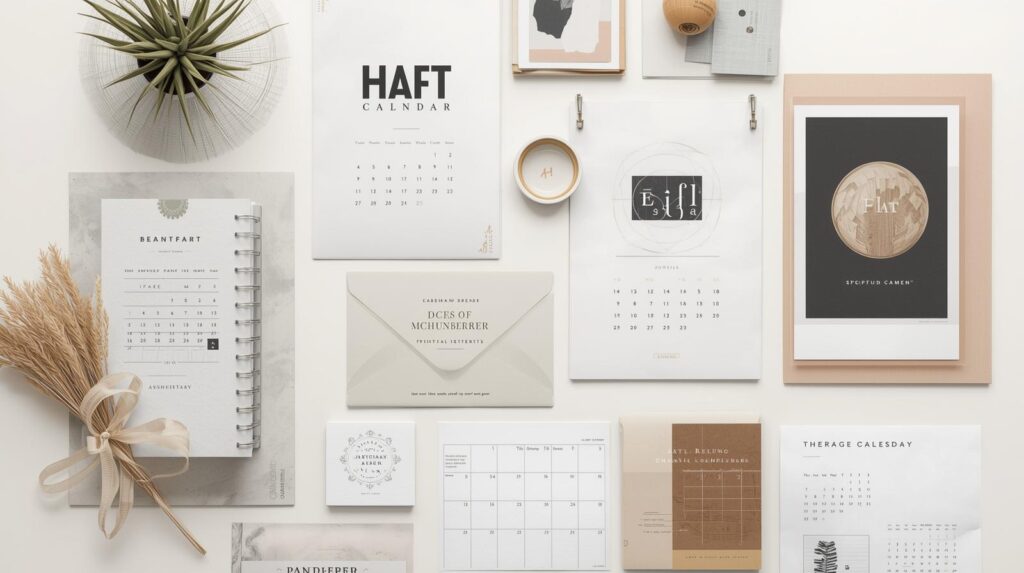
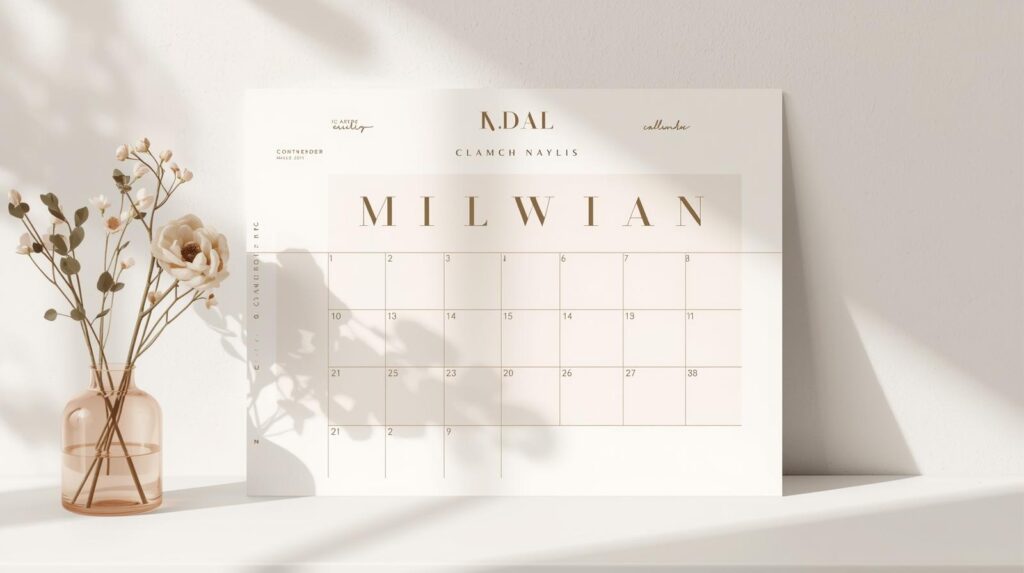
The minimalist calendar aesthetic embraces simplicity, clarity, and restraint. Clean lines, ample white space, and understated typography characterize this approach. Color, if used at all, appears sparingly, perhaps as a subtle accent or to highlight important dates. The goal is a calendar that organizes without overwhelming, that provides information without demanding attention.
Minimalist calendars often use high-quality materials that justify their simplicity. Thick, textured paper, precise printing, and thoughtful binding elevate what might otherwise feel ordinary. The beauty lies in what is left out as much as what is included, in the space that allows the eye to rest and the mind to focus.
This aesthetic suits modern interiors, spaces with clean lines and neutral palettes. It appeals to those who find visual clutter stressful and who prefer their tools to recede rather than assert themselves. For these users, a calendar should be seen when needed and not seen when not.
Maximalist Calendar Aesthetic
At the opposite end of the spectrum, the maximalist calendar aesthetic celebrates abundance, color, and pattern. These calendars are events in themselves, demanding attention and rewarding it with visual richness. Illustrations crowd the pages, colors clash and harmonize, and every month brings new imagery to discover.
Maximalist calendars often feature work from artists and illustrators whose style fills every corner. Each month becomes a new artwork to study, a new world to enter. The calendar functions as both planning tool and art collection, changing regularly to keep the eye engaged.
This aesthetic brings energy and personality to spaces that can handle visual richness. It works well in eclectic interiors, creative workspaces, and homes where self-expression takes priority over restraint. For those who love pattern and color, a maximalist calendar provides daily delight.

Vintage and Nostalgic Calendar Aesthetic
The vintage calendar aesthetic draws on design from past eras, evoking nostalgia and historical connection. Mid century modern calendars with their characteristic typography and illustration, Victorian-era designs with elaborate ornamentation, Art Deco calendars with geometric patterns, all transport users to different times while serving present needs.
This aesthetic often involves reproduction of historical designs or new work in period styles. The appeal lies partly in the beauty of the designs themselves and partly in the connection they provide to earlier generations who also marked time’s passage. Using a vintage-style calendar feels like participating in a long tradition.
Vintage aesthetics suit traditional interiors, spaces with antique furnishings, and anyone who feels drawn to earlier design periods. They provide warmth and character that contemporary designs sometimes lack.
Botanical and Nature Calendar Aesthetic
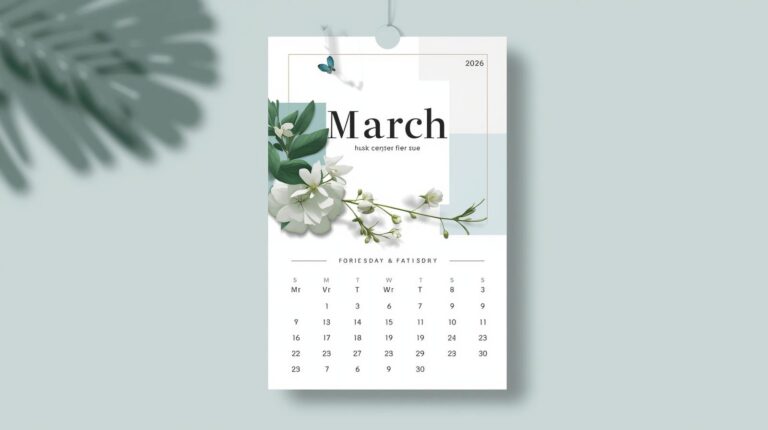
The botanical calendar aesthetic brings the natural world indoors through imagery of plants, flowers, and landscapes. Each month might feature a different flower in bloom, a changing forest scene, or the progression of a garden through the seasons. This aesthetic connects users to natural rhythms that our indoor lives often obscure.
Botanical calendars range from scientifically accurate illustrations to artistic interpretations. Some feature photography of stunning landscapes; others use pressed flowers or herbal imagery. The common thread is a celebration of the natural world and its cycles.
This aesthetic creates calm, grounding presence in any space. It works particularly well in homes with plants, nature-inspired decor, and for those who find peace in natural imagery. The changing months reflect actual changes in the outdoors, deepening the connection.
Typography-Focused Calendar Aesthetic
For those who love letters and words, typography-focused calendars celebrate the art of type. Each month might feature a different font, a meaningful quote beautifully arranged, or simply the numbers themselves treated as graphic elements. The beauty lies in the forms of letters and their arrangement on the page.
These calendars appeal to designers, writers, and anyone who appreciates the visual potential of language. They often use limited color palettes that allow the typography to take center stage. The result is sophisticated, understated, and endlessly interesting to those who love letters.
Functional and Organizational Calendar Aesthetic
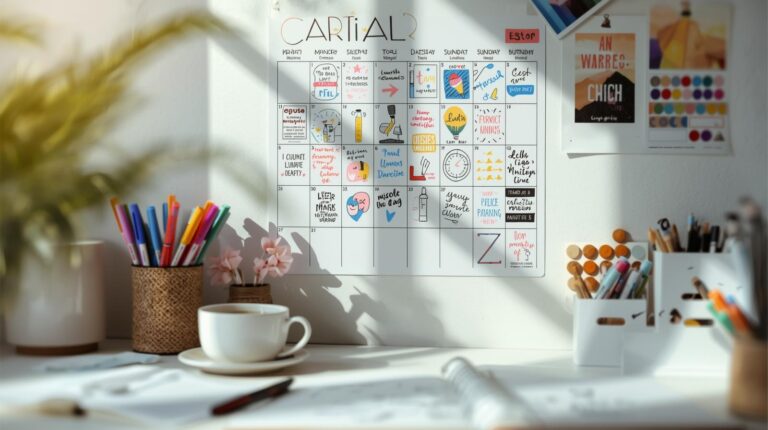
Some calendars prioritize function above all, with aesthetics emerging from thoughtful organization rather than decoration. These calendars feature ample writing space, clear grids, and practical features like note sections, pockets, or stickers. The beauty lies in how well they serve their purpose.
This aesthetic appeals to busy households and professionals who need serious organizational tools. The best examples prove that function need not sacrifice beauty; thoughtful design elevates even the most practical calendar into something pleasing to use daily.
Choosing the Right Calendar Aesthetic for Your Space
With so many options, selecting the right calendar aesthetic requires consideration of several factors.
Consider Your Space
Where will your calendar live? A kitchen calendar faces different demands than an office calendar or one in a shared family space. Consider the existing decor, the colors and style of the room, and how much visual competition the calendar will face. A maximalist calendar might get lost in an already busy space or might provide a welcome focal point in a neutral one.
Size matters enormously. A small calendar on a large wall looks insignificant; an oversized calendar in a small room feels overwhelming. Measure your space and choose a calendar appropriately scaled. Consider whether you want the calendar to dominate its wall or blend in.
Consider Your Planning Style
How do you actually use a calendar? Some people write extensively, filling each day with appointments, notes, and reminders. These users need ample writing space and perhaps a grid layout that accommodates many entries. Others use calendars primarily for awareness, noting only major events. These users can prioritize beauty over writing space.
Consider whether you prefer seeing a full month at once or focusing on weeks. Month grids provide overview; weekly spreads allow more detail. Some calendars offer both, with month views for planning and weekly spreads for detailed scheduling.
Consider Your Aesthetic Preferences
Ultimately, your calendar should please you. Look honestly at your home and your style. Do you gravitate toward clean lines and neutral colors, or do you love pattern and bold hues? Do you prefer realistic imagery or abstract design? Your calendar will be with you all year; choose something that brings you joy every time you see it.
Creating Your Own Calendar Aesthetic
For those who cannot find exactly what they want, creating a custom calendar offers unlimited possibilities.
DIY Calendar Materials and Methods
Creating your own calendar can be as simple as printing free templates on nice paper or as involved as hand-lettering and illustrating each month. The middle ground involves purchasing blank calendar bases and customizing them with your own stamps, drawings, or collage elements.
Quality materials elevate DIY calendars. Thick, textured paper takes ink beautifully and feels substantial. Quality binding ensures the calendar lasts the year. Even simple calendars feel special when made with care.
Digital Customization Options
For those who prefer digital tools, numerous platforms allow custom calendar creation. Upload your own photos, choose layouts and fonts, and order professionally printed calendars. This approach combines personal content with professional production, resulting in calendars that are both meaningful and beautiful.
Family photo calendars have become particularly popular, combining practical planning with cherished images. Each month features different family photos, creating a year-long journey through memories while organizing daily life.
Involving Family in Calendar Creation
For families, creating calendars together builds investment in using them. Children can illustrate certain months, add stickers to special dates, or help choose images. The resulting calendar reflects the whole family and becomes more meaningful than anything store-bought.
Using Your Beautiful Calendar
A beautiful calendar serves its purpose best when actually used. Developing habits around calendar use ensures it functions as intended.
Daily Calendar Rituals
Incorporate your calendar into daily routines. Morning coffee might include a quick review of the day ahead. Evening wind-down might involve checking tomorrow’s schedule. These small rituals keep you connected to your calendar and prevent important dates from being missed.
Weekly Planning Sessions
Set aside time each week for more thorough calendar engagement. Review the coming week, note any conflicts or preparations needed, and ensure everyone in the household knows what to expect. This weekly practice reduces surprises and builds family communication.
Monthly Reviews and Setup
At each month’s end, take time to appreciate the passing month and prepare for the next. For calendars with replaceable pages, this is the moment to turn to a fresh month, to admire new imagery, and to transfer any ongoing items. This ritual marks time’s passage and creates natural moments of reflection.
Caring for Your Calendar
A beautiful calendar deserves care that keeps it looking good throughout the year.
Placement Considerations
Hang your calendar where it will be used but not damaged. Avoid spots with direct sunlight, which fades colors and damages paper. Keep away from moisture sources like sinks or windows left open in rain. Consider how traffic patterns might affect the calendar; a busy hallway might lead to accidental tears.
Writing Tools Matter
The right writing tools protect your calendar while serving your needs. Pencils erase easily but may smudge. Fine-tipped markers write clearly but may bleed through thin paper. Test tools on a corner before committing to extensive use. For maximum flexibility, consider using removable stickers or washi tape for dates that might change.
Preserving Special Calendars
For particularly beautiful or meaningful calendars, consider preservation after the year ends. Some people frame favorite months as art. Others keep complete calendars as records of their years. With care, even used calendars can become cherished keepsakes.
Conclusion: The Gift of a Beautiful Calendar
A beautiful calendar offers far more than a way to track appointments. It provides daily visual pleasure, a moment of beauty in the midst of busy schedules. It marks time’s passage with grace, helping us appreciate both where we’ve been and where we’re going. It brings order to chaos while delighting the eye.
The calendar aesthetic reminds us that even utilitarian objects can be beautiful, that planning need not be ugly, that organizing our lives can itself be a pleasure. In choosing or creating a calendar that delights us, we affirm that our time matters, that the days of our lives deserve to be marked with care and beauty.
Whether you prefer minimalist grids or maximalist illustrations, vintage reproductions or contemporary photography, botanical imagery or typographic art, the perfect calendar awaits. Take time to find it, or create it yourself. Let it grace your wall and organize your days. And at year’s end, when you turn the final page, appreciate the year that has passed, marked in beauty, organized with care, remembered with affection.